AU Chain Calories 2026: Guzman, Grill'd, Nando's, Roll'd
Verified kilojoule and protein figures for Guzman y Gomez, Grill'd, Nando's, and Roll'd in 2026, how accurate AU chain menu boards really are, and how to stay under 8,700 kJ at point of sale.

Dr. Maya Patel
Registered Dietitian, M.S. Nutrition Science
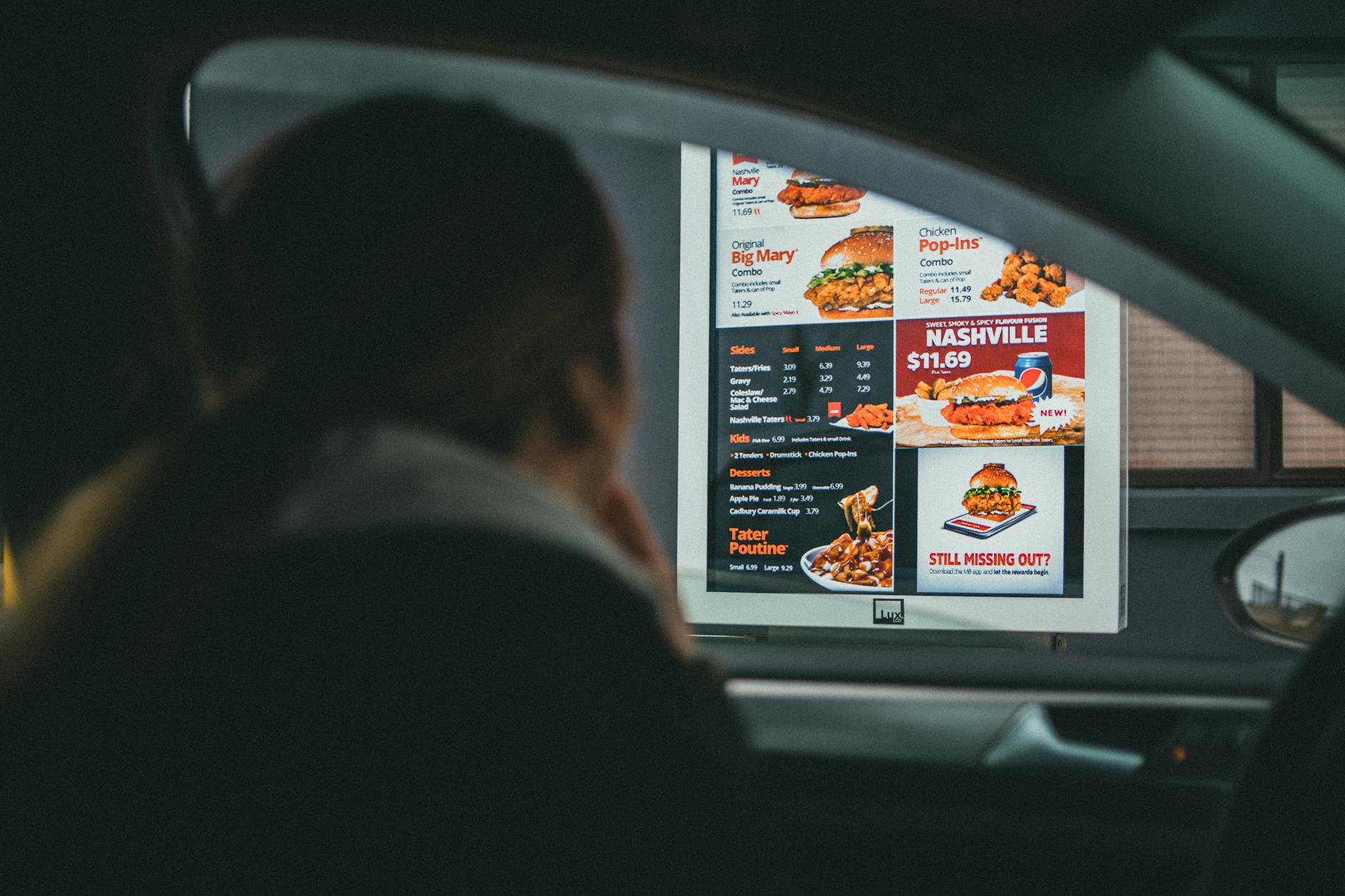
At Australian chains in 2026, a Nando's whole PERi-PERi chicken delivers 5,780 kJ (1,380 kcal), a Guzman y Gomez mild grilled chicken burrito 3,250 kJ (777 kcal), a Grill'd Simply Grill'd beef burger 2,396 kJ (573 kcal), and a Roll'd sliced rare beef pho bowl roughly 3,196 kJ (764 kcal). The 8,700 kJ adult daily reference printed on every chain menu sits roughly between two of those meals. AU chain food is not automatically a kilojoule blowout, but the swing between menu items is wider than most diners notice.
Since 2017, large chain food businesses in Australia have been required to display energy content in kilojoules next to each standard menu item, alongside the statement The average adult daily energy intake is 8,700 kJ. The rule applies to chains with 20 or more outlets in a state or 50 nationally, and it covers cafés, fast food, juice bars, and supermarket bakeries. The number on the menu board is calculated, not measured per serve, so what arrives on your tray can swing by a couple of hundred kilojoules either way.
This guide gathers verified kJ and protein figures for four major Australian chains — Guzman y Gomez, Grill'd, Nando's, and Roll'd — explains how the on-menu numbers are calculated, what research suggests about real-world variance, and how to keep an order inside your daily target without giving up restaurant food. All figures below come from each chain's published nutrition page or the CalorieKing Australia database. Where a meal has multiple variants, the number used is the most commonly ordered option as of May 2026.
What are the calorie counts at major Australian chain restaurants?
Across the four chains profiled here, a typical main meal lands between 2,400 kJ (573 kcal) and 5,780 kJ (1,380 kcal), or roughly 28-67 percent of the 8,700 kJ adult daily reference. Protein per main ranges from 30 g (Simply Grill'd beef burger) to 208 g (Nando's whole chicken, served as a sharing meal).
The table below summarises a popular item from each chain, drawn from official menu nutrition pages and CalorieKing Australia. Values are per serve as listed; actual portions vary with extras, sauces, and side substitutions.
| Chain | Item | Serve | kJ | kcal | Protein |
| Nando's | Whole PERi-PERi Chicken | 889 g | 5,780 | 1,380 | 208 g |
| Nando's | Half PERi-PERi Chicken | 460 g | 2,990 | 715 | 108 g |
| Nando's | Tenders (4 pc) | ~140 g | 922 | 220 | 39.6 g |
| Guzman y Gomez | Mild Grilled Chicken Burrito | 480 g | 3,250 | 777 | 47.2 g |
| Guzman y Gomez | Spicy Grilled Chicken Burrito Bowl | 470 g | 2,850 | 681 | 43 g |
| Grill'd | Simply Grill'd Beef Burger (Traditional bun) | 259 g | 2,396 | 573 | 30 g |
| Roll'd | Sliced Rare Beef Pho (Bowl) | 808 g | ~3,196 | 764 | n/a |
| Roll'd | BBQ Chicken Banh Mi | 300 g | ~1,929 | 461 | n/a |
| Roll'd | BBQ Chicken Rice Paper Roll (Soldier) | 115 g | ~636 | 152 | n/a |
- Lean-protein chains land lower than they look. Nando's half PERi-PERi chicken supplies 108 g of protein for 2,990 kJ, a protein-to-kJ density most other chains cannot match. Skin off drops the number further.
- Burrito bowls beat burritos on the kJ ledger. Skipping the tortilla saves around 400 kJ at Guzman y Gomez for the same filling.
- Pho looks light but is heavy by volume. A full Roll'd pho bowl weighs 808 g and crosses 3,000 kJ thanks to noodles and broth, even with very little fat.
- Burgers are the steadiest moderate option. A Grill'd Simply Grill'd beef burger on a traditional bun runs 2,396 kJ — comparable to a half chicken or a burrito bowl.
How accurate are the kilojoule figures printed on AU chain menus?
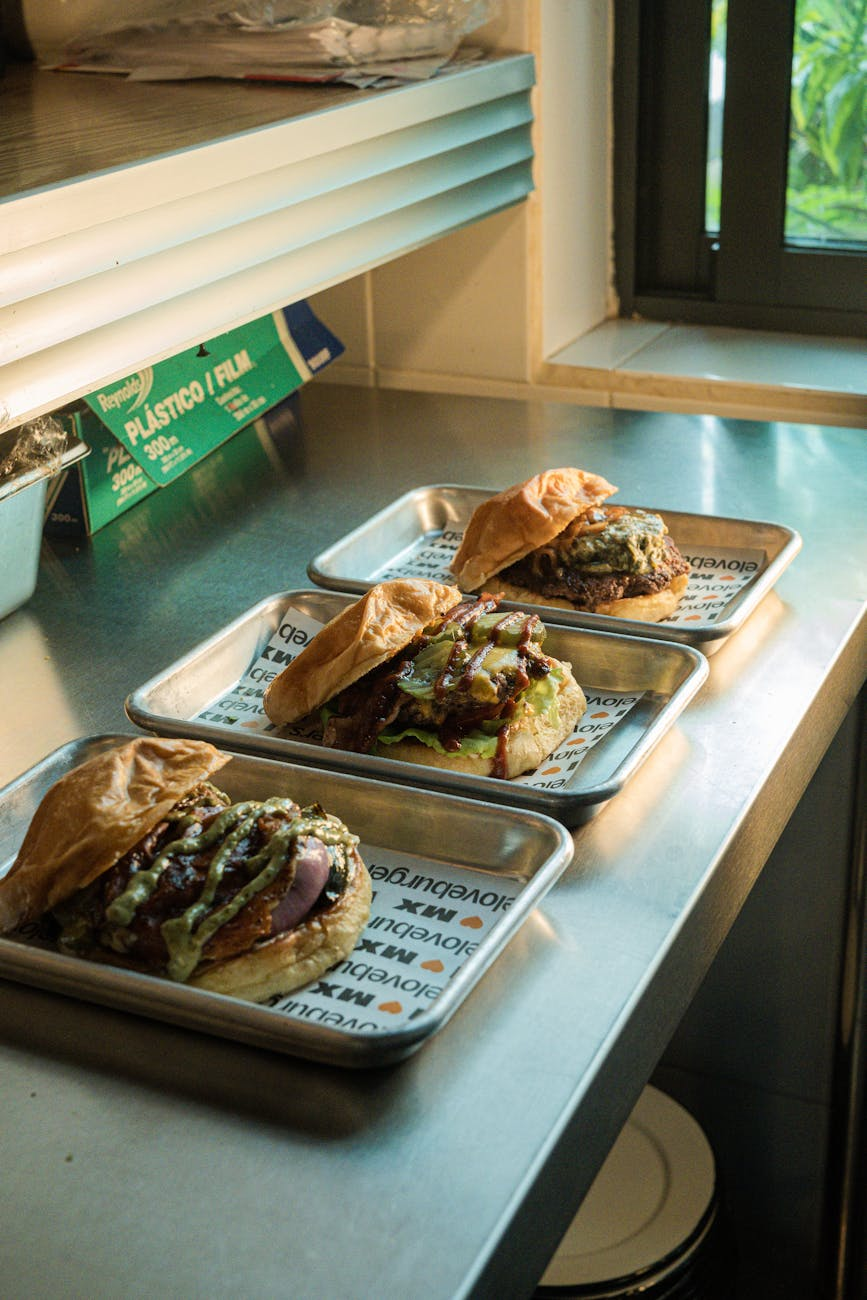
The kJ numbers on Australian chain menus are calculated averages, not per-serve measurements, and state health authorities allow them to be derived from the FSANZ Nutrition Panel Calculator rather than laboratory tested. International data suggests real-world meals can run 18 percent higher than the printed value, and roughly 15 percent of menu items exceed the declared figure by more than 20 percent.
Three things drive that variance.
First, the math behind the figure. Under Queensland Health's Fast Choices scheme and equivalent rules in Victoria, NSW, the ACT, and SA, businesses calculate kilojoules from recipe ingredient lists, frequently through the FSANZ Nutrition Panel Calculator. Recipe-based estimates do not capture the difference between a 25 g and a 35 g scoop of cheese, a generous versus modest aioli pour, or a chicken thigh that ran 320 g instead of 280 g.
Second, ingredient drift. The same menu item can come from different suppliers depending on the city and quarter, and protein-rich meats vary in fat content from one delivery to the next. A 2010 Tufts University study of 29 quick-serve and sit-down restaurant items found measured energy averaged 18 percent higher than the stated value, with about 15 percent of items exceeding their declared count by more than 20 percent.
Third, consumer estimation on top of the printed number. A 2013 BMJ study of 1,877 adults and 1,178 adolescents at four fast-food chains found adults under-estimated meal calories by an average of 175 kcal (732 kJ), and adolescents under-estimated by 259 kcal (1,083 kJ). Underestimation grew as meal size grew. The Block et al. paper notes that posted calorie counts do not eliminate this bias — they simply give diners the option to override their gut estimate.
| What drives the gap | Direction | Typical size |
| Recipe vs measured serve (portion drift) | Higher on the plate | ±10-15% |
| Ingredient supplier or seasonal variance | Either direction | ±5-10% |
| Sides, sauces, extras added at order | Higher on the plate | +500-1,500 kJ |
| Consumer mental estimate ignoring the kJ label | Lower in the head | -700 to -1,100 kJ |
How can you stay under your daily target when eating at AU chains?
You stay under your daily target by ordering the protein anchor first and shaping sides around your remaining kJ budget for the day. A 2,400-2,900 kJ main plus a side salad and water keeps almost any AU chain meal at one third of an 8,700 kJ day, leaving room for two normal meals on either side.
This is the same principle that makes restaurant calorie tracking workable: you do not need exact decimals, you need to anchor the order around the largest and most variable component on the tray.
A practical order playbook:
For dishes from cuisines whose portions and ingredients vary widely from US-style databases, see the global cuisines tracking guide. Roll'd in particular fits this pattern — Vietnamese pho weighs more and contains more carbohydrate than most generic "noodle soup" entries.
Frequently Asked Questions
Are kilojoule labels required on all Australian restaurant menus?
No — only large chains. The rule applies to businesses with at least 20 outlets in the relevant state or territory, or 50 nationally, and only to standard menu items. Dine-in-only restaurants, cinemas, service stations, mobile food trucks, and non-profit food services are exempt. Independent cafés do not have to display kJ on the menu.
How does the 8,700 kJ daily reference work?
The 8,700 kJ figure represents an average adult daily energy intake and is required on chain menu boards under state legislation. It is a reference, not a personal target — actual needs vary with sex, height, weight, age, and activity. For a personal estimate, calculate your TDEE instead of using 8,700 kJ universally.
Why do some apps show different calorie counts for the same Guzman y Gomez burrito?
Most third-party apps pull from user-submitted databases that may use older recipes, different serve sizes, or different fillings. CalorieKing Australia entries are aligned with chain-supplied data, but apps like FatSecret can include user-modified versions. Where the chain publishes nutrition, treat that as the reference and treat app entries as approximations.
Is grilled chicken at Nando's actually lower in kilojoules than fried chicken at competing chains?
Yes, on a like-for-like serve. Flame-grilling does not add cooking oil to the protein, so a 460 g Nando's half PERi-PERi chicken delivers 2,990 kJ and 108 g of protein. A comparable serve of fried chicken from any deep-fried chain typically runs 30-45 percent higher in energy due to the absorbed batter oil. The sides and sauces still matter — basting and chips can close the gap quickly.
How can KCALM help track AU chain meals more accurately?
KCALM's photo logging reads the full plate, including chips, rice, sauces, and drinks that recipe-based menu kJ sometimes underrepresents. Pair photo logging with the chain's printed kJ where available — if the two figures agree within 10-15 percent, log the photo number; if they diverge, log the higher figure. For a beginner's overview, see the getting started with calorie tracking guide.
Sources
Ready to track smarter?
Join thousands who use KCALM for calorie tracking. AI-powered food recognition, scientifically-validated calculations, and zero anxiety.
Related Articles
Ultra-Processed Foods: What They Are and Why They Matter
What are ultra-processed foods? Learn how the NOVA system defines them, why they drive overeating, the health risks the evidence supports, and how to cut back.
NutritionPre and Post-Workout Nutrition: What to Eat and When
What should you eat before and after a workout? Evidence-based timing, protein and carb targets, the truth about the anabolic window, and how to fuel training simply.
NutritionMicronutrients: Vitamins and Minerals You Might Be Missing
Tracking macros but missing vitamins and minerals? Learn the top 10 micronutrients US adults underconsume, daily targets, best food sources, and how to close the gap.