Ultra-Processed Foods: What They Are and Why They Matter
What are ultra-processed foods? Learn how the NOVA system defines them, why they drive overeating, the health risks the evidence supports, and how to cut back.

Dr. Maya Patel
Registered Dietitian, M.S. Nutrition Science

Ultra-processed foods are industrial formulations made mostly from refined substances and additives, with little or no whole food. They now supply about 58% of the calories in the average US adult diet. A 2019 Cell Metabolism trial at the National Institutes of Health found that people ate roughly 500 extra calories per day when their diet was ultra-processed, despite matched nutrients.
You do not need to memorize a banned-foods list to understand ultra-processed foods. The simpler question is whether a product was assembled in a factory from ingredients you would never cook with at home: protein isolates, modified starches, emulsifiers, and engineered flavor compounds. That distinction, not calories or fat alone, is what current nutrition science is most concerned about.
This guide explains what ultra-processed foods (UPFs) actually are, how the NOVA system classifies them, why they drive overeating, the health risks the evidence supports, and practical steps to cut back without chasing perfection.
What Are Ultra-Processed Foods?
Ultra-processed foods are ready-to-eat or ready-to-heat products manufactured largely from substances extracted from foods rather than from whole foods themselves. The category includes packaged snacks, soft drinks, instant noodles, mass-produced bread, reconstituted meat products, and most breakfast cereals. They typically contain ingredients you would not find in a home kitchen, such as high-fructose corn syrup, hydrogenated oils, protein isolates, and additives like emulsifiers, artificial colors, and non-sugar sweeteners.
The defining feature is not a single nutrient. It is the degree of industrial transformation. A plain oat is minimally processed. Oats baked into a glazed cereal bar with invert syrup, soy lecithin, and natural flavors are ultra-processed. The same starting crop sits at opposite ends of the spectrum.
What Is the NOVA Classification System?
NOVA is a food classification framework developed by researchers at the University of São Paulo and now referenced by the WHO, the FAO, and several national dietary guidelines. Instead of grading foods by nutrients, it sorts them by the extent and purpose of processing into four groups:
Group 4 is the category that concerns researchers most, and it is the focus of this guide.
How Much of Our Diet Is Ultra-Processed?
Ultra-processed foods now dominate the modern Western diet. An analysis of US national dietary survey data published in BMJ Open (Martínez Steele et al., 2016) found that UPFs supplied 57.9% of total calories for the average American adult. For children and teenagers the share is even higher: a 2021 JAMA study (Wang et al.) reported that 67% of calories consumed by US youth came from ultra-processed sources, up from 61% two decades earlier.
The pattern is not unique to the United States. UPFs account for more than half of energy intake in the United Kingdom and Canada, and their share is rising fastest in middle-income countries as packaged products replace traditional diets.
Why Do Ultra-Processed Foods Lead to Overeating?
Ultra-processed foods make it easy to consume more calories than your body needs. The clearest evidence comes from a tightly controlled 2019 trial at the US National Institutes of Health (Hall et al., Cell Metabolism). Twenty adults lived in a research ward and ate either an ultra-processed or an unprocessed diet for two weeks each. The diets were matched for the calories on offer, plus sugar, fat, fiber, and macronutrients.
On the ultra-processed diet, participants ate about 508 extra calories per day and gained roughly 0.9 kg. On the unprocessed diet, they lost about the same amount. Nothing was hidden or forced. People simply ate more when food was ultra-processed.
Researchers point to several mechanisms: UPFs are energy-dense, soft and quick to chew, low in fiber and protein relative to calories, and engineered for a flavor intensity that delays fullness signals.
Are Ultra-Processed Foods Engineered to Be Addictive?
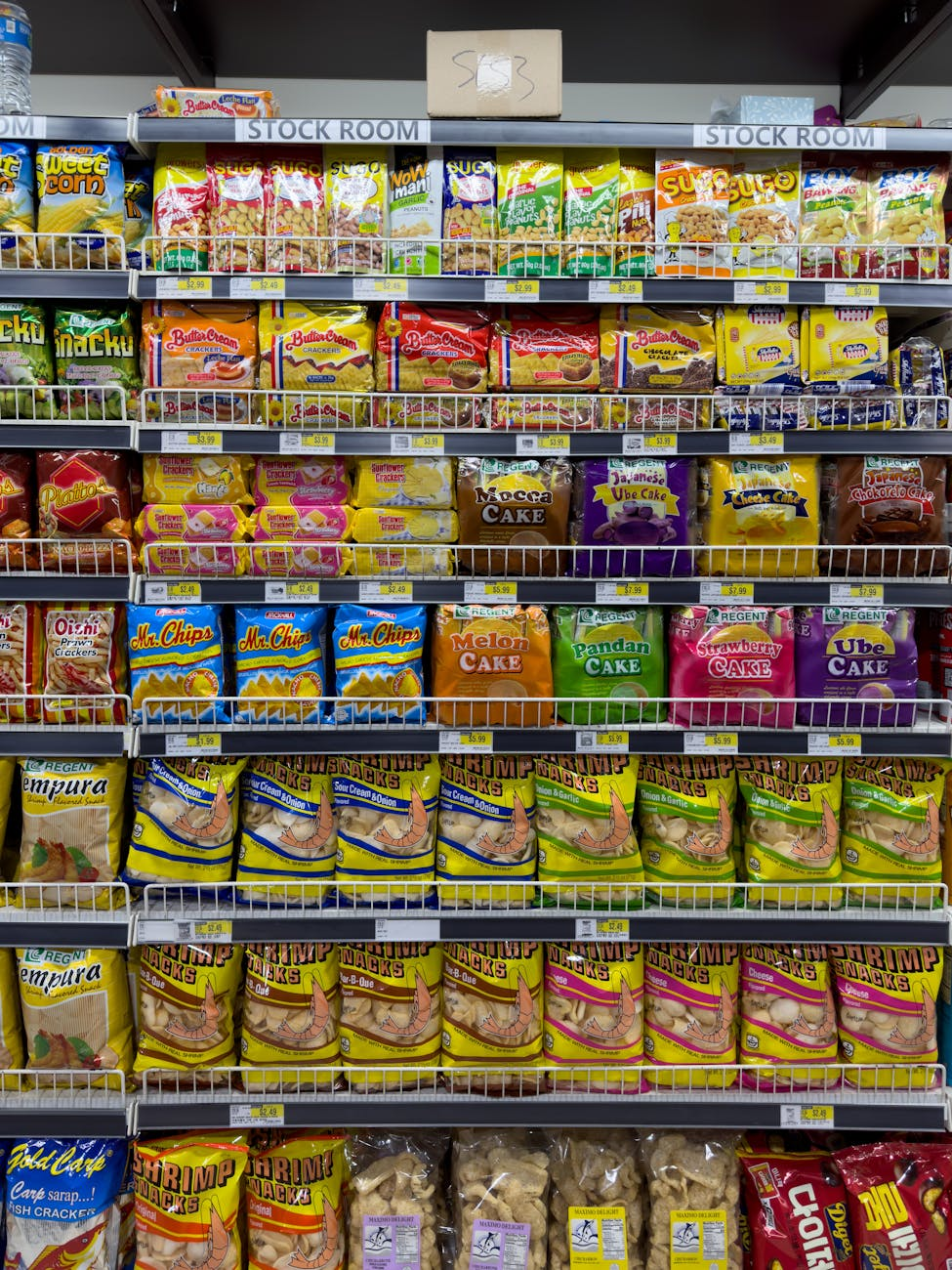
UPFs are not addictive in the strict clinical sense, but they are deliberately engineered to be hard to stop eating. Food manufacturers optimize products for what the industry calls the bliss point: the precise combination of sugar, fat, salt, and texture that maximizes craving while minimizing the satiety that would make you put the package down.
This hyperpalatability overrides the appetite signals that normally regulate intake. In the NIH trial, people ate ultra-processed meals significantly faster, and faster eating is consistently linked to higher total intake. The refined carbohydrates and low fiber content also cause sharper blood sugar swings, which can trigger hunger sooner. For more on the biology behind this, see our guide to hunger hormones and appetite.
What Health Risks Are Linked to Ultra-Processed Foods?
Higher ultra-processed food intake is consistently associated with worse health outcomes. The most comprehensive evidence is a 2024 umbrella review in The BMJ (Lane et al.) that pooled 45 meta-analyses covering nearly 10 million people. It found that greater UPF exposure was directly associated with 32 health outcomes.
The strongest associations included a 50% higher risk of cardiovascular disease-related death, a 48 to 53% higher risk of anxiety and common mental disorders, and a 12% greater risk of type 2 diabetes. Higher UPF intake was also linked to obesity, depression, and all-cause mortality.
These are observational findings, so they show correlation rather than proof of cause. But the consistency across dozens of studies, combined with the controlled NIH feeding trial, makes a strong case that UPFs are not simply a marker of an otherwise poor diet.
Are All Ultra-Processed Foods Equally Bad?
No. The NOVA group 4 label covers a vast range of products, and treating them as a single block oversimplifies the picture. A 2023 study in The Lancet Regional Health found that some UPF subgroups, such as packaged whole-grain breads and yogurts, were not linked to increased cardiovascular risk, while processed meats and sugary drinks carried the strongest associations.
The practical takeaway is to prioritize cutting the highest-risk UPFs first. Sugar-sweetened beverages, processed meats, and refined-flour snacks deserve the most attention. A fortified whole-grain breakfast cereal or a plain yogurt with a few additives is technically ultra-processed but nutritionally far less concerning.
This is also why a strict elimination approach often backfires. Focusing on overall diet quality, fiber, and protein is more sustainable than memorizing which products carry a NOVA 4 label. See our anti-inflammatory foods guide for foods worth adding to the plate.

How Can You Eat Fewer Ultra-Processed Foods?
Reducing ultra-processed intake does not require perfection. Small, consistent swaps shift the balance of your diet over time. Seven evidence-aligned strategies:
Does Calorie Tracking Help You Cut Back on UPFs?
Yes, tracking surfaces patterns you would otherwise miss. Most people underestimate how much of their intake comes from packaged snacks, sauces, and drinks. Logging meals for even one week reveals where ultra-processed calories cluster, usually around mid-afternoon snacking and convenience meals.
Calorie tracking also reframes the goal. Instead of banning foods, you can watch your share of whole-food calories climb week over week, which is a more sustainable target than a perfect record. KCALM's photo logging makes this easier, since snapping a meal records both the calories and a visual history of how processed your diet looks.
For a structured starting point, see our getting started with calorie tracking guide, and avoid the pitfalls in our post on common calorie counting mistakes.
Frequently Asked Questions
Is all processed food bad for you?
No. Processing is a spectrum, and most processing is harmless or even beneficial. Freezing vegetables, pasteurizing milk, canning beans, and fermenting yogurt are all forms of processing that preserve nutrients and safety. The concern centers specifically on ultra-processed foods: industrial formulations built from refined substances and additives rather than whole foods.
How can I tell if a food is ultra-processed?
Check the ingredient list. Ultra-processed foods typically contain substances you would not cook with at home, such as high-fructose corn syrup, hydrogenated or interesterified oils, protein isolates, emulsifiers, and artificial colors or flavors. A long list of unfamiliar industrial ingredients is the clearest signal. Whole and minimally processed foods have short, recognizable ingredient lists, or none at all.
Do ultra-processed foods cause weight gain directly?
A 2019 NIH controlled feeding trial showed that people ate about 500 extra calories per day on an ultra-processed diet and gained weight, even though both diets offered matched calories and nutrients. UPFs do not break the laws of energy balance. They simply make overeating easier through energy density, hyperpalatability, and weak fullness signals.
Are ultra-processed foods the same as junk food?
Not exactly. Junk food usually means high-calorie, low-nutrient snacks like chips and candy, which are almost all ultra-processed. But the UPF category is broader. It also includes products marketed as healthy, such as some protein bars, plant-based meat alternatives, flavored yogurts, and breakfast cereals. NOVA classifies by processing, not by how healthy a product appears.
Can you eat ultra-processed foods and still be healthy?
Yes, in moderation. No single food determines health, and an occasional ultra-processed item within an otherwise whole-food diet is not a problem. The risk rises when UPFs make up the majority of your calories, as they do for most adults. Aim to shift the overall balance toward whole foods rather than pursuing a zero-UPF diet.
Are plant-based meat substitutes ultra-processed?
Most are. Products like plant-based burgers and sausages are typically built from protein isolates, oils, binders, and flavorings, which places them in NOVA group 4. That does not make them nutritionally equivalent to processed meat, since many are lower in saturated fat and free of nitrites. They are a reasonable occasional choice but not a whole food.
How quickly does cutting ultra-processed foods improve health?
Some changes appear within weeks. The NIH trial showed measurable shifts in calorie intake and weight within 14 days of changing diets. Improvements in blood sugar control, energy, and digestion often follow within one to two months as fiber intake rises. Cardiovascular and metabolic benefits accumulate over longer periods of consistent change.
Sources
Ready to track smarter?
Join thousands who use KCALM for calorie tracking. AI-powered food recognition, scientifically-validated calculations, and zero anxiety.
Related Articles
Pre and Post-Workout Nutrition: What to Eat and When
What should you eat before and after a workout? Evidence-based timing, protein and carb targets, the truth about the anabolic window, and how to fuel training simply.
NutritionMicronutrients: Vitamins and Minerals You Might Be Missing
Tracking macros but missing vitamins and minerals? Learn the top 10 micronutrients US adults underconsume, daily targets, best food sources, and how to close the gap.
NutritionAnti-Inflammatory Foods: What to Eat to Reduce Inflammation
Which foods reduce inflammation? Learn the top anti-inflammatory foods, what to avoid, an anti-inflammatory meal plan, and the science behind chronic inflammation.