Pre and Post-Workout Nutrition: What to Eat and When
What should you eat before and after a workout? Evidence-based timing, protein and carb targets, the truth about the anabolic window, and how to fuel training simply.

James Nakamura
Sports Nutritionist & Meal Prep Coach
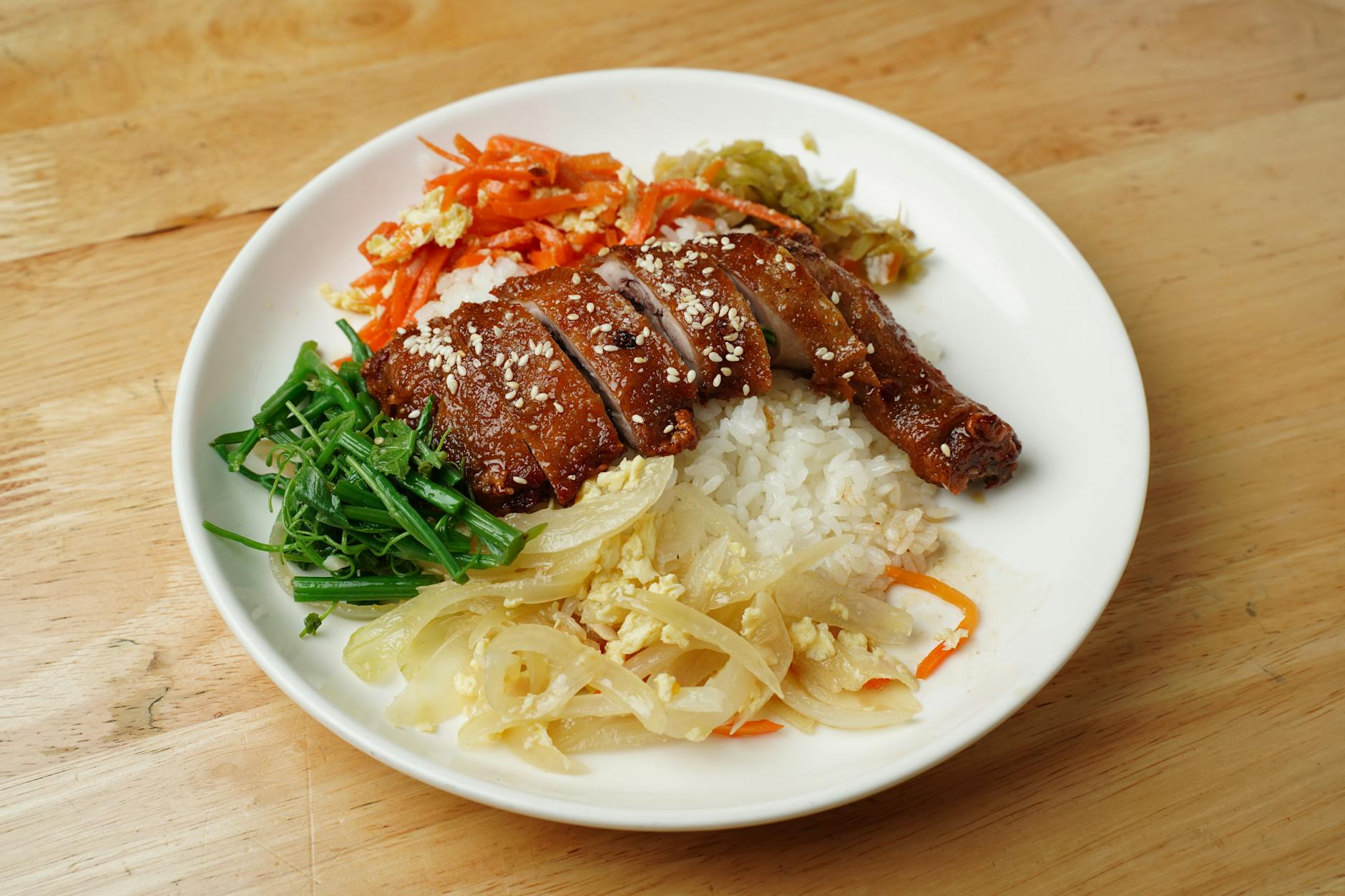
Eat 0.5 to 1.5 g/kg of carbohydrate and 0.3 to 0.5 g/kg of protein 1 to 3 hours before training, then aim for 20 to 40 g of protein with similar carbs within 2 hours after. A 2018 British Journal of Sports Medicine meta-analysis by Morton et al. found that hitting these protein targets around training increased lean mass gains by 27% compared to lower-protein controls, regardless of the exact minute the meal landed.
Workout nutrition is one of the most overcomplicated topics in fitness. Magazines and supplement brands have spent decades selling the idea that miss the "anabolic window" and your session is wasted. The actual research is more forgiving: timing matters, but in hours, not minutes, and total daily protein still drives most of the result.
This guide covers what to eat before and after training, when to eat it, when fasted training makes sense, how requirements differ for strength versus endurance work, and how to track workout-day nutrition without turning every meal into a calculation.
What Should You Eat Before a Workout?
A pre-workout meal should pair easily digested carbohydrate with moderate protein and minimal fat or fiber. The carbohydrate tops up muscle glycogen and blood glucose for performance. The protein primes muscle protein synthesis. Low fat and fiber keep digestion quick so you train without stomach discomfort. The 2017 Journal of the International Society of Sports Nutrition (JISSN) position stand recommends 1 to 4 g/kg of carbs and 0.25 to 0.5 g/kg of protein before training, scaled to how soon you eat.
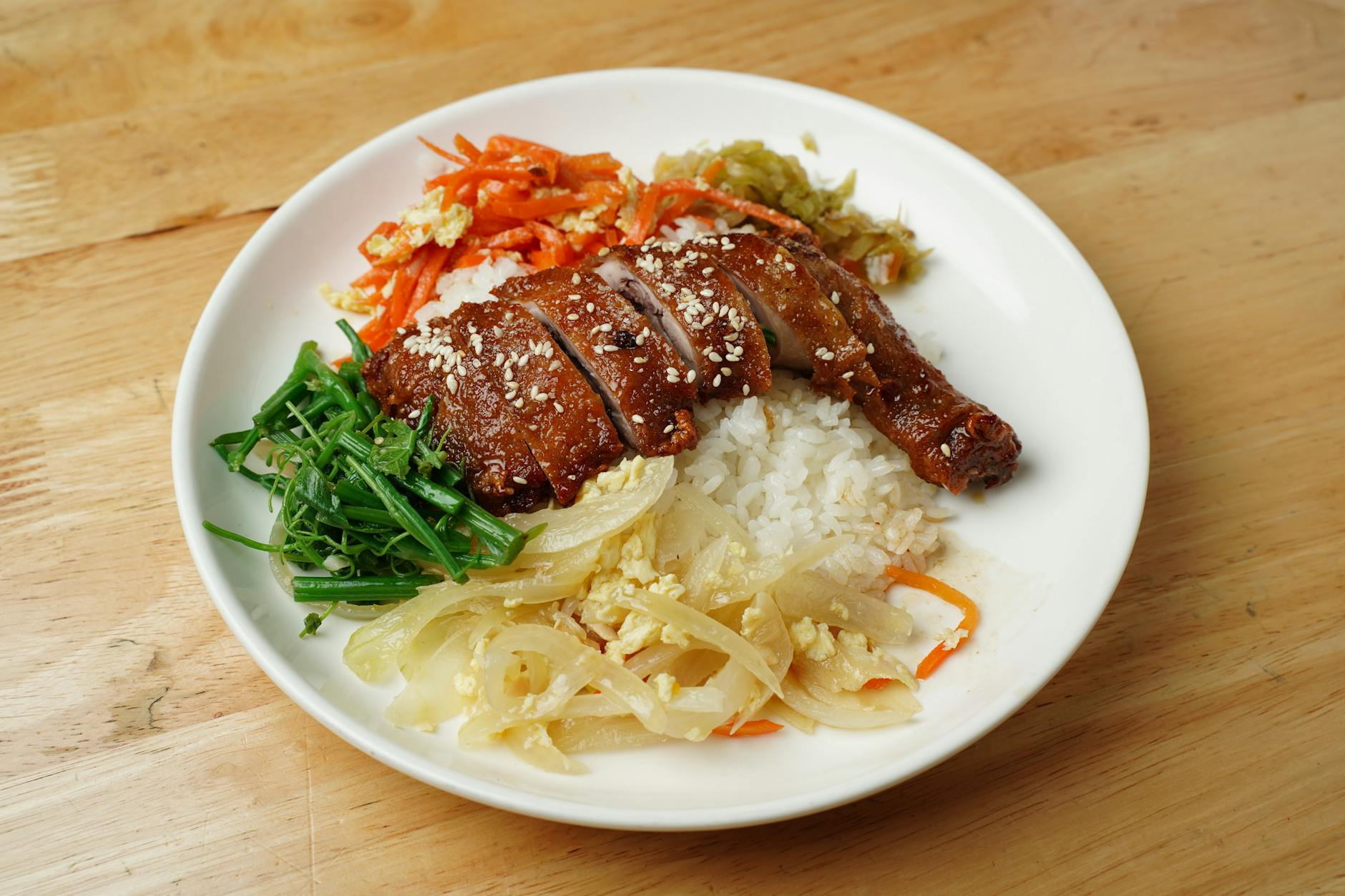
A 75 kg lifter eating 2 hours before training would target about 75 g carbs and about 25 g protein, roughly 450 to 500 kcal. That looks like a bowl of oats with whey, a chicken and rice meal, or a banana with Greek yogurt and toast. Higher-fat or high-fiber meals work fine 3+ hours out but slow digestion if eaten too close to training. For macro splits in general, see our ultimate macronutrients guide.
How Long Before Training Should You Eat?
The closer to training you eat, the smaller and more carb-dominant the meal should be. A full mixed meal needs 2 to 3 hours to clear the stomach. A protein-and-carb snack can be eaten 30 to 60 minutes before. Liquid carbs and whey protein can land 15 to 20 minutes before with most people tolerating them well, since liquids empty the stomach in about half the time of solid food.
| Time before training | Meal size | Example |
| 3+ hours | Full mixed meal (500-700 kcal) | Chicken, rice, vegetables, olive oil |
| 1.5-2 hours | Smaller meal (350-500 kcal) | Oats with whey and banana |
| 30-60 minutes | Light snack (150-300 kcal) | Banana with Greek yogurt or rice cake with whey |
| 15-20 minutes | Liquid only (100-200 kcal) | Whey shake with a piece of fruit |
What Are the Best Pre-Workout Foods?
The strongest pre-workout foods balance fast-acting carbs with a moderate protein dose. Below are seven options that work across most session types and digest cleanly inside a typical 60- to 120-minute window.
For training over 90 minutes, increase carbs by 30 to 60 g. For sessions under 45 minutes, you can train fasted or with a small snack alone.
Is Fasted Training Better for Fat Loss?
No, fasted training does not produce more fat loss than fed training when daily calories are matched. A 2014 Journal of the International Society of Sports Nutrition trial by Schoenfeld et al. compared fasted versus fed morning cardio for 4 weeks at equal calorie intakes and found no difference in body fat or fat mass change. The body adjusts fat oxidation across the day, so any extra fat burned during a fasted session is offset later.
Where fasted training does hurt is high-intensity and resistance work. A 2013 Journal of Sports Sciences meta-analysis found 5 to 15% reductions in performance for sessions over 60 minutes when glycogen was low. For 30-minute easy zone-2 cardio, fasted is fine. For lifting, sprints, or long sessions, eating beforehand will make the work better, which is what drives long-term adaptation. See our hydration and weight loss guide for the related question of when to drink before training.
What Should You Eat After a Workout?
A post-workout meal should deliver 20 to 40 g of high-quality protein and 0.5 to 1.0 g/kg of carbohydrate within 2 hours of finishing. The protein supplies amino acids for muscle protein synthesis (MPS). The carbs replenish glycogen and dampen the cortisol spike that exercise produces. A 2018 British Journal of Sports Medicine meta-analysis pooled 49 trials and concluded that protein doses above 1.6 g/kg/day saturate muscle building benefits, with about 0.4 g/kg per meal as the per-serving sweet spot.
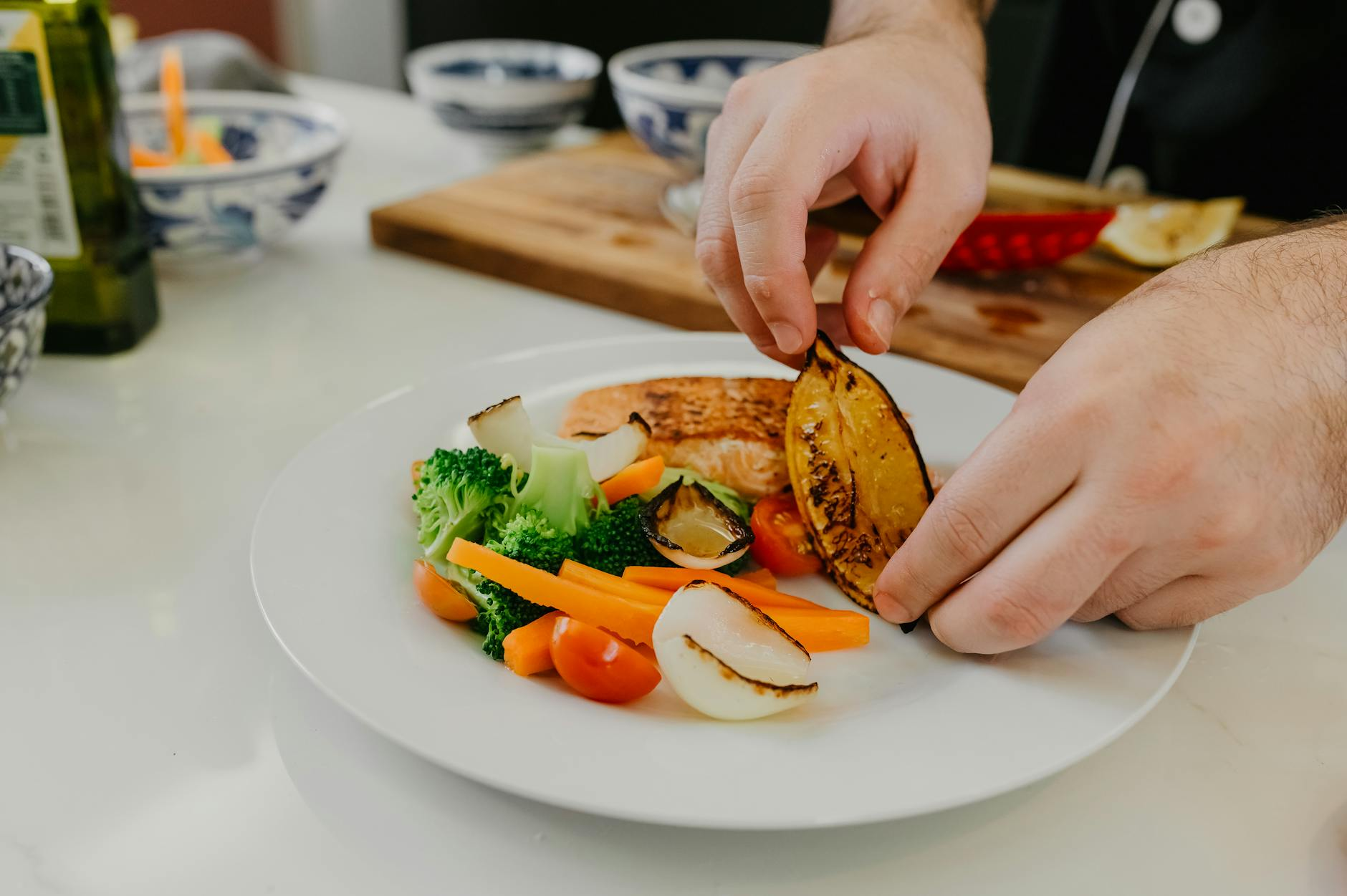
For most adults, that translates to a fist-sized portion of meat, fish, eggs, or tofu plus a starch like rice, potato, oats, or fruit. Whey or casein shakes work equally well, especially when appetite is suppressed after hard sessions. The 2017 ISSN protein position stand by Jäger et al. found whey and casein produce similar 24-hour MPS responses, just on different timelines.
How Important Is the Anabolic Window?
The "30-minute anabolic window" is largely a myth. A 2013 JISSN review by Aragon and Schoenfeld analyzed 20 controlled trials and concluded the post-workout window for maximizing MPS is more accurately 4 to 6 hours wide, not 30 minutes. The trigger is total protein and carb intake around the session, not the exact minute they land.
The window does tighten in one situation: when you have trained fasted for 6+ hours. In that case eating within 60 to 90 minutes after the session genuinely improves recovery, because muscle glycogen and amino acids are depleted simultaneously. If you ate a mixed meal 1 to 3 hours before training, however, amino acids are still circulating and the post-workout meal can wait up to 2 hours with no measurable cost.
How Much Protein Do You Really Need Post-Workout?
Aim for 20 to 40 g of protein per post-workout meal, scaled to body weight at roughly 0.4 g/kg. A 2014 Journal of Nutrition study by Macnaughton et al. compared 20 g and 40 g whey doses after whole-body resistance training and found 40 g produced 20% more MPS in larger lifters (over 80 kg lean mass). For smaller athletes, 20 to 25 g was sufficient.
The bigger lever is total daily protein, not the single dose. The 2018 Morton meta-analysis pinned 1.6 g/kg/day as the threshold where lean mass gains plateau, with diminishing returns above 2.2 g/kg. Distribute that across 3 to 5 meals every 3 to 5 hours for optimal MPS through the day. For practical hitting of these targets, see our protein tracking for beginners guide.
Do You Need Carbs After Training?
Yes for endurance, optional but helpful for strength, and useful even in fat-loss phases. Carbs after training restore muscle glycogen, which fuels the next session and supports recovery. A 2018 Nutrients review by Hearris et al. found that consuming 1.0 to 1.2 g/kg of carbs immediately post-exercise restored glycogen at maximum rate over 4 hours, but slower restoration over 24 hours was unchanged whether carbs came right after the session or with the next normal meal.
In a calorie deficit, you do not need to add carbs specifically post-workout. Hitting daily macro targets with your usual meal pattern is enough for most lifters. Endurance athletes training twice a day are the exception; they benefit from immediate carb refeeding to be ready for the second session. For more on training-specific macros, see our nutrition for fitness goals guide.
Should You Eat Differently for Strength vs Endurance?
Yes, the macro emphasis shifts. Strength sessions are short and largely glycolytic, so total daily protein matters more than peri-workout carbs. Endurance sessions are longer and more glycogen-dependent, so carb timing and intra-workout fuel become important. Both still benefit from a 20 to 40 g protein bookend.
| Goal | Pre-workout focus | During training | Post-workout focus |
| Strength / hypertrophy | 0.5 g/kg carbs + 0.3 g/kg protein, 1-2 h before | Water only for sessions under 90 min | 0.4 g/kg protein + 0.5 g/kg carbs within 2 h |
| Endurance (under 60 min) | 0.5-1.0 g/kg carbs 1-2 h before | Water | Whatever fits the next meal |
| Endurance (over 90 min) | 1.0-1.5 g/kg carbs 2-3 h before | 30-60 g carbs/hour during | 1.0-1.2 g/kg carbs + 25-40 g protein within 1 h |
| Body recomposition | Standard pre-workout meal | Water | Protein-led meal, carbs from daily target |
How Do You Track Workout-Day Nutrition?
The simplest method is to set daily targets, then place a protein-and-carb meal 1 to 3 hours before training and another within 2 hours after. Do not try to log peri-workout nutrition separately. Most apps, including KCALM, let you tag meals as "pre-workout" or "post-workout" so you can review weekly patterns without breaking your daily totals.
Three workout-day rules cover 90% of the benefit:
If you struggle to eat enough on training days because appetite is suppressed after hard sessions, liquid calories (whey shake, milk, smoothies) work well as the immediate post-workout option. Manual logging plus AI-assisted food recognition makes hitting these targets without measuring every gram surprisingly easy. For broader strategy, see our getting started with calorie tracking guide.
Frequently Asked Questions
Do I have to eat before a morning workout?
No, not for sessions under 45 minutes at moderate intensity. For longer sessions or any heavy resistance training, a small carb-and-protein snack 15 to 30 minutes before will improve performance. If you train within 60 minutes of waking and cannot stomach solid food, a whey shake with a piece of fruit is the lowest-friction option and digests quickly enough to fuel the work.
Is fasted cardio better for fat loss?
No. A 2014 Schoenfeld trial directly compared fasted and fed morning cardio at matched daily calories and found no difference in fat loss over 4 weeks. Fasted cardio can suit some people for convenience or appetite reasons, but it does not provide a metabolic edge. For most people fed cardio supports better session quality and equal or better results.
Can I just drink a protein shake instead of eating?
Yes, for the post-workout meal especially. A whey shake with a banana delivers 25 to 40 g protein and 30 g carbs in under 60 seconds, digests faster than solid food, and produces equal long-term muscle gains. The 2017 ISSN protein position stand confirmed whole-food and supplement protein sources produce similar MPS when matched on leucine and total protein. Use whichever is easier to hit your targets.
What if I cannot eat anything before training?
Train anyway. If sessions are under 60 minutes and not maximal effort, fasted training is fine. If sessions are heavy or over 60 minutes, even small intakes help: 100 ml of juice, a date, or a few sips of a sports drink provide 20 to 30 g of carbs and noticeably improve performance. Try liquid options first, since they tolerate well even with low appetite.
Do I need carbs after a workout if I am cutting?
Not specifically post-workout. As long as your daily carb target is hit, your body will refill glycogen over 24 hours regardless of timing. The exception is two-a-day sessions or events under 8 hours apart, where immediate post-workout carbs (1.0 to 1.2 g/kg) accelerate refueling. In a standard cut, distribute carbs across the day with a moderate amount around training.
Should I take BCAAs before training?
Not if you already eat enough protein. A 2017 Frontiers in Physiology paper by Wolfe found BCAAs without other essential amino acids produce a weaker MPS response than whole protein. Whey, eggs, milk, or any 20 to 40 g protein source replaces BCAA supplementation entirely. BCAAs only show benefit in long fasted training sessions, and even then, whey beats them.
Can I drink coffee before a workout?
Yes, and it is one of the most evidence-backed performance aids. A 2021 Sports Medicine meta-analysis by Grgic et al. found caffeine at 3 to 6 mg/kg taken 30 to 60 minutes pre-workout improved strength by 2 to 7% and endurance by 3 to 5%. It does not interfere with protein synthesis or fat oxidation. Black coffee, espresso, or pre-workout supplements all work — total caffeine is what matters.
Does the anabolic window actually exist?
A small window exists, but it is 4 to 6 hours wide, not 30 minutes. The 2013 Aragon and Schoenfeld review found that as long as protein is eaten within several hours of training, MPS is maximized. The window matters most when you train fasted, in which case eating within 60 to 90 minutes post-session is genuinely beneficial. After a normal pre-workout meal, you have hours of grace.
Sources
Ready to track smarter?
Join thousands who use KCALM for calorie tracking. AI-powered food recognition, scientifically-validated calculations, and zero anxiety.
Related Articles
AU Christmas Lunch Calories: Ham, Prawns, Pavlova 2026
What a traditional Australian Christmas lunch costs in kilojoules — leg ham, cooked prawns, roast turkey, pavlova, and a glass of wine at 4,500 to 6,000 kJ per serve. Primary-source AU data from FSANZ AFCD, what 2023 holiday-weight research found across 4,627 participants, and a seven-step tracking playbook for the day inside the 8,700 kJ reference.
NutritionWhy Calorie Apps Overcount Vegetables (And How to Fix It)
Why calorie apps drift on vegetables — peer-reviewed research on database errors and oil absorption, the 7-step logging playbook for accurate AU vegetable tracking, and why the AFCD beats USDA for Australian produce.
NutritionHelloFresh AU Calories: Recipe Labels vs Actual 2026
Verified kilojoule, protein, and sodium figures for HelloFresh Australia recipes in 2026, what 346-recipe and 36-meal AU studies reveal about labelled vs as-cooked accuracy, and a five-rule playbook for tracking HelloFresh meals inside an 8,700 kJ day.