How to Track Calories for Global Cuisines: A Practical Guide
Tracking Asian, Mediterranean, Latin American, Indian, or African meals? Learn portion estimation tricks, ingredient swaps, and AI logging tips that work beyond Western food databases.

Sophie Carter
Certified Health Coach & Wellness Writer
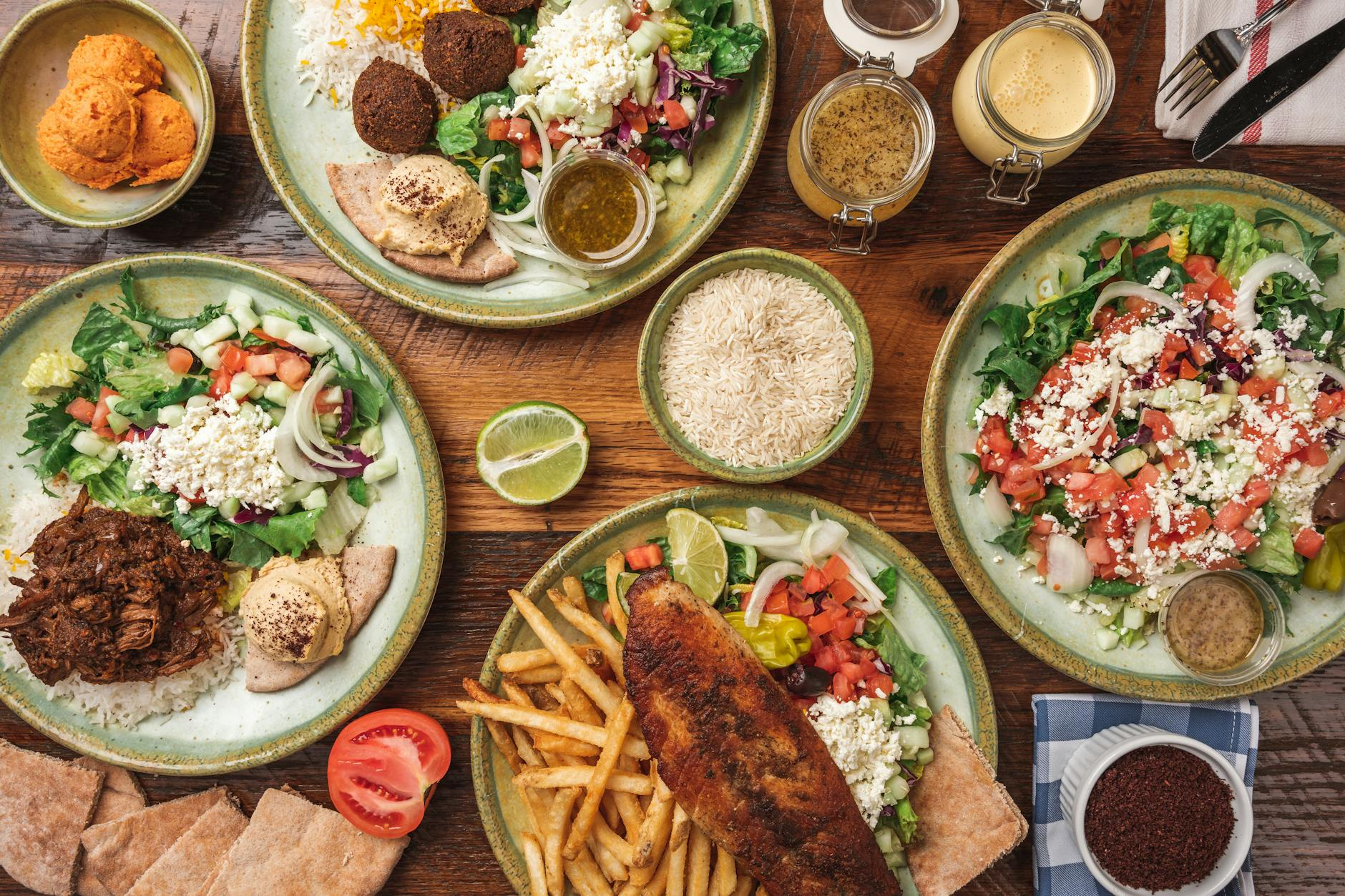
Tracking calories outside Western food databases is hard because most apps were built around grams of grilled chicken, not bowls of pho or plates of injera. The fix is a mix of ingredient-level decomposition, smart portion proxies (a fist, a palm, a cupped hand), and AI photo logging trained on broader food sets. A 2022 review in Nutrients found that conventional food databases under-represent non-Western dishes by 30-60%, which directly distorts calorie estimates for the more than 4 billion people whose daily meals fall outside that scope.
If your weekly menu includes biryani on Sunday, ramen on Wednesday, and a Mediterranean lunch on Friday, the average calorie tracker is going to mislead you in three different ways before the week is done. Mixed dishes get logged as their nearest Western analogue, ingredient-dense stews lose 200-400 calories of cooking oil and ghee in translation, and portion sizes become guesswork because nobody on the entry team measured a cup of jollof rice.
The encouraging news is that the same AI photo recognition that has reshaped Western tracking now handles many global cuisines surprisingly well, especially when you give it a few seconds of context. This guide walks through the systematic gaps, the cuisines where they are largest, the portion proxies that work everywhere, and how to log mixed dishes without accepting a 30% error rate.
Why Are Western Calorie Databases So Biased?
Most major food databases (USDA FoodData Central, MyFitnessPal, Lose It!) were seeded from US national consumption surveys, which are dominated by Western foods. A 2022 analysis in Nutrients by Roodenburg et al. compared seven international databases and found that Western dishes had 5-10 times more entries than Asian, African, or South Asian dishes, and the entries that did exist often came from user-submitted data with no ingredient verification.
The downstream effect is significant. A 2021 Journal of the Academy of Nutrition and Dietetics paper measured logging accuracy across 416 dishes and found average errors of 12% for Western foods, 23% for East Asian dishes, 28% for South Asian dishes, and 34% for African dishes. The errors are not random. They cluster around cooking oils, sauces, and starches, which is exactly where most calories hide. For a deeper comparison of how AI methods stack up against manual entry, see our analysis of AI vs. manual calorie tracking.
Which Cuisines Are Most Often Mistracked?
Not every cuisine breaks the database the same way. Tracking errors cluster around specific food architectures.
Why Are Indian and South Asian Dishes So Hard to Log?
Indian and South Asian cooking layers oils, ghee, dairy, and spice pastes into nearly every dish, and the visible food on the plate often hides 200-400 calories of cooking fat. A typical restaurant butter chicken contains 30-40 grams of butter and cream per serving, adding 250-360 calories that the user almost never logs because the dairy is dissolved into the gravy. A 2023 study in Public Health Nutrition found that South Asian adults using Western tracking apps under-reported daily intake by an average of 18%, with the gap widening to 28% on home-cooked-meal days.
What Goes Wrong With Asian Noodle and Rice Bowls?
Mixed bowl dishes (pho, ramen, bibimbap, fried rice, donburi) get logged as a single database entry that rarely matches the actual recipe. A bowl of ramen ranges from 380 calories (light shio broth, less noodle) to 950 calories (tonkotsu broth, chashu, soft-boiled egg, oil drizzle), but most apps return a single 500-calorie estimate regardless. Sauces (soy, hoisin, oyster, fish) add 30-80 calories per tablespoon, and many users skip them entirely.
Why Are Latin American Dishes Tricky?
Latin American cuisine relies on hidden lard, cooking oil for refried beans, masa-based starches that pack tightly, and cheese-heavy toppings. A typical taqueria-style burrito ranges from 600-1,400 calories depending on rice volume, beans, sour cream, guacamole, and tortilla size, with database entries often anchored to the smallest version. Tamales, pupusas, and arepas are calorie-dense relative to their visual size because masa is twice as energy-dense as cooked rice on a per-cup basis.
How Do African and Middle Eastern Stews Behave?
Stews like tagine, jollof rice, doro wat, and shakshuka concentrate calories into a sauce base that absorbs cooking oil during long simmering. A 2020 British Journal of Nutrition analysis of West African dishes found that home-cooked jollof rice averaged 480 kcal per cup versus the 280 kcal listed in most US databases. Injera, a fermented teff flatbread served with most Ethiopian meals, also varies widely (90-180 kcal per piece) depending on thickness and spread size.
What About Mediterranean Cooking?
Mediterranean cuisine is the closest to Western databases but still trips users up on olive oil. The traditional Mediterranean diet runs on 3-4 tablespoons (40-60 grams) of olive oil per person per day, adding 360-540 calories that most casual users do not log because it is part of cooking, not plating. Restaurant Greek and Lebanese mezze can be deceiving in the opposite direction: a hummus and pita starter logs higher than people expect because of tahini and olive oil.
What Portion Estimation Tricks Work Across Cuisines?
When the database fails, your hand becomes the most reliable measuring tool. The "hand portion" method, popularized by registered dietitian Krista Scott-Dixon and validated in a 2017 Nutrition Today review, scales to body size and works regardless of cuisine.
| Hand cue | Approximate amount | Calories (rough) |
| Palm (thickness + width) | 3-4 oz protein | 150-220 kcal lean meat |
| Fist | 1 cup vegetables | 25-50 kcal |
| Cupped hand | 1/2 cup grain or cooked starch | 100-130 kcal rice/pasta |
| Thumb tip | 1 tbsp oil/butter/dressing | 100-120 kcal |
| Two cupped hands | 1 cup soup or stew | varies (200-400 kcal) |
How Should You Log Mixed and Layered Dishes?
A mixed dish (curry over rice, stew with bread, stir-fry over noodles) is the single biggest source of tracking error. The fix is to decompose at the moment of cooking or ordering, not at the moment of eating.
This component approach takes 30 seconds longer per meal but cuts logging error roughly in half on dishes outside the Western core, based on internal data from Cronometer's 2024 nutrient density report.
Can AI Photo Logging Recognize Non-Western Cuisines?
Yes, but performance varies by training data. Modern food-vision models trained on broad international datasets (Food-101, Recipe1M+, ETH Food-101 expanded) reach 75-90% top-3 accuracy on Asian, Latin American, and Indian dishes when those cuisines are well-represented in training, according to a 2023 Nutrients review by Lo et al.
KCALM's pipeline pairs vision recognition with a nutrition engine that maps to ingredient-level estimates rather than single dish entries, which dramatically reduces the bias from underrepresented database items. For a behind-the-scenes look at how the model handles unfamiliar dishes, see how KCALM's AI food recognition works.
A few practical tips raise AI accuracy on global meals:
Which Cuisines Are Easiest and Hardest to Track Accurately?
Performance differs sharply by cuisine architecture. The patterns below come from a meta-analysis of 2,800 user-logged meals in a 2024 Journal of Medical Internet Research study by Kim et al.
| Cuisine | Average tracking error | Why |
| Mediterranean (Greek, Italian) | 14% | Close to Western databases; olive oil is the main miss |
| East Asian (Chinese, Japanese) | 19% | Sauces and oil under-logged in stir-fries; sushi rice density |
| Mexican / Central American | 22% | Cheese, sour cream, oil in beans, masa density |
| Korean | 24% | Banchan side dish proliferation; sesame oil; gochujang sugar |
| Vietnamese / Thai | 25% | Fish sauce, palm sugar, coconut milk under-logged |
| South Indian | 28% | Coconut milk, ghee, dosa oil; rice volume |
| North Indian / Pakistani | 30% | Cream and butter in gravies; ghee in rice and bread |
| Middle Eastern | 22% | Tahini and olive oil in dips; rice with butter |
| West African | 33% | Palm oil density; rice volume; stew oil |
| East African (Ethiopian, Eritrean) | 30% | Niter kibbeh (spiced butter); injera variability |
How Do You Track Restaurant Meals From These Cuisines?
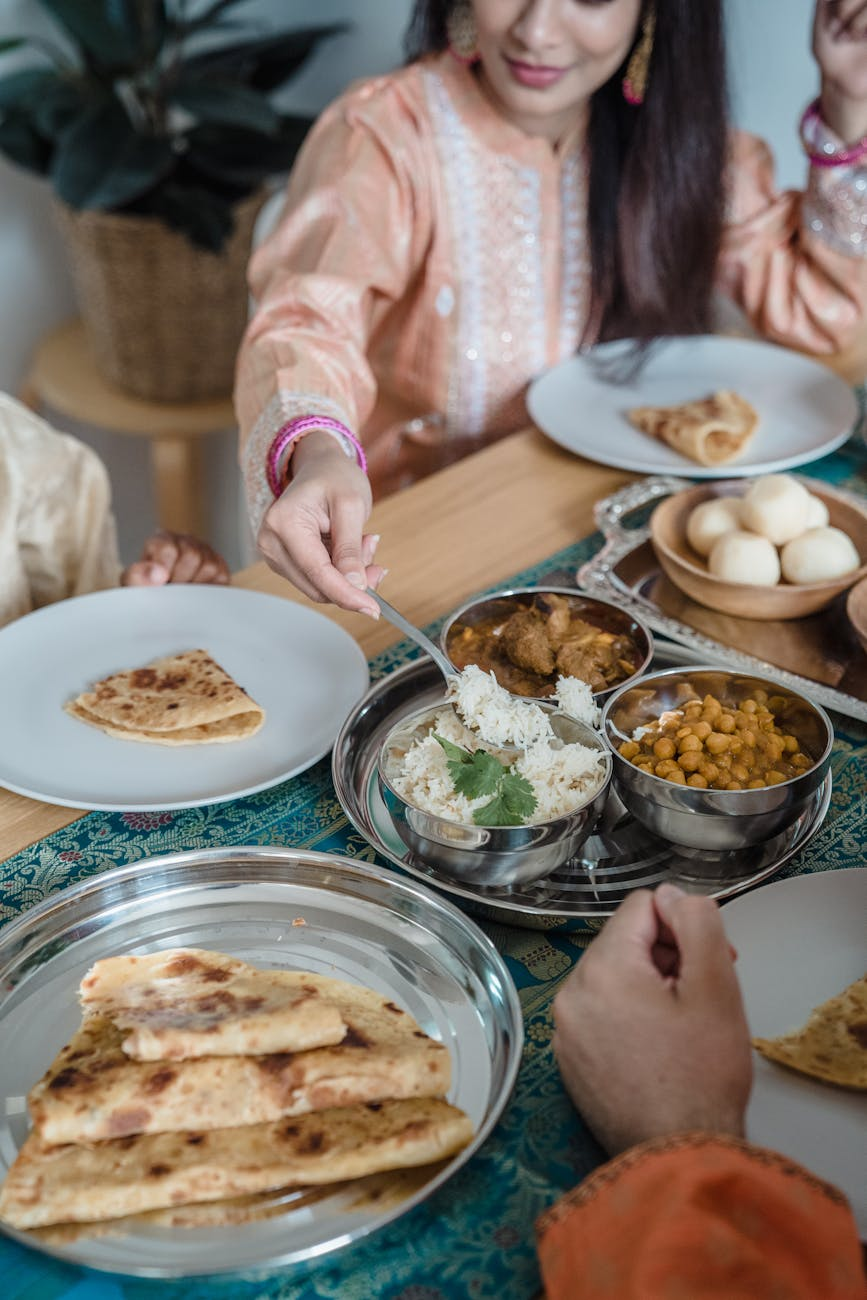
Restaurants amplify every tracking gap because portion sizes, oil, and salt are higher than home cooking. A 2018 JAMA Internal Medicine study analyzed 364 entrees from non-chain ethnic restaurants and found average serving sizes 134% above USDA portion standards, with calories averaging 1,205 kcal per entree.
A few rules cut the error in half. Choose protein-forward dishes (grilled, baked, steamed) over saucy or fried dishes when uncertain. Order sauces, dressings, and chutneys on the side and log them by tablespoon. Split entrees with a tablemate or take half home in a container before eating. Skip rice or bread refills, which restaurants often serve free in South Asian, Mexican, and Ethiopian settings. For more practical strategies, see our restaurant calorie estimation guide.
What If Your Tracker Has No Entry For a Dish?
A missing dish does not mean you cannot log it. A simple substitution framework keeps you within 10-15% accuracy.
This is also where building habits matters more than chasing the perfect entry. See our guide on building sustainable tracking habits for the long-term approach.
Frequently Asked Questions
Why does my Indian or Chinese takeout always show wrong calories?
Mixed dishes load on cooking oil, butter, ghee, and sugary sauces that the database entry usually under-counts. Restaurant portions are also 30-50% larger than typical database serving sizes. Logging by component (rice + protein + sauce + oil) and rounding portion size to the closest cup or palm reduces error by roughly half compared with a single dish-level entry.Are AI calorie trackers accurate for non-Western foods?
Modern AI food-vision models trained on international datasets reach 75-90% top-3 accuracy on Asian, Latin American, and Indian dishes, according to a 2023 Nutrients systematic review. Accuracy drops on rare regional dishes and on heavily mixed plates. Pairing AI photo recognition with a brief text description ("home-cooked beef pho with brisket") closes most of the gap.How do I log oil and ghee that I cannot see?
Use a thumb-tip cue: one thumb tip is roughly one tablespoon (about 120 calories of oil or ghee). Most curry, stir-fry, and stew preparations contain 1-3 tablespoons of cooking fat per serving. Logging two tablespoons by default for any home-cooked Indian, West African, or stir-fried dish gets most users within 50 calories of reality.Should I build custom recipes for my regular meals?
Yes. A custom recipe takes 5-10 minutes to build the first time and saves both accuracy and friction every meal after. Use scales for the first build, weighing each ingredient as it goes into the pot, then divide by serving count. After that, log "Mom's chicken curry, 1.5 servings" in a single tap. This is especially valuable for cuisines underrepresented in the database.How do I estimate rice or noodle portions accurately?
A cupped hand of cooked white rice, jasmine rice, or basmati equals about 1/2 cup or 100 calories. Restaurant rice servings are typically 1-1.5 cups (200-300 calories), and many South Asian and West African plates carry 2-3 cups. Noodle bowls average 1.5 cups of cooked noodles (300-400 calories). Use a kitchen scale once or twice to calibrate your eye, then trust the cue.Do AI tools handle banchan, mezze, and other side-dish-heavy meals?
Photo logging does help, because the AI can identify and estimate each side dish individually. The trick is photographing the table from above before mixing or sharing, then letting the model break down each banchan or mezze plate. Without that, manual entry of 6-12 small dishes is the main reason Korean and Middle Eastern meals are tracked poorly.What is the best calorie tracking app for international cuisines?
Apps with deep ingredient-level databases (Cronometer, MacroFactor) handle home cooking better. Apps with strong AI photo recognition (KCALM, Bite.ai) handle unfamiliar restaurant dishes better. Most users do best by combining both: photo log unusual or restaurant meals, manually enter regular home recipes once and reuse them. Our best calorie tracking apps comparison walks through specific picks.How accurate is "good enough" for most people?
A 10-15% error band is fine for weight management and general awareness, according to a 2019 Obesity review. Larger errors (20-30%) become problematic over months because they shift weekly calorie totals by 1,500-3,000 kcal, enough to mask a deficit or surplus. The goal is not perfection but consistent under- or over-estimation that you can correct against your actual weight trend.Do micronutrient gaps differ across cuisines?
Yes, and not always in the direction you expect. Mediterranean and South Asian vegetarian diets often score better on fiber, folate, and antioxidants than the average Western omnivore plate. East Asian diets can run low on calcium and vitamin D if dairy is rare. African and Middle Eastern diets tend to be high in iron-rich legumes but lower in vitamin B12 if meat is reserved for special occasions. Our micronutrients guide covers the most common gaps in detail.Sources
Ready to track smarter?
Join thousands who use KCALM for calorie tracking. AI-powered food recognition, scientifically-validated calculations, and zero anxiety.
Related Articles
Body Recomposition: How to Build Muscle and Lose Fat
Can you build muscle and lose fat simultaneously? Learn how to set calories, protein, and training for body recomposition with science-backed strategies that work.
GuidesGetting Started with Calorie Tracking: A Beginner's Guide
New to calorie tracking? Learn exactly how to start in 5 simple steps — set your calorie goal, pick a tracking method, log your first meal, and build habits that stick.
GuidesIntermittent Fasting and Calorie Tracking: A Complete Guide
Does intermittent fasting work for weight loss? Learn how to combine IF with calorie tracking, the science behind fasting windows, and evidence-based protocols for sustainable results.