HelloFresh AU Calories: Recipe Labels vs Actual 2026
Verified kilojoule, protein, and sodium figures for HelloFresh Australia recipes in 2026, what 346-recipe and 36-meal AU studies reveal about labelled vs as-cooked accuracy, and a five-rule playbook for tracking HelloFresh meals inside an 8,700 kJ day.

Sophie Carter
Certified Health Coach & Wellness Writer

HelloFresh Australia recipe cards list a median 2,840 kJ (678 kcal) per serve across 346 recipes, with 44 g of protein and 839 mg of sodium, according to a 12-month University of South Australia analysis published in 2021. Independent kitchen-prepared analyses put the as-cooked figure closer to 3,680 kJ (881 kcal) per serve — driven mainly by the "add oil and butter" steps the recipe assumes you follow. Tracking the card number, not the as-cooked number, can understate a single meal by 600 to 900 kJ.
HelloFresh has become Australia's biggest meal kit by a comfortable margin, shipping millions of dinners a year against an 8,700 kJ menu-label reference that most subscribers never personally calculate. The recipe card prints calories, protein, carbs, fat, and sodium for each meal — useful data, more than most home-cooked plates ever get tagged with. The catch is that the card lists the recipe as written, not always what lands on the plate after the "drizzle of oil," "knob of butter," and "season generously" instructions. This guide is the 2026 AU calorie and protein database for HelloFresh recipes, with the peer-reviewed research on how the labelled numbers compare to the cooked reality, and a practical playbook for tracking meal kit nights inside a calorie target.
The figures below come from three Australian academic analyses — Curtain and Grafenauer in Nutrients (2019), Moores and colleagues in Health Promotion International (2021), and a structured Australian meal-kit review in Public Health Nutrition (2023) — plus HelloFresh's own published recipe data. Where label data and kitchen-tested data diverge, you may want to track the as-cooked figure if you are aiming for a tight deficit.
What does a typical HelloFresh Australia recipe contain per serve?
A 12-month analysis of 346 HelloFresh Australia recipes published in 2021 found a median 2,840 kJ (678 kcal) per serve, 44 g of protein, 58 g of carbohydrate, and 28 g of total fat. Median serve weight was 580 g. Macronutrient distribution sat at 38 percent fat, 34 percent carbohydrate, 25 percent protein, and 11 percent saturated fat.
The Moores 2021 study is still the largest single look at HelloFresh AU labelled nutrition data. The team at the University of South Australia extracted nutritional figures for every HelloFresh recipe ordered through the AU site between July 2017 and June 2018 — 346 total recipes, 251 unique dishes — and compared them against the Australian Dietary Guidelines. The headline finding: HelloFresh's labelled energy per serve was reasonable for a main meal, the protein figure consistently exceeded the per-meal target, and sodium was the macronutrient that varied most wildly between recipes.
Here is what the published recipe data looks like in 2026, drawn from HelloFresh AU's current online nutrition information and grouped by recipe style:
| Recipe style | Typical kJ/serve | Typical kcal/serve | Protein (g) | Sodium (mg) | Approx. serve weight |
| Calorie-Smart pork or chicken stir-fry | 2,400 | 574 | 38 | 1,100 | 520 g |
| Calorie-Smart beef rice bowl | 2,600 | 622 | 42 | 1,250 | 540 g |
| Family classic chicken parmigiana | 3,800 | 909 | 52 | 1,650 | 600 g |
| Family classic beef burger and chips | 4,200 | 1,004 | 48 | 1,800 | 620 g |
| Veggie ricotta gnocchi | 3,100 | 741 | 24 | 1,200 | 540 g |
| Quick 20-minute teriyaki chicken | 2,900 | 694 | 41 | 1,400 | 550 g |
| Premium steak with potato gratin | 3,900 | 933 | 46 | 1,500 | 580 g |
| Slow-cooked Mexican beef bowl | 3,300 | 789 | 44 | 1,300 | 600 g |
A practical note on the 580 g median serve weight from Moores 2021 — that is heavier than the typical 350 g supermarket ready meal. HelloFresh portions are designed to be filling, with a higher vegetable share, which is one reason kilojoules per serve run higher than ready meal averages. The Coles and Woolworths ready meals database covers the supermarket comparison in detail.
How accurate are HelloFresh recipe card kilojoules in 2026?
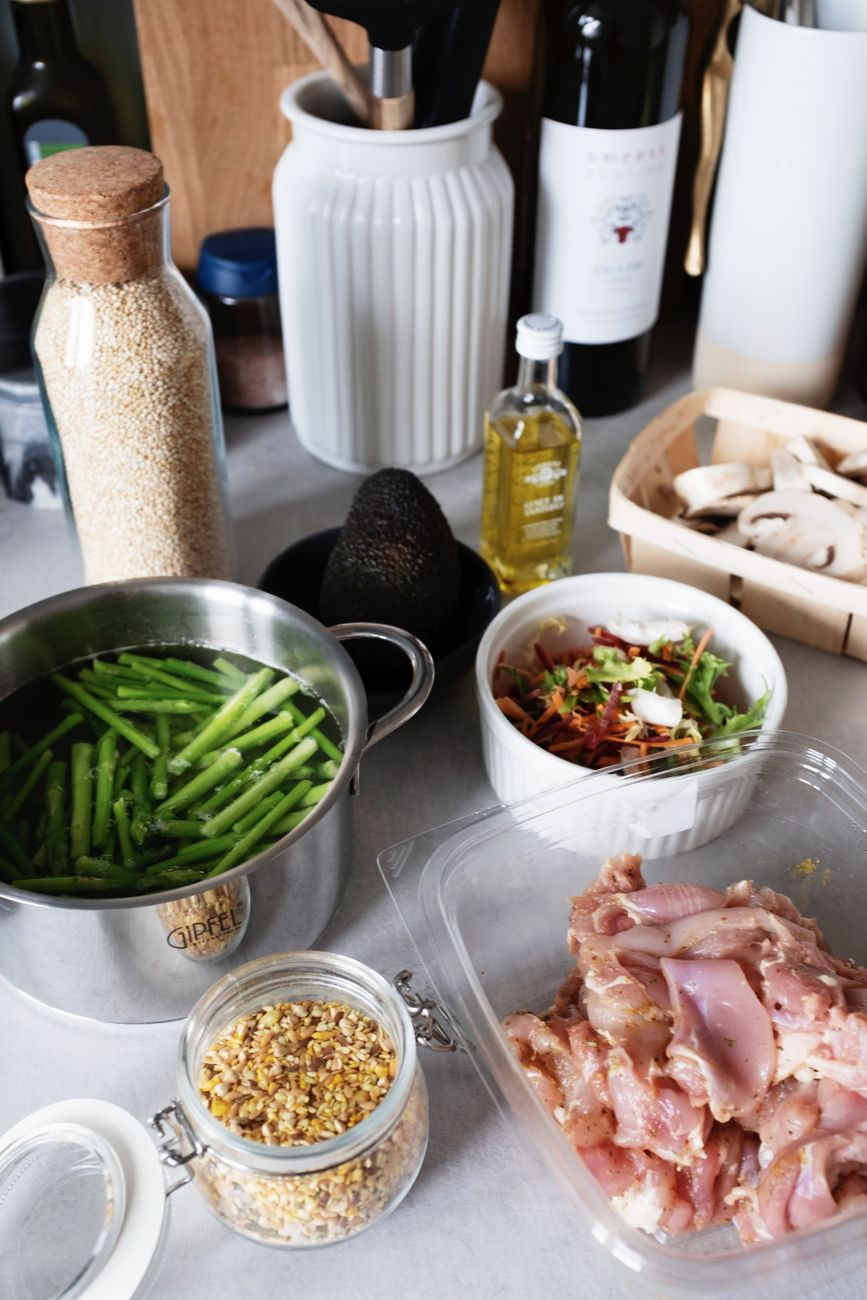
HelloFresh AU recipe cards list nutrition figures calculated from a software database (FoodWorks) against the printed ingredient list, not measured from a cooked plate. Independent kitchen analyses found cooked meals ran 800 to 850 kJ higher than the labelled equivalent on average — about 25 to 30 percent over the card. The gap is driven by added cooking oil, butter, and salt that the recipe instructs but does not always tally.
The label-versus-actual gap is the most useful single fact about meal kit tracking. Curtain and Grafenauer published the original Australian meal-kit nutrition analysis in Nutrients in 2019, using FoodWorks software to analyse 12 HelloFresh recipes from four weekly boxes. Their finding: 3,683 ± 787 kJ per serve, 38.9 g of protein, 53.4 g of fat (52 percent of energy), and 16.7 g of saturated fat. A 2023 structured review in Public Health Nutrition repeated the exercise on 36 prepared meals (18 HelloFresh, 18 Marley Spoon) and landed on 3,676 ± 696 kJ per serve, 48 g protein, 46 g fat, and 10 g fibre — almost identical to Curtain.
Both numbers sit roughly 800 to 850 kJ above the Moores 2021 label-database median of 2,840 kJ. The gap is consistent across two independent research teams and two different years, so it is a real pattern, not a measurement quirk.
| Source | Methodology | Median energy/serve | Protein | Sodium |
| Moores 2021 (label data) | 346 HelloFresh AU recipes, label nutrition | 2,840 kJ | 44 g | 839 mg |
| Curtain 2019 (kitchen analysis) | 12 recipes, FoodWorks ingredient analysis | 3,683 kJ | 39 g | 1,426 mg |
| Public Health Nutrition 2023 | 18 HelloFresh meals, prepared and analysed | 3,676 kJ | 48 g | 1,256 mg |
| Label-to-kitchen variance | — | +800 to +850 kJ | similar | +400 to +600 mg |
This does not mean the recipe card is "wrong" in a regulatory sense — it means the card describes the recipe as listed, while your plate is the recipe as cooked. The NUTTAB vs USDA database analysis explains how database choice affects every calorie estimate, and the same principle applies inside a meal kit recipe.
For tracking purposes, the most honest single-step adjustment is to add 600 to 900 kJ per serve to the printed card figure when you have followed the oil-and-butter instructions as written. If you cooked dry — air-fryer instead of pan-sear, no finishing butter, no extra salt — you can trust the card. Most subscribers fall in between.
Why are HelloFresh AU meals so high in sodium?
The 2019 Curtain study found HelloFresh AU meals carried 1,426 mg of sodium per serve — almost double the meal-kit competitor average and roughly 71 percent of the NHMRC suggested dietary target of 2,000 mg per day. The 2023 review repeated the finding at 1,256 mg per serve. Most of the sodium comes from instructed "season generously" steps and added pantry sauces (soy, stock cubes, hard cheese, BBQ sauce).
Sodium is the AU meal kit category's biggest unsolved nutrition problem, and HelloFresh consistently runs higher than its competitors. Curtain and Grafenauer compared five AU meal kit services in 2019 — Dinnerly, HelloFresh, MarleySpoon, Pepper Leaf, and Thomas Farms Kitchen — and found HelloFresh meals contained almost twice the sodium of the next-highest service. The team noted recipes instructed cooks to add salt more than twice on average per recipe.
The Heart Foundation of Australia recommends adults eat no more than 5 g of salt a day, equivalent to about 2,000 mg of sodium. The typical Australian eats around 9 g of salt — roughly 3,600 mg of sodium — almost double the recommendation. A single HelloFresh meal at 1,426 mg of sodium puts you at 71 percent of the suggested daily target in one sitting.
Here is how a HelloFresh meal compares to the recommended daily sodium target and to typical Australian intake:
| Reference | Sodium (mg/day) | One HelloFresh meal as percent |
| NHMRC suggested dietary target | 2,000 | 71 percent |
| NHMRC adequate intake | 460-920 | 155-310 percent |
| Heart Foundation recommendation | 2,000 | 71 percent |
| Typical Australian intake (actual) | 3,600 | 40 percent |
| WHO recommended upper limit | 2,000 | 71 percent |
You can lower the sodium load without changing meal kits. Practical swaps that work:
The hydration and weight loss guide covers why sodium and water balance interact for people tracking weight on the scale.
Are HelloFresh meals worth it for fat loss in Australia?
Yes for adherence, but with caveats. A pre-portioned HelloFresh meal removes the eyeballing error that pushes home-cooked plates 20 to 30 percent over their estimated calories, which research suggests is the single biggest predictor of weight loss success. The catches are the high sodium load, the heavy reliance on cooking oils, and the per-serve cost (~$30 more weekly than equivalent supermarket ingredients per the 2023 review).
The case for meal kits on a deficit is about consistency, not virtue. A 2,900 kJ chicken stir-fry from HelloFresh is not nutritionally superior to a 2,900 kJ home-cooked plate, but it removes the friction of planning, shopping, and weighing at the moment when the deficit is hardest to keep. Research suggests adherence — the share of weeks you actually run the prescribed deficit — predicts long-term weight loss outcomes far better than which specific diet pattern you chose.
The getting started with calorie tracking guide covers the first-two-weeks accuracy work. The calorie tracking versus intuitive eating discussion covers the longer-term decision about whether tracking remains necessary at all. The healthy eating on a budget guide puts the per-serve cost of meal kits in perspective alongside whole-food cooking.
A five-rule playbook for using HelloFresh on a calorie deficit:
A practical caveat on portion sizes: HelloFresh "2-person" portions are designed for two adult dinner servings. The 2023 review found typical serve weight at 580 g, which is a generous portion. If you eat slowly and notice you are satisfied at 70 percent, log 70 percent — not the full card figure.
How do HelloFresh meals compare to Coles and Woolworths ready meals?
HelloFresh meals run roughly 1,000 to 1,500 kJ higher per serve than typical Coles and Woolworths chilled ready meals (2,840 kJ median labelled, 3,680 kJ as-cooked, versus 1,649 kJ for the supermarket median). Protein is similar (44 g vs 19 g median, but premium ready meals match HelloFresh at 35 to 50 g). Sodium is higher in HelloFresh (839 to 1,426 mg vs 784 mg median for ready meals). Per-serve cost favours ready meals by about $5 to $8.
The cross-category comparison helps you pick the right tool for the night. HelloFresh wins on freshness, vegetable serves (3.1 per meal per Curtain 2019, versus around 1.0 to 1.5 in most ready meals), and cooking-skill development. Ready meals win on energy precision, lower sodium, lower price, and zero prep time. Both beat takeaway on calorie-tracking accuracy by a wide margin — the AU chain restaurant calorie guide covers the eating-out comparison.
Here is a fair side-by-side using published 2026 nutrition data for a single dinner:
| Dinner option | Energy/serve | Protein | Sodium | Prep time |
| HelloFresh Calorie Smart stir-fry | 2,400 kJ (label) / 3,100 kJ (cooked) | 38 g | 1,100 mg | 25 min |
| HelloFresh Family Classic burger | 4,200 kJ (label) / 5,000 kJ (cooked) | 48 g | 1,800 mg | 35 min |
| Strength Meals Co chilled chicken | 1,260 kJ | 33 g | 540 mg | 5 min |
| Woolworths Macro Beef Lasagne | 1,520 kJ | 22 g | 700 mg | 5 min |
| Guzman y Gomez chicken burrito bowl | 2,500 kJ | 38 g | 1,250 mg | 0 min |
Frequently Asked Questions
Are HelloFresh AU recipe card calories accurate?
The card is accurate as a software estimate against the printed ingredient list, but independent kitchen analyses found cooked meals ran 800 to 850 kJ higher than the labelled equivalent. The gap is driven mainly by added cooking oil, butter, and salt that the recipe instructs but does not always tally. If you followed the oil and butter steps as written, adding 600 to 900 kJ to the card figure is a reasonable adjustment for tracking purposes.
How many calories are in a HelloFresh Australia meal in 2026?
The median HelloFresh AU recipe lists 2,840 kJ (678 kcal) per serve, according to a 12-month analysis of 346 recipes published in 2021. As-cooked figures from independent kitchen analyses ran around 3,680 kJ (881 kcal) per serve. Individual recipes range from roughly 2,200 kJ for Calorie Smart options to 4,200 kJ or more for Family Classic meals.
Why is HelloFresh so high in sodium?
A 2019 study in Nutrients found HelloFresh AU meals contained almost twice the sodium of competing meal kit services — 1,426 mg per serve versus competitor averages around 700 to 900 mg. Most of the sodium comes from the included pantry sauces (soy, stock cubes, hard cheese, BBQ sauce) and the "season generously" salt steps. Halving the included sauce and skipping the seasoning step typically drops sodium by 30 to 50 percent.
Does HelloFresh help with weight loss in Australia?
It can. A pre-portioned meal removes the eyeballing error that pushes home-cooked plates 20 to 30 percent over their estimated calories, and research suggests adherence — running the prescribed deficit consistently — predicts weight loss outcomes more than diet pattern. The catches are HelloFresh's high sodium load and the per-serve cost. The Calorie Smart range, designed to land between 2,200 and 2,700 kJ per serve, is the easiest fit for an 8,700 kJ day.
How does HelloFresh compare to Coles and Woolworths ready meals?
HelloFresh meals run roughly 1,000 to 1,500 kJ higher per serve than typical chilled ready meals (2,840 kJ labelled, 3,680 kJ cooked, versus 1,649 kJ for the AU supermarket median). Sodium is higher (839 to 1,426 mg versus 784 mg median for ready meals). Protein is similar at the premium end of both categories. Per-serve cost favours ready meals by about $5 to $8. HelloFresh wins on freshness and vegetable serves; ready meals win on energy precision and lower sodium.
How much sodium is in a HelloFresh meal?
Two independent Australian analyses found HelloFresh meals carried 1,256 to 1,426 mg of sodium per serve as cooked — about 63 to 71 percent of the NHMRC suggested dietary target of 2,000 mg per day. Recipe cards typically list a lower figure (839 mg median in the Moores 2021 study), reflecting the recipe as written rather than as cooked with included sauces and "season generously" steps.
Are HelloFresh portions big enough for active adults?
The 2023 review found typical HelloFresh serve weight at 580 g, which is generous for a single dinner. Protein runs at 44 to 48 g per serve as cooked, which exceeds the per-meal target of 30 to 40 g for muscle protein synthesis. For active adults at higher maintenance calories (10,500 kJ or more per day), one HelloFresh serve plus a small side typically fills the dinner slot adequately. The pre and post-workout nutrition guide covers how to slot meal kit dinners around training.
Sources
Ready to track smarter?
Join thousands who use KCALM for calorie tracking. AI-powered food recognition, scientifically-validated calculations, and zero anxiety.
Related Articles
Coles vs Woolworths Ready Meals: AU Calorie Database 2026
Verified kilojoule, protein, and sodium figures for Coles and Woolworths frozen and chilled ready meals in 2026, plus what 631-meal AU research reveals about Health Star Ratings, salt, and what actually feeds a fat-loss plan.
NutritionSchooner, Pint, Pot, Middy: AU Beer Calorie Guide 2026
Verified kilojoule and calorie figures for a schooner, pint, pot, middy, and jug of Australian beer at full strength, mid strength, and light, with state-by-state naming and how to track them in a calorie app.
NutritionNUTTAB vs USDA: Why Your AU Calorie App Is Probably Wrong
Most calorie apps pull from the USDA database, not Australia's NUTTAB (now AFCD). Here is what that means for accuracy in kilojoules, micronutrients, and AU-specific foods — plus how to fix it.