CGM vs Calorie Tracking: 2026 Fat Loss Trial Review
Over-the-counter CGMs from Dexcom Stelo and Abbott Lingo cost roughly USD 89 per month, but the 2024 Jarvis meta-analysis of 25 RCTs and 2,996 participants found CGM produced a non-significant minus 0.7 kg weight change versus controls. A 2025 Bannuru meta-analysis in Type 2 diabetes found CGM plus nutrition education produced 2.06 kg extra loss, while a 2023 Hengist duplicate-meal study reported ICCs of 0.14 to 0.31 in adults without diabetes. What the evidence actually shows, why calorie tracking still wins on cost per kilogram lost, and how to decide between the two in 2026.

Sophie Carter
Certified Health Coach & Wellness Writer
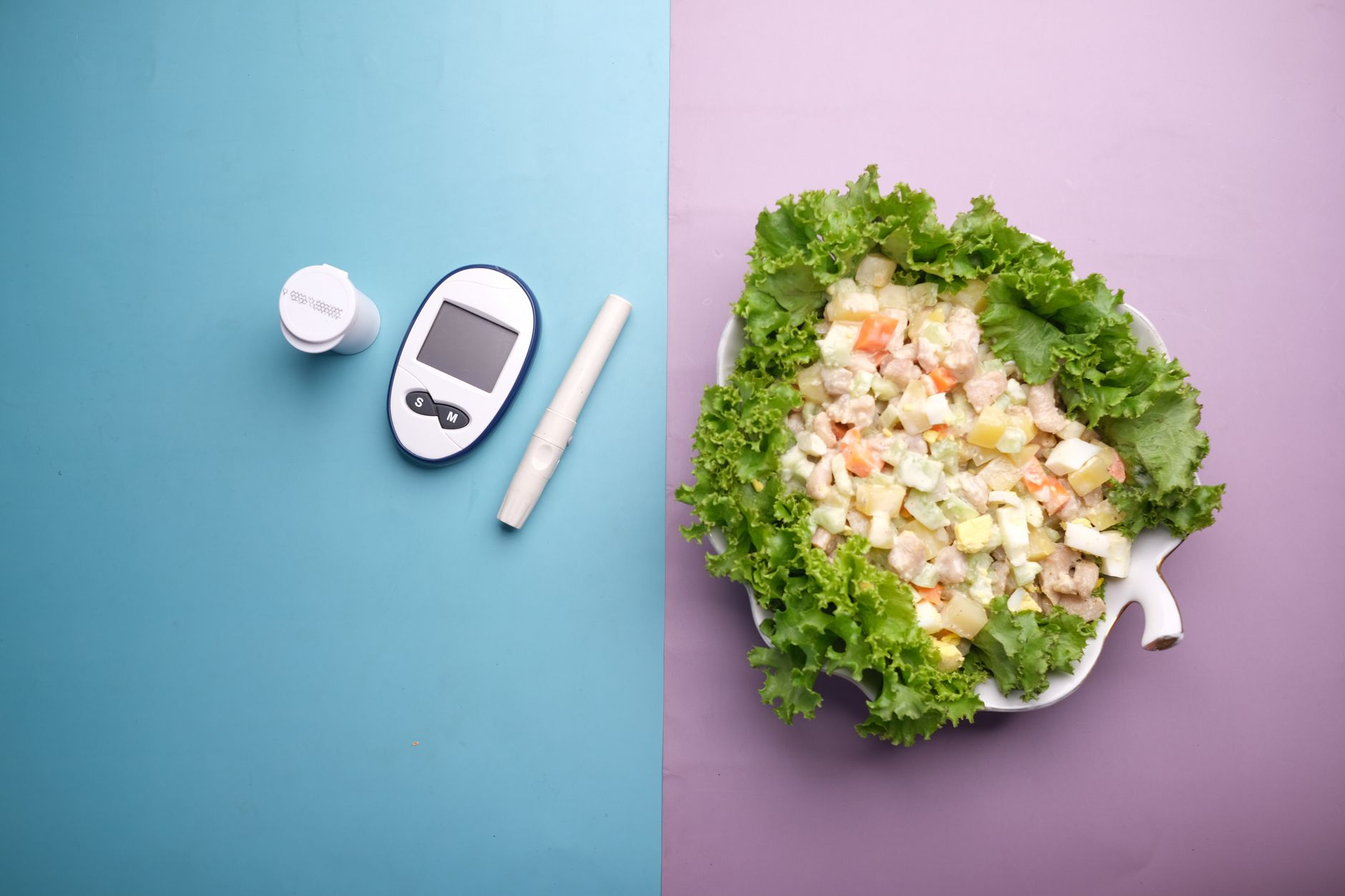
Over-the-counter continuous glucose monitors from Dexcom Stelo and Abbott Lingo cost roughly USD 89 per month, but the 2024 Jarvis meta-analysis of 25 RCTs and 2,996 participants found CGM produced a non-significant minus 0.7 kg change in weight (95 percent CI minus 1.4 to 0.0). The 2025 Bannuru meta-analysis in Type 2 diabetes reported 2.06 kg extra loss when CGM was paired with nutrition education. For adults without diabetes, the 2023 Hengist duplicate-meal study measured intra-class correlations of 0.14 to 0.31 — well below the 0.5 reliability threshold most personalized-nutrition apps assume.
If you have opened Instagram in 2026 and seen a wellness creator explain why their new Dexcom Stelo or Abbott Lingo sensor is the reason they finally cracked fat loss, you have met the fastest-growing category in consumer health tech. Continuous glucose monitors (CGMs) went over the counter in the United States in 2024, and the marketing has been aggressive. This guide unpacks what the 2024 to 2025 peer-reviewed evidence actually shows about CGMs versus calorie tracking for fat loss, why the reliability data is weaker than the marketing implies, and how to decide which tool matches your goals in 2026.
The sources below come from peer-reviewed work in Diabetologia (Jarvis and colleagues 2024 meta-analysis of 25 RCTs), the Journal of Diabetes Science and Technology (Bannuru and colleagues 2025 CGM plus lifestyle meta-analysis in Type 2 diabetes), The American Journal of Clinical Nutrition (Merino and colleagues 2022 ZOE PREDICT validity study), medRxiv (Hengist and colleagues 2023 duplicate-meal reliability preprint by Kevin Hall's group), Nutrition and Metabolism (González-Rodríguez and colleagues 2019 non-diabetic postprandial glucose study), and Cureus (Ahmed and colleagues 2025 systematic review of CGM in non-diabetics for cardiovascular prevention). Where the effect size depends on the population — Type 2 diabetes versus non-diabetic — the range is presented rather than a single point estimate.
Does wearing a CGM cause weight loss on its own?
In adults without diabetes, wearing a CGM alone does not produce meaningful weight loss. The 2024 Jarvis meta-analysis of 25 RCTs and 2,996 participants — the largest synthesis to date — reported a minus 0.7 kg weight change (95 percent CI minus 1.4 to 0.0, p = 0.066) and a minus 0.4 kg per m² BMI change (95 percent CI minus 0.9 to 0.0, p = 0.080). Both effects failed to reach statistical significance. Where CGM does move weight is when it is paired with structured nutrition education in Type 2 diabetes — the 2025 Bannuru meta-analysis of 21 RCTs and 2,734 adults documented 2.06 kg extra loss (95 percent CI minus 3.74 to minus 0.38) in that specific context.
The Jarvis paper matters because it is the reference the 2026 consumer market is largely ignoring. It pooled 25 randomized trials across Type 2 diabetes, Type 1 diabetes, gestational diabetes, and overweight or obesity populations, and asked the direct question: does giving people CGM feedback change body weight compared to control? The pooled answer was no — the weight and BMI effects were both non-significant, with confidence intervals that included zero.
Where CGM did move outcomes was in glycemic markers: HbA1c fell by 0.28 percent (95 percent CI 0.15 to 0.42) and time in range rose by 7.4 percent (95 percent CI 2.0 to 12.8). Those are meaningful diabetes outcomes. They are not weight-loss outcomes, and no calorie tracker is trying to compete with them.
The Bannuru 2025 review looked specifically at CGM plus nutrition education in Type 2 diabetes and found a different result: 2.06 kg extra weight loss, HbA1c minus 0.46 percent, and time-in-range plus 7.18 percent. The Bannuru findings are the closest published evidence to the "CGM as a weight-loss tool" claim — but they apply to adults with Type 2 diabetes who received structured education alongside the sensor, not to healthy adults wearing a Stelo for wellness. The best calorie tracking apps comparison covers the tool category most non-diabetic adults are actually choosing between.
How does CGM compare to calorie tracking in randomized trials?
No head-to-head RCT has directly compared CGM-guided eating to calorie tracking for fat loss in healthy adults as of mid-2026. The closest evidence comes from the Jarvis pooled analysis (CGM versus control, minus 0.7 kg non-significant) and observational calorie-tracking data showing 3 to 5 percent body-weight loss at 12 months for consistent users. The absence of a direct head-to-head is itself informative — the CGM industry has run large glycemic-outcome trials without commissioning a matched-calorie fat-loss comparison against a free calorie tracker.
A side-by-side comparison of what the published research actually reports for each tool:
| Tool | Best-evidence 12-month weight change | Study type | Cost per year (USD) |
| CGM alone (non-diabetic) | minus 0.7 kg (non-significant) | Jarvis 2024 meta, 25 RCTs, n=2,996 | ~1,070 (Stelo at 89/month) |
| CGM plus nutrition education (T2D) | minus 2.06 kg (significant) | Bannuru 2025 meta, 21 RCTs, n=2,734 | ~1,070 plus program cost |
| MyFitnessPal Premium | minus 3 to 5 percent body weight | Long-term cohort data | 79.99 |
| Free calorie tracker (KCALM, MyFitnessPal free) | minus 3 to 5 percent body weight | Long-term cohort data | 0 |
The one context where CGM outperforms calorie tracking on cost-effectiveness is medically indicated glycemic management — Type 1 diabetes, insulin-dependent Type 2 diabetes, and reactive hypoglycemia. Outside that clinical band, the evidence for CGM as a weight-loss tool does not yet support the marketing.
Where does CGM add real value?
CGM adds genuine value in three contexts that calorie tracking cannot replicate: clinically indicated glucose management (Type 1 and insulin-treated Type 2 diabetes), behaviour experiments over 2 to 4 weeks (learning your own postprandial patterns), and exercise-timing optimization around meals. The 2025 Ahmed systematic review of 7 studies and 1,127 non-diabetic participants documented that walking initiated 20 minutes before individual postprandial glucose peak reduced 4-hour glucose area under the curve by 0.6 mmol per litre per hour (p = 0.047) and insulin by 28.7 percent (p less than 0.001). Those are effects a calorie tracker cannot generate.
CGM's real strengths are informational, not weight-loss. For an adult without diabetes wearing a Stelo or Lingo for 14 to 28 days, three concrete outputs are typical:
- Postprandial pattern mapping. You learn which meals produce the biggest glucose excursions in your specific body. The 2019 González-Rodríguez study of 148 non-diabetic adults documented sex-specific patterns: in women, higher fibre and higher fat both flattened the glucose curve (p = 0.034 and p = 0.003 respectively), while in men only carbohydrate content moved the response. That is real personalization the average calorie tracker does not surface.
- Exercise-timing signal. The Ahmed 2025 review found the pre-peak walk protocol produced the largest single behavioural effect — a 0.6 mmol per litre per hour reduction in glucose AUC from a 20-minute walk timed to individual postprandial data. A calorie tracker cannot tell you when your peak is.
- Motivational activation. Multiple studies in the Ahmed review reported CGM moved participants from precontemplation to action stages of physical-activity change. The visible feedback loop matters — and it is a genuine effect, distinct from the weight-loss outcome.

What do 2024 to 2025 over-the-counter CGMs actually deliver?
Three CGMs are now available over the counter in the United States as of mid-2026: Dexcom Stelo (FDA cleared March 2024), Abbott Lingo (June 2024), and Abbott Libre Rio (June 2024). All three cost roughly USD 89 per month for the 15-day sensors, use interstitial fluid rather than capillary blood, and are cleared for adults without insulin-treated diabetes. The 2022 Merino ZOE PREDICT study in The American Journal of Clinical Nutrition documented a same-brand device coefficient of variation of 3.7 percent for standardized meals but a within-subject variability of roughly 30 percent when the same person ate the same food on different days — which is the number that matters most for anyone using CGM to guide daily food choices.
The FDA over-the-counter clearances changed the market shape. Before 2024, CGMs were prescription devices priced at USD 200 to 400 per month for a self-pay user. After the clearances, subscription services from Levels, Nutrisense, and Signos moved to consumer pricing that landed around USD 89 to 199 per month depending on sensor generation and app tier.
The Merino 2022 paper is the reliability benchmark. It measured 394 participants wearing dual Abbott FreeStyle Libre Pro devices simultaneously and reported a same-brand coefficient of variation of 3.7 percent for standardized meals and 4.1 percent for ad libitum meals. When comparing two different brands (Freestyle Libre versus Dexcom G6), the variation jumped to 12.5 percent for standardized meals and 16.6 percent for ad libitum. Meal-ranking concordance held up (Kendall correlation 0.68 for interbrand comparisons), but misclassification risk rose to 19 percent for different-brand comparisons.
The number the marketing rarely quotes is the within-subject figure. When the same person consumed the same food on different days, coefficient of variation was approximately 30 percent. That means a "personalized" recommendation based on one meal test carries roughly 10x the noise of the device precision figure — and it is the reason the Hengist 2023 duplicate-meal study is the most important CGM paper of the last three years for consumer decisions.
A summary of the three OTC CGMs available in the United States as of July 2026:
| Device | Manufacturer | FDA cleared | Sensor life | Monthly cost (USD) | Target user |
| Stelo | Dexcom | March 2024 | 15 days | 89 | Non-insulin adults, wellness |
| Lingo | Abbott | June 2024 | 14 days | 89 | Non-diabetic wellness |
| Libre Rio | Abbott | June 2024 | 14 days | ~89 | Non-insulin Type 2 diabetes |
Is CGM-based personalized nutrition scientifically reliable?
The 2023 Hengist duplicate-meal study — from Kevin Hall's group at the NIH — measured how consistently the same food produced the same glucose response in 30 adults without diabetes. The intra-class correlation coefficients were 0.31 for the Abbott sensor and 0.14 for the Dexcom sensor. Both fall below the 0.5 threshold that indicates poor reliability, and both are far below the 0.75 threshold typical clinical measurements require. The authors concluded that personalized diet advice based on single or dual CGM meal tests requires aggregated repeated measurements to be trustworthy — a bar most consumer apps do not meet.
The Hengist paper deserves attention because it directly tests the mechanism that services like ZOE, Levels, and Signos rely on: the assumption that a person's postprandial glucose response to a given food is a stable individual trait that CGM can measure and use to personalize recommendations. If the same person, eating the same food a week apart, produces glucose curves that correlate only weakly (r = 0.43 to 0.47), then the "personalized" recommendation is closer to a coin flip than a signal.
The Zeevi 2015 Cell paper that launched the personalized-nutrition category acknowledged this variability — it built a machine-learning model that combined microbiome, clinical, and dietary features to predict responses precisely because single measurements were noisy. Consumer apps typically drop the microbiome and clinical inputs and rely on CGM data alone. The Hengist data suggests that shortcut is not scientifically supportable at the individual-recommendation level.
How should you decide between a CGM and a calorie tracker?
For most healthy adults pursuing fat loss, a free or low-cost calorie tracker is the more evidence-supported first tool. Choose a CGM if you have clinically indicated glucose management needs, if you want a 14 to 28-day self-experiment to learn your postprandial patterns, or if you want an exercise-timing signal that a calorie tracker cannot generate. Combine both if budget allows and if calorie tracking alone has plateaued after 3 to 6 months of consistent use. Research suggests the tool matched to the goal beats the tool matched to the marketing.
A practical seven-step decision protocol for choosing between a CGM and a calorie tracker in 2026:
For most readers pursuing fat loss without a diagnosed metabolic condition, the answer the current evidence supports is unglamorous: a free calorie tracker, applied consistently, is the higher-evidence and lower-cost starting point. The getting started with calorie tracking guide covers the practical setup, and the 3,500-calorie rule research review covers the realistic weight-loss trajectory to expect once you have your intake data.
Frequently Asked Questions
Are CGMs harmful for non-diabetic adults?
Research suggests OTC CGMs are physically safe for non-diabetic adults — the sensors are cleared by the FDA for this exact population and the adverse-event rates in the trials are low, mostly mild skin irritation at the insertion site. The concern in the literature is behavioural rather than physical: several commentators have raised that CGM data can trigger disordered-eating patterns in susceptible individuals by pathologizing normal postprandial glucose rises. If you have a history of eating-disorder concerns, consider discussing with a clinician before starting.
Does a bigger glucose spike after a meal mean more fat gain?
Not directly. In non-diabetic adults, postprandial glucose excursions are a normal physiological response to carbohydrate intake and do not reliably predict subsequent fat storage. Energy balance — total calories in versus total calories out — remains the primary driver of body-mass change. The Jarvis 2024 meta-analysis is the clearest evidence that improving glucose curves without changing energy balance does not produce weight loss in non-diabetic populations.
Can I use a CGM instead of counting calories?
For fat loss in adults without diabetes, the current evidence does not support CGM as a replacement for calorie tracking. CGM measures a downstream marker (glucose) rather than the direct fat-loss lever (energy balance). The Jarvis 2024 pooled result of minus 0.7 kg (non-significant) versus documented 3 to 5 percent 12-month weight loss for consistent calorie-tracker users suggests calorie tracking is the more evidence-supported primary tool.
How long should I wear a CGM to learn something useful?
The typical self-experiment window in the published literature is 14 to 28 days — long enough to capture repeated meal responses, day-to-day variation, and the effect of exercise timing. The 2025 Ahmed systematic review's included studies used wear times ranging from 10 to 90 days, with 14 to 28 days being the most common. Beyond 28 to 60 days, the marginal informational value drops sharply for most non-diabetic users.
Do CGMs work for tracking exercise-induced calorie burn?
No. CGMs measure interstitial glucose, not energy expenditure. Wearables like the Apple Watch, Garmin, and Whoop estimate exercise calories through heart rate and accelerometer data — and even those estimates carry documented error rates of 15 to 30 percent for many activities. A CGM plus a wearable plus a calorie tracker is the fullest picture; CGM alone is the wrong instrument for that specific question.
Are the personalized-nutrition apps like ZOE and Levels worth the subscription cost?
The evidence is mixed. The ZOE PREDICT studies demonstrated CGM validity for categorising meal responses at the group level (Merino 2022, r = 0.68 for meal ranking). The Hengist 2023 duplicate-meal study documented that individual-level recommendations from small numbers of meal tests are unreliable (ICC 0.14 to 0.31). If the app appeals to you as a behavioural nudge or self-education tool, it may deliver value. If you expect it to produce personalized recommendations backed by high-reliability individual data, the current evidence does not yet support that claim at consumer-app measurement volumes.
What does KCALM recommend for adults choosing between the two tools?
KCALM is a calorie tracker, so consider the source. That said, the pattern the peer-reviewed evidence supports is: start with calorie tracking (free, high-evidence for fat loss, direct measurement of the fat-loss lever), add a CGM as a 14 to 28-day self-experiment if you are curious about your own postprandial patterns or if you have plateaued after months of consistent tracking, and use both together if you have clinical indications or the budget for a permanent CGM subscription. The tools measure different things and match different goals.
Sources
Ready to track smarter?
Join thousands who use KCALM for calorie tracking. AI-powered food recognition, scientifically-validated calculations, and zero anxiety.
Related Articles
Why the 3,500-Calorie Rule Is Wrong: Hall Model 2026
The 3,500 calories per pound rule traces to a 1958 Wishnofsky calculation and overstates real weight loss for almost every dieter past month two. A 2014 Thomas validation found a 140 kcal per day cut predicted 15 lb a year by Wishnofsky but only 8.2 lb by the Hall model and 5.7 lb by the Thomas model. What the 2011 Lancet Hall paper, the 2016 Biggest Loser 6-year follow-up, and the NIH Body Weight Planner say about adaptive thermogenesis, plus a realistic fat-loss trajectory protocol for 2026.
ScienceMyFitnessPal vs Cronometer Accuracy: 2026 Research Review
Peer-reviewed validation studies put MyFitnessPal energy error at plus 1.3 percent against the Belgian Nubel database but show poor reliability for protein, sodium, and cholesterol — while a 2025 study in 43 Canadian endurance athletes found Cronometer carried good validity for almost every nutrient. What the 2024 scoping review of 46 calorie apps found, where user-submitted entries break, and a five-step playbook for getting closer to the truth.
ScienceWalking Calorie Calculator: ACSM Pace + Incline Math 2026
Most calorie apps approximate walking with a flat MET value, but the ACSM walking equation accounts for pace and incline. What 2024 Compendium MET values say, where ACSM drifts by 9 to 20 percent against indirect calorimetry, and a recalibrated walking calorie table for 2026.