AU Christmas Lunch Calories: Ham, Prawns, Pavlova 2026
What a traditional Australian Christmas lunch costs in kilojoules — leg ham, cooked prawns, roast turkey, pavlova, and a glass of wine at 4,500 to 6,000 kJ per serve. Primary-source AU data from FSANZ AFCD, what 2023 holiday-weight research found across 4,627 participants, and a seven-step tracking playbook for the day inside the 8,700 kJ reference.

Sophie Carter
Certified Health Coach & Wellness Writer
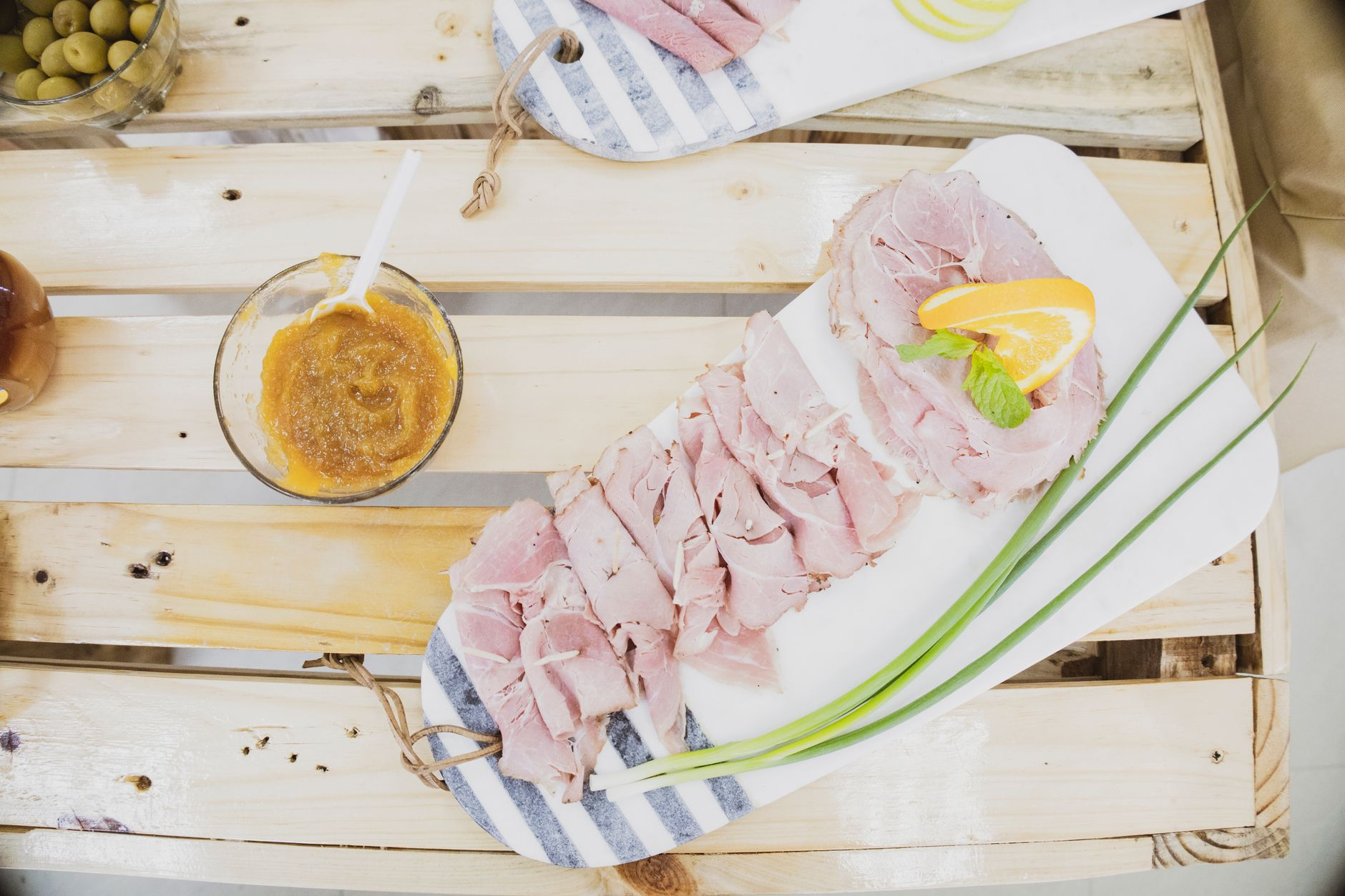
A traditional Australian Christmas lunch — leg ham, cooked prawns, roast turkey, pavlova, and a glass of wine — sits at roughly 4,500 to 6,000 kJ (1,075 to 1,435 kcal) per person, or 52 to 69 percent of the FSANZ 8,700 kJ daily intake reference. Most adults gain 0.5 to 0.65 kg over the December–January period, and roughly half of that gain typically persists past summer.
For Australians, Christmas Day is shaped by summer weather, prawns on ice, a glazed leg ham at room temperature, pavlova with seasonal stone fruit, and beer or sparkling wine outside in the heat. The calorie profile of that meal is very different from a Northern Hemisphere Christmas, and it does not match the assumptions baked into most calorie apps that pull from USDA data instead of the FSANZ Australian Food Composition Database. This guide reconstructs the kilojoule load of a typical Aussie Christmas lunch from primary AU data, shows how it fits inside the 8,700 kJ reference, and offers a tracking playbook for the day itself.
The numbers below are sourced from the FSANZ Australian Food Composition Database (AFCD), the NHMRC Australian alcohol guidelines, the Heart Foundation Australia's dietitian festive guidance, and a 2023 systematic review of 10 holiday-eating studies covering 4,627 participants in Nutrients. Where research suggests the figure is sensitive to brand or preparation, the range is shown rather than a single point estimate.
How many calories are in a typical Australian Christmas lunch?
A balanced AU Christmas lunch lands between 4,500 and 6,000 kJ (1,075 to 1,435 kcal) per person. That covers a 150 g serve of leg ham, 200 g of cooked prawns, 150 g roast turkey, mixed salads, one slice of pavlova, and a single 150 mL glass of wine or sparkling. Adding seconds, a second drink, or trifle pushes the meal toward 8,000 to 10,000 kJ.
The table below builds a single-plate Christmas lunch from typical AU portions and the FSANZ AFCD nutrient figures. Energy in kilojoules is the AU-standard unit; calories are the equivalent at 4.184 kJ per kcal.
| Component | Typical AU serve | Energy (kJ) | Energy (kcal) | Protein (g) |
| Leg ham, lean (sliced) | 150 g | 700 | 167 | 28 |
| Cooked king prawns (flesh) | 200 g | 700 | 167 | 47 |
| Roast turkey breast | 150 g | 700 | 167 | 33 |
| Mixed leafy salad, light dressing | 150 g | 250 | 60 | 3 |
| Roasted potatoes | 120 g | 600 | 143 | 3 |
| Pavlova with cream and berries | 100 g | 1,250 | 299 | 4 |
| Sparkling wine (single 150 mL) | 150 mL | 465 | 111 | 0 |
| Single-plate total | ~4,665 | ~1,114 | ~118 |
The single-plate figure assumes one serve of each component. Real Christmas lunches typically involve grazing across two to three hours, so add 1,500 to 3,000 kJ for second helpings, a second drink, an extra slice of pavlova, or a small trifle wedge. The 2023 Nutrients systematic review by Lopez-Minguez and colleagues found that participants in the studies they reviewed consumed an excess of energy on individual festive days that translated into measurable weight gain — typically 0.28 kg in normal-weight participants and 0.48 kg in those with obesity.
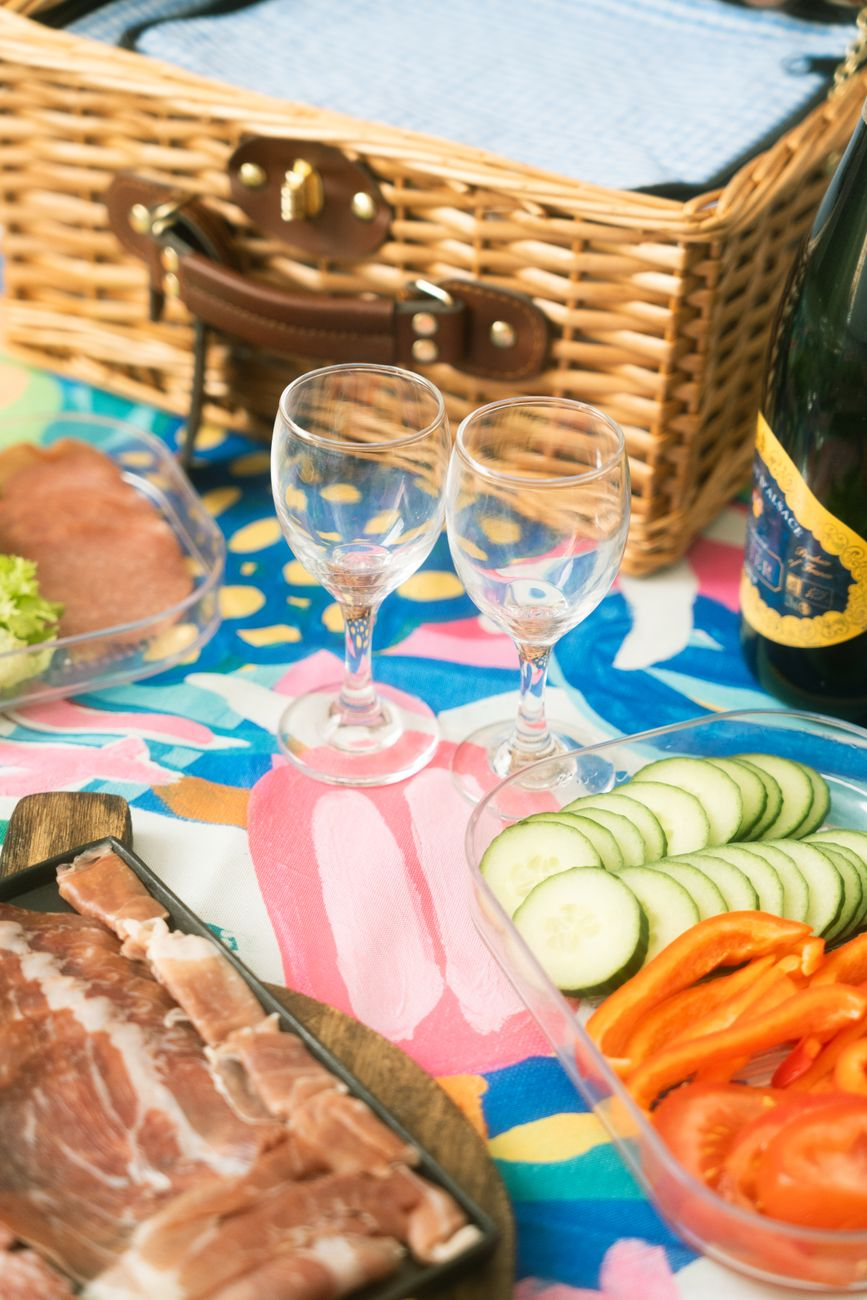
Which Christmas foods cost the most kilojoules per serve?
Pavlova, Christmas pudding, and trifle are the highest-kilojoule items per typical serve, with pavlova around 1,250 kJ per 100 g, Christmas pudding 1,200 to 1,390 kJ per 100 g, and homemade trifle 700 kJ per 100 g. Cooked king prawns are the lowest-energy main, at roughly 350 kJ (83 kcal) per 100 g of peeled flesh. Lean leg ham sits in between.
The kilojoule cost varies sharply across the foods that define an Australian Christmas. The table below uses AU retailer panels (Woolworths, Coles) and FSANZ AFCD reference values per 100 g, which is the format printed on the nutrition information panel of every packaged AU food.
| Food | Energy per 100 g (kJ) | Energy per 100 g (kcal) | Typical serve | Energy per serve (kJ) |
| Cooked king prawn flesh | 349 | 83 | 200 g | 700 |
| Leg ham, lean | 467 | 111 | 150 g | 700 |
| Roast turkey breast | 466 | 111 | 150 g | 700 |
| Roast potatoes (oil-roasted) | 500 | 120 | 120 g | 600 |
| Homemade trifle | 700 | 167 | 150 g | 1,050 |
| Christmas pudding (Woolworths Matured) | 1,200 | 287 | 100 g | 1,200 |
| Pavlova with cream and fruit | 1,250 | 299 | 100 g | 1,250 |
| Sparkling wine (12 percent ABV) | 310 | 74 | 150 mL | 465 |
| Full-strength beer (4.8 percent ABV) | 175 | 42 | 425 mL schooner | 750 |
Diabetes Australia notes that alcohol provides 29 kJ per gram, and one standard AU drink contains 10 g of pure alcohol — so each standard drink starts at 290 kJ from the alcohol alone, before mixers, sugar, or sparkling carbohydrate are added. The Australian beer calorie guide for schooners, pints, pots, and middies covers the per-glass figures in detail, and the alcohol calorie tracking guide lays out lower-energy options.
How does Christmas Day fit inside an 8,700 kJ daily reference?
The FSANZ 8,700 kJ reference describes the average daily intake for an Australian adult on food labels, not a personal target. A 6,000 kJ Christmas lunch leaves roughly 2,700 kJ for breakfast, snacks, and dinner — enough room for a light breakfast and a small evening plate. Aiming for a balanced rest-of-day rather than a hard restriction is the approach the Heart Foundation Australia recommends.
The 8,700 kJ figure is prescribed in the Food Standards Code as a labelling reference, not a personal allowance. Your personal energy requirement varies with age, sex, body composition, and activity level — most adults sit between 6,500 kJ and 12,000 kJ. A worked TDEE calculation for your own body lives in the TDEE calculator with AU and US units, which steps through the Mifflin-St Jeor equation in both kilojoules and kilocalories.
For Christmas Day specifically, the maths is straightforward. If a typical lunch sits at 4,500 to 6,000 kJ, a single day at the 8,700 kJ reference would leave 2,700 to 4,200 kJ for the rest of the day. That covers a moderate breakfast (around 1,500 kJ), a light evening plate (around 1,500 kJ), and roughly 1,200 kJ of buffer. Aiming higher than 8,700 kJ for the day itself is reasonable if you sit closer to a typical maintenance intake of 10,000 to 11,000 kJ — the issue is not the single day but the persistence of the surplus across the December–January window.
The Heart Foundation Australia's dietitian guidance for festive feasting, attributed to Senior Dietitian Jemma O'Hanlon, frames it the same way: rather than eliminating discretionary foods entirely, the recommendation is to "pick one or two moments to really savour your favourite festive food and commit to balancing out the rest of the week." That balance-over-the-week framing is consistent with the broader research on caloric load — what determines weight change is total intake across weeks, not any single day.
What does the research say about Christmas weight gain?
A 2023 systematic review in Nutrients (Lopez-Minguez and colleagues) covering 10 studies and 4,627 participants found that adults gain 0.4 to 1.35 percent of body weight across the Christmas period, and approximately half of that gain typically persists past the end of the holiday window. Australian-specific research puts the local figure at around 0.65 percent (roughly 0.5 to 1.5 kg) — and because Christmas falls in summer here, the gain reflects food intake rather than winter inactivity.
The Lopez-Minguez and colleagues 2023 Nutrients systematic review searched PubMed for festive-season weight studies and included 10 studies spanning the United States, Germany, Japan, and Europe. Average gains varied by population — 0.4 percent in the US, 0.6 percent in Germany, 0.5 percent in Japan over Christmas and Golden Week respectively, and 1.35 percent across three European countries. The persistence finding is the part most relevant to a tracking workflow: approximately half of the weight gained during these holiday periods was maintained until the end of the studies' follow-up windows.
Australian-specific data, summarised by researchers in The Conversation in December 2023, puts the AU figure at around 0.65 percent of body weight — roughly 500 g for a 75 kg adult — and notes that an early Australian study found participants put on an average of 564 g over the Christmas–New Year break. Because Christmas occurs during the Southern Hemisphere summer, the AU gain cannot be attributed to cold-weather inactivity. Energy intake is doing the work, not seasonal exercise drop-off.
A few quantitative anchors worth holding in mind. Research on US Thanksgiving (the closest analogue meal study) found that participants consumed roughly 3,960 kcal at a single dinner — almost twice the maintenance intake for the average woman. Translating that figure to kilojoules gives 16,572 kJ at the table, equivalent to nearly two days of 8,700 kJ stacked into one sitting. The Australian Christmas lunch numbers above sit substantially below that, but a long grazing day of canapés, lunch, drinks, and dessert can land close to the Thanksgiving figure.
How can you enjoy Christmas without derailing your tracking?
Most calorie-tracking research (and Heart Foundation AU guidance) recommends planning the day rather than eliminating foods. A simple framework: load up on the lower-energy proteins (prawns, lean ham, turkey), cap the desserts at one slice, log alcohol as you go, and accept the day will sit above your usual intake. Resume normal tracking on Boxing Day.
A seven-step playbook for tracking a typical Aussie Christmas lunch without anxiety, drawn from Heart Foundation AU guidance, Diabetes Australia advice, and the broader research on sustainable eating:
If counting calories on the day feels stressful, the calorie tracking vs intuitive eating guide covers a "calibrated intuition" approach that uses tracking outside of social meals and hunger cues inside them.
Frequently Asked Questions
How many calories are in a slice of glazed Christmas ham?
A 150 g serve of lean leg ham contains approximately 700 kJ (167 kcal) and 28 g of protein, per the FSANZ Australian Food Composition Database. Glazed ham adds 100 to 200 kJ per serve from the brown sugar or maple glaze; if the glaze is heavy or honey-mustard, total energy may reach 900 kJ per 150 g serve. Choosing lean leg ham over deli-style sliced ham (around 700 kJ per 100 g) lowers both kilojoules and sodium.
Are cooked prawns really that low in calories?
Yes. Cooked king prawn flesh contains 349 kJ (83 kcal) per 100 g and 23.7 g of protein with only 0.9 g of fat, per the FSANZ AFCD. A 200 g serve at lunch delivers roughly 47 g of protein for 700 kJ — one of the most protein-dense, energy-light items on a typical Australian Christmas table. Cocktail sauce adds 200 to 400 kJ depending on serve, so factor it in if you are tracking tightly.
Should you skip breakfast on Christmas Day to "save" calories?
Skipping breakfast may not help. Research suggests arriving at a meal in a hungry state increases total intake. A modest, protein-led breakfast (eggs on wholemeal toast, around 1,500 kJ) tends to reduce later grazing and overall day intake compared with a fasted approach. The Heart Foundation AU's framing of balance over restriction supports the same conclusion — eat normally up to the meal and adjust around it.
How much weight do Australians typically gain at Christmas?
Australian research suggests adults gain around 0.65 percent of body weight across the Christmas–New Year window — roughly 500 g for a 75 kg adult and 800 g for a 120 kg adult. A 2023 Nutrients systematic review of 10 international studies (4,627 participants) found that approximately half of that gain persists past the end of the holiday period, which is the part most worth planning around.
Is it worth logging Christmas Day in your calorie app at all?
Logging Christmas Day matters less than logging the week around it. The Lopez-Minguez 2023 review shows that what predicts lasting weight change is the sum of intake across multiple days, not any single meal. Many people find a simple "estimate, accept, resume" approach to the day itself works better than tracking every bite in real time, especially if calorie tracking has felt stressful at family meals in the past.
How many standard drinks fit inside the NHMRC Australian alcohol guidelines?
The NHMRC 2020 Australian Guidelines recommend no more than 10 standard drinks per week and no more than 4 on any single day for healthy adults. Each standard drink contains 10 g of pure alcohol — equivalent to 100 mL of wine, 285 mL of full-strength beer, or 30 mL of spirits. The energy cost is roughly 290 kJ per standard drink from the alcohol alone, before mixers or sweeteners.
Sources
Ready to track smarter?
Join thousands who use KCALM for calorie tracking. AI-powered food recognition, scientifically-validated calculations, and zero anxiety.
Related Articles
Why Calorie Apps Overcount Vegetables (And How to Fix It)
Why calorie apps drift on vegetables — peer-reviewed research on database errors and oil absorption, the 7-step logging playbook for accurate AU vegetable tracking, and why the AFCD beats USDA for Australian produce.
NutritionHelloFresh AU Calories: Recipe Labels vs Actual 2026
Verified kilojoule, protein, and sodium figures for HelloFresh Australia recipes in 2026, what 346-recipe and 36-meal AU studies reveal about labelled vs as-cooked accuracy, and a five-rule playbook for tracking HelloFresh meals inside an 8,700 kJ day.
NutritionColes vs Woolworths Ready Meals: AU Calorie Database 2026
Verified kilojoule, protein, and sodium figures for Coles and Woolworths frozen and chilled ready meals in 2026, plus what 631-meal AU research reveals about Health Star Ratings, salt, and what actually feeds a fat-loss plan.