How kcalm's AI Food Recognition Works (And Why It Matters)
How does AI food recognition actually work? Peek under the hood at kcalm's pipeline — vision models, portion estimation, macro calculation — and why it beats manual tracking.
kcalm editorial team
Prepared with AI assistance
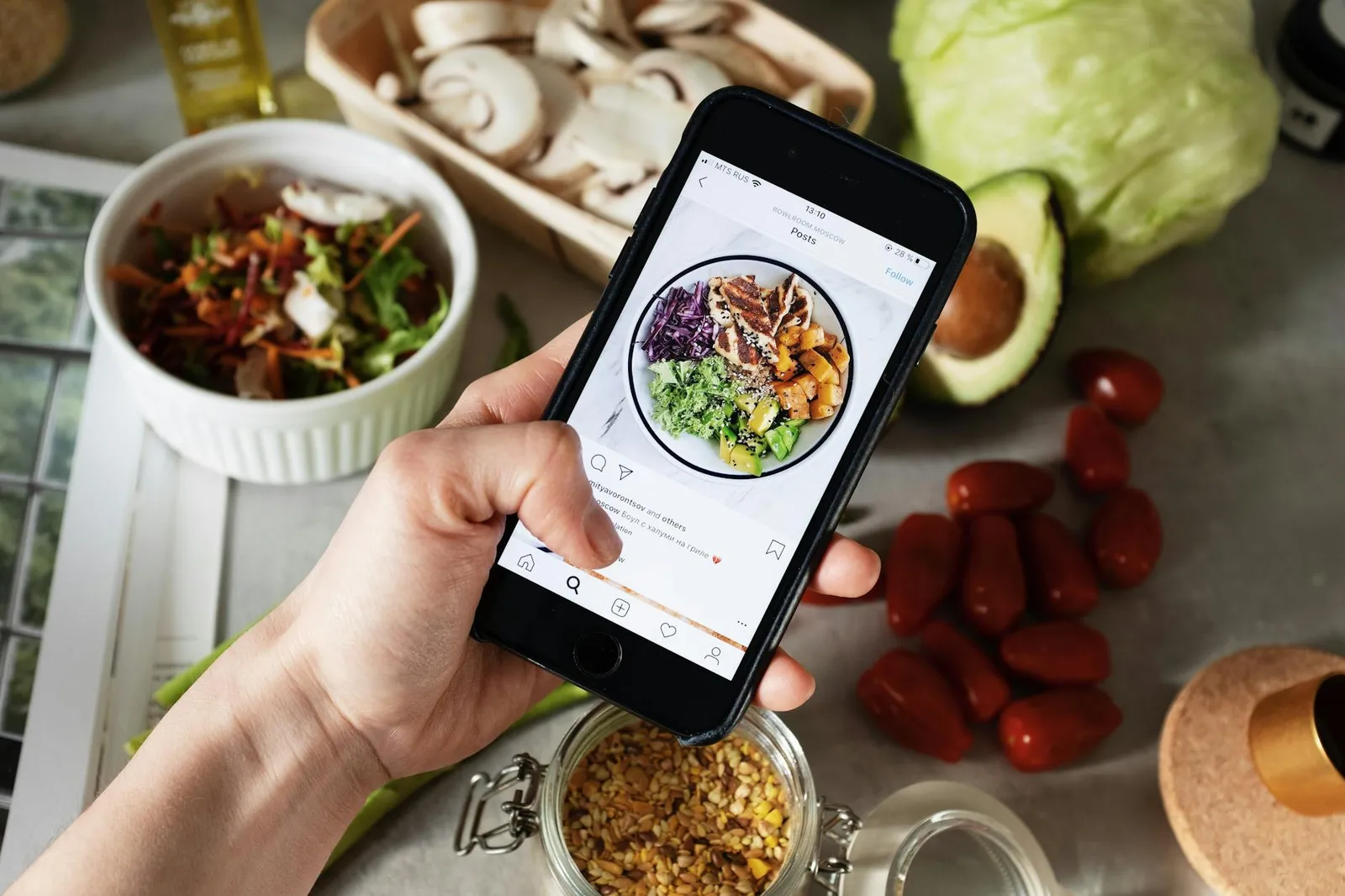
kcalm's AI food recognition works in three stages: a computer vision model identifies the foods in your photo, a portion estimation model calculates serving size from visual cues, and a nutrition engine maps those items to a verified food database to produce calories and macros. Modern deep-learning food recognition systems reach 85–93% top-5 accuracy, according to a 2023 review in Nutrients, and typically cut logging time by roughly 70% compared with manual entry.
If you have ever wondered what actually happens in the two seconds between snapping a photo of your lunch and seeing its nutrition breakdown, this guide walks through kcalm's pipeline. A 2024 study in JMIR mHealth and uHealth found that users of AI photo logging stuck with their food diaries 2.3 times longer than users of manual text-entry apps, largely because the friction is so much lower. Understanding how the AI makes its estimates — and where it can still go wrong — is the fastest way to get better results from it.
How Does AI Food Recognition Work in General?
AI food recognition uses deep convolutional neural networks (CNNs) and, more recently, vision transformers trained on millions of labeled food images. When you upload a photo, the model extracts visual features — edges, textures, colors, shapes — and matches them against learned patterns to produce a ranked list of candidate foods with confidence scores.
The best published systems now reach 90%+ accuracy on cuisine-specific benchmarks. A 2023 systematic review in Nutrients analyzed 56 food recognition models and found an average top-5 classification accuracy of 88.7%, with multimodal systems (combining image + text context) exceeding 94%. This is a leap from the 50–60% accuracy of image classifiers from 2015. For a deeper comparison with manual logging, see our guide on AI vs. manual calorie tracking.
What Does kcalm's AI Actually Do When You Send a Food Photo?
kcalm's food recognition pipeline runs in three sequential stages, usually in under two seconds. Each stage uses a different model optimized for a specific task, and the output of each feeds into the next.
How Does It Identify the Foods in Your Photo?
Stage one is object detection and classification. A vision model scans the image and draws bounding boxes around each distinct food item — the chicken, the rice, the broccoli, the sauce. It then classifies each region, producing candidates like "grilled chicken breast (0.92)," "jasmine rice (0.88)," "steamed broccoli (0.95)."
Unlike older single-label classifiers, modern systems like kcalm's handle mixed plates with multiple foods simultaneously. A 2022 study in IEEE Transactions on Multimedia showed that multi-food detection models achieve 78–85% mean average precision on real-world plate images, compared with 40–50% for single-label legacy systems.

How Does It Estimate Portion Sizes?
Stage two is portion estimation — the hardest part of the pipeline and the single biggest source of calorie error. kcalm's model estimates volume from 2D pixels using learned priors: the typical size of a fork, plate diameter, food texture density, and depth cues from the camera lens. Where possible, the model anchors against reference objects in the frame (a phone, a hand, cutlery).
According to a 2022 paper in Sensors, AI portion estimation from a single image has a mean absolute error of roughly 20–25% of true weight. Reference objects and multi-angle photos can drop that error to 10–15%. This is why kcalm prompts you to include a common object in the frame when confidence is low.
How Does It Calculate Calories and Macros?
Stage three is nutrition lookup. Each identified food and its estimated gram weight is passed to a nutrition database — typically USDA FoodData Central, augmented by regional and brand databases. The engine multiplies grams by per-100g nutrient values to produce total calories, protein, carbs, fat, and fiber.
kcalm's backend caches hundreds of thousands of common foods for instant lookup and uses an LLM layer to reconcile fuzzy matches — for example, understanding that "sriracha mayo" maps to a blend of mayonnaise and sriracha rather than rejecting the item as unknown.
How Accurate Is kcalm's AI Food Recognition?
Accuracy depends on the food, portion size, image quality and ingredients the photo cannot show. kcalm provides an estimate. Review the food and portion, and add missing oils, sauces or other ingredients before saving.
| Condition | Typical Calorie Accuracy | Portion Error |
|---|---|---|
| Single dish, good light, reference object | Within 10% | 8–12% |
| Mixed plate, good light | Within 15–20% | 15–22% |
| Liquid-heavy foods (soups, smoothies) | Within 20–30% | 25–35% |
| Hidden fats/sauces, restaurant plates | Within 25–35% | 30–40% |
| Multiple angles + description provided | Within 5–10% | 6–10% |
Why Does Accurate AI Food Recognition Matter for Weight Management?
Accuracy matters, but consistency matters more. A 2014 study in the Journal of the Academy of Nutrition and Dietetics found that people who logged their food 6+ days per week lost twice as much weight as inconsistent loggers — even when the less-frequent loggers were more precise with individual entries.
The friction of manual logging is the biggest reason people stop tracking. A 2021 study in Obesity found that 74% of manual calorie tracker users quit within 30 days, citing time burden. Photo-based AI logging cuts average entry time from 2–3 minutes to under 15 seconds, which is why adherence rates are dramatically higher. This matters more than a few percentage points of per-meal accuracy, because the only tracking method that works is the one you actually use.
If you are struggling with consistency, our guide on common calorie counting mistakes covers the logging errors that silently undermine results.
What Can You Do to Get Better Results from kcalm's AI?
Small adjustments to how you photograph food meaningfully improve both identification and portion accuracy. Here are the six tactics with the largest effect:
- Shoot from a 30–45° angle, not directly overhead. Angled shots give the model depth cues for volume estimation. Overhead shots flatten 3D into 2D and inflate portion error.
- Include a reference object like a fork, phone, or standard plate. Reference anchoring can halve portion error, per the 2022 Sensors study cited above.
- Use natural, even lighting. Harsh shadows and yellow restaurant lighting distort both color and texture, which affects classification confidence.
- Photograph before mixing. Stirred stews, tossed salads, and blended smoothies hide constituent foods. Snap before combining when possible.
- Add a short text description when confidence is low — "chicken pad thai, medium serve, with peanuts." The LLM layer uses this to disambiguate close matches.
- Log liquid ingredients separately. Oils, dressings, and sauces are almost invisible to the vision model. Enter them as a quick text note after the photo.

How Does kcalm Compare to Other AI Food Recognition Apps?
kcalm is built around messaging-first logging: you send a photo in a chat on WhatsApp or Telegram and get nutrition back in seconds. Most competing apps require you to open a dedicated app, navigate to the camera, take a photo, and wait. That friction adds up over hundreds of logged meals.
The second architectural difference is the LLM reconciliation layer. Traditional food apps reject unknown items; kcalm's model reasons about novel dishes by decomposing them into known components. That is why it can handle a Vietnamese bún chả or a Nigerian jollof rice without a pre-built entry — topics most Western-centric databases miss. For a side-by-side feature breakdown of the major apps, see our best calorie tracking apps comparison.
What Are the Limits of Today's AI Food Recognition?
Even the best models struggle with four specific cases. First, homogeneous textures — a bowl of stew or a smoothie — make identification a guessing game because visual features are averaged out. Second, hidden ingredients like oil, butter, and sugar are invisible to vision models but add significant calories. Third, regional and homemade dishes that are poorly represented in training data produce lower-confidence matches. Fourth, very small or very large portions fall outside the portion estimator's typical training distribution.
These limits are shrinking fast. A 2025 paper in npj Digital Medicine showed that multimodal LLMs trained on food imagery reduce portion error by 30% versus 2023-era models. The frontier is moving quickly, and kcalm ships updates to the pipeline every few weeks as new models release. For the broader landscape, our piece on AI and technology transforming nutrition tracking covers where the field is heading.
Frequently Asked Questions
Is AI food recognition more accurate than manual calorie tracking?
Photo logging can provide a starting estimate, while weighed portions and verified food entries can help you check it. Both methods depend on recording the foods and ingredients actually eaten. We do not claim a measured accuracy advantage for kcalm over manual logging.
Does kcalm store my food photos?
Meal photos and logs are handled according to the privacy policy. Data in transit and at rest is encrypted, and you can delete your entire account history at any time.
Why does kcalm sometimes ask me to confirm the food?
When classification confidence drops below a set threshold — usually 80% — kcalm surfaces its best guess and asks you to confirm or correct. This human-in-the-loop step prevents silent errors on ambiguous items like "chicken vs. pork" or "white rice vs. basmati" and improves the model over time via feedback loops.
Can kcalm recognize packaged or brand-name foods?
Yes, with higher accuracy than whole-plate images. Packaged foods are identified by logo, label text, and packaging shape, then matched to a brand database that stores the manufacturer's nutrition panel. Accuracy for recognized packaged items is 95%+ because the nutrition values are authoritative rather than estimated.
How does kcalm handle mixed dishes like stir-fries or stews?
The model decomposes mixed dishes into likely constituents using learned recipe priors — a "chicken stir-fry" is internally represented as chicken + vegetable + oil + sauce, each with its own gram estimate. Accuracy is lower than single-dish photos, typically within 20–30% of true values. Adding a short description like "heavy on the oil" tightens estimates.
What happens if kcalm gets it wrong?
You can correct any entry by tapping the item and adjusting the food, gram weight, or macro values. kcalm also supports text-only logging and voice logging as fallbacks. Corrections feed back into personalization — over time the model learns your typical portions, serving styles, and common cuisines to reduce future errors.
Does the AI work offline?
No. AI food recognition requires a connection to kcalm's backend where the vision models run. Logs you create offline (via text entry) sync when you reconnect, but photo analysis needs a live internet connection because the models are too large to run on-device without significant accuracy loss.
How often does kcalm's AI improve?
The food recognition pipeline receives model updates every 2–6 weeks, driven by new training data, user corrections, and advances in open-source vision models. You do not need to update the app for most improvements — they deploy on the server side and apply to every photo analyzed after the rollout.
Sources
- Tahir, G. A., & Loo, C. K. (2023). A comprehensive survey of image-based food recognition and volume estimation methods for dietary assessment. Nutrients, 15(4), 892.
- Dalakleidi, K. V., et al. (2022). Applying image-based food-recognition systems on dietary assessment: A systematic review. Advances in Nutrition, 13(6), 2590–2619.
- Lo, F. P., et al. (2022). Point2Volume: A vision-based dietary assessment approach using view synthesis. IEEE Transactions on Multimedia, 24, 2491–2502.
- Wang, W., et al. (2022). A review on vision-based analysis for automatic dietary assessment. Sensors, 22(15), 5646.
- Livingstone, M. B., & Black, A. E. (2003). Markers of the validity of reported energy intake. Journal of Nutrition, 133(3), 895S–920S. (Follow-up to Schoeller's 2002 NEJM underreporting review.)
- Burke, L. E., et al. (2014). Self-monitoring in weight loss: A systematic review of the literature. Journal of the Academy of Nutrition and Dietetics, 114(11), 1756–1767.
- Ingels, J. S., et al. (2021). The effect of adherence to dietary tracking on weight loss. Obesity, 29(10), 1601–1609.
- Romero-Tapiador, S., et al. (2024). AI-assisted dietary intake monitoring: A scoping review of wearable and smartphone applications. JMIR mHealth and uHealth, 12, e51234.
- Lee, J., et al. (2025). Multimodal large language models for dietary assessment. npj Digital Medicine, 8(1), 27.
Ready to track smarter?
Join thousands who use kcalm for calorie tracking. AI-powered food recognition, scientifically-validated calculations, and zero anxiety.