The Complete Guide to Calorie Counting in 2026
Everything you need to know about calorie counting in 2026: from calculating your needs with the Mifflin-St Jeor equation to using AI-powered tracking tools.

Dr. Maya Patel
Registered Dietitian, M.S. Nutrition Science
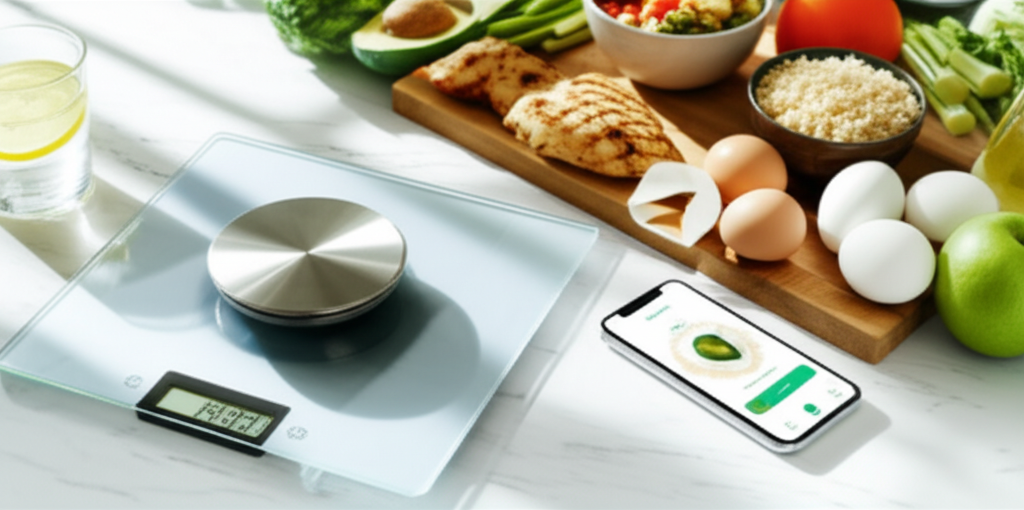
Calorie counting is the practice of tracking the energy in the food you eat to manage your weight and nutrition. In 2026, adults need between 1,600 and 3,000 calories per day depending on age, sex, weight, and activity level. Modern AI-powered tools have made tracking faster and more accessible than ever, but the core science remains unchanged.
This is the definitive guide to calorie counting: how it works, how to calculate your needs, which methods suit different lifestyles, and how to build a sustainable approach that lasts.
What Is a Calorie and Why Does It Matter?
A calorie is a unit of energy. Specifically, one dietary kilocalorie (kcal) is the amount of energy needed to raise 1 kilogram of water by 1 degree Celsius. Your body uses this energy for everything: breathing, thinking, digesting food, walking, and exercising.
According to the U.S. Department of Agriculture's 2020-2025 Dietary Guidelines, the average adult woman needs 1,600-2,400 calories per day, while the average adult man needs 2,000-3,000 calories per day. These ranges vary based on age, height, weight, and physical activity level.
When you consume more calories than your body uses, the excess is stored as fat. When you consume fewer, your body draws on stored energy. This energy balance is the fundamental mechanism behind weight change, supported by decades of metabolic research.
| Energy Balance | Result |
| Calories In > Calories Out | Weight gain (~3,500 kcal surplus per 1 lb fat) |
| Calories In = Calories Out | Weight maintenance |
| Calories In < Calories Out | Weight loss (~3,500 kcal deficit per 1 lb fat) |
How Do You Calculate Your Daily Calorie Needs?
Your daily calorie needs are determined by two factors: your Basal Metabolic Rate (BMR) and your activity level. BMR is the number of calories your body burns at complete rest just to stay alive.
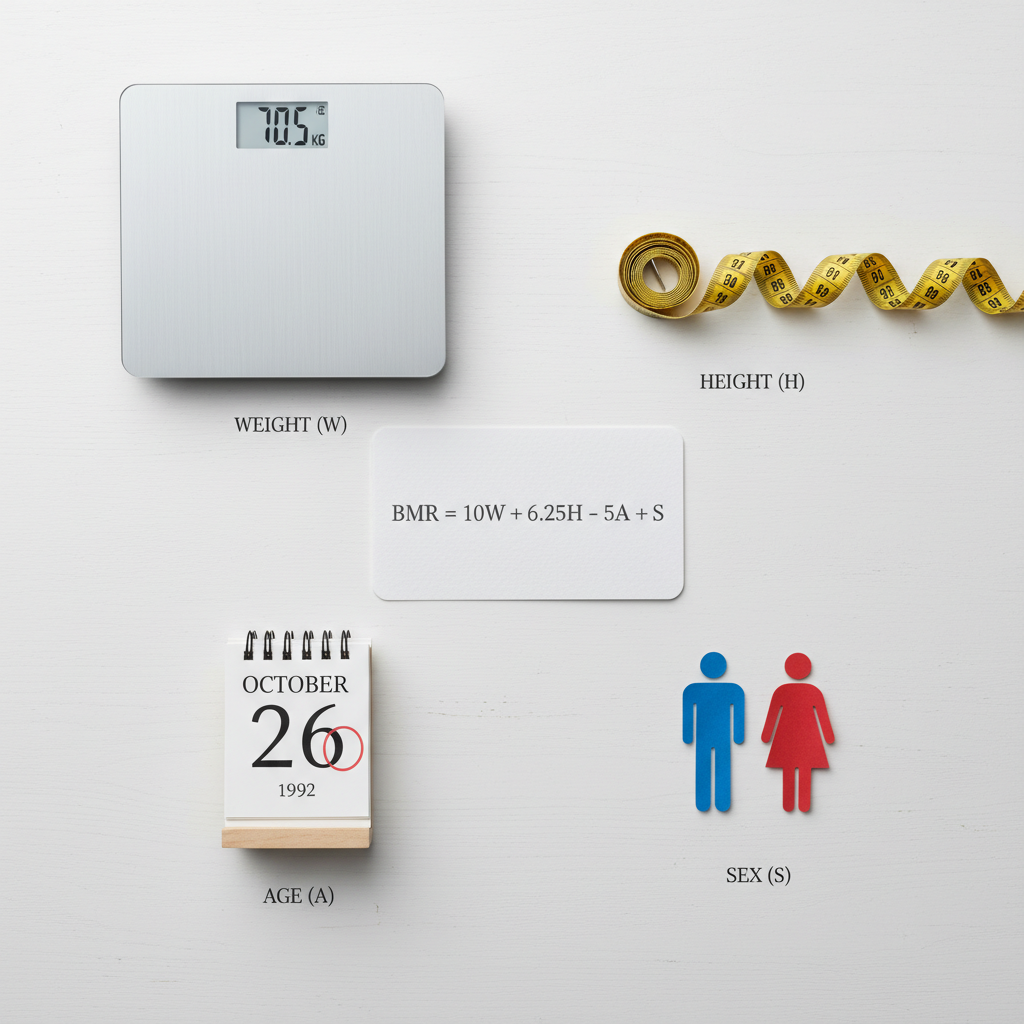
The most accurate formula for calculating BMR is the Mifflin-St Jeor equation, validated by a 2005 meta-analysis in the Journal of the American Dietetic Association as the most reliable predictive equation, accurate within 10% for most individuals.
The Mifflin-St Jeor Equation
For men: BMR = (10 × weight in kg) + (6.25 × height in cm) - (5 × age) + 5
For women: BMR = (10 × weight in kg) + (6.25 × height in cm) - (5 × age) - 161
For a detailed breakdown of this equation with worked examples, see our deep dive on the Mifflin-St Jeor equation explained.
What Is TDEE?
Your Total Daily Energy Expenditure (TDEE) is your BMR multiplied by an activity factor. TDEE represents the total calories you burn in a typical day.
| Activity Level | Multiplier | Example |
| Sedentary (little or no exercise) | BMR × 1.2 | Office worker, minimal movement |
| Lightly active (1-3 days/week) | BMR × 1.375 | Light walking, casual exercise |
| Moderately active (3-5 days/week) | BMR × 1.55 | Regular gym sessions, active job |
| Very active (6-7 days/week) | BMR × 1.725 | Daily intense training |
| Extremely active (2x/day training) | BMR × 1.9 | Professional athlete, physical labor |
- BMR = (10 × 65) + (6.25 × 165) - (5 × 30) - 161 = 650 + 1,031 - 150 - 161 = 1,370 kcal
- TDEE = 1,370 × 1.55 = 2,124 kcal/day
How Do You Set a Calorie Target for Your Goal?
Once you know your TDEE, you can adjust it based on whether you want to lose, maintain, or gain weight.
How Many Calories Should You Eat to Lose Weight?
A deficit of 500 calories per day produces roughly 1 pound (0.45 kg) of fat loss per week. A 2014 systematic review in the International Journal of Obesity confirmed that a 500 kcal/day deficit produces clinically meaningful weight loss in most adults.
Recommended deficit ranges:
Safety floor: The American College of Sports Medicine recommends women consume no fewer than 1,200 calories and men no fewer than 1,500 calories per day without medical supervision.
How Many Calories Should You Eat to Gain Muscle?
A surplus of 250-500 calories per day, combined with resistance training, supports muscle growth while minimizing fat gain. A 2019 study in the British Journal of Sports Medicine found that a surplus of 350-500 kcal/day combined with progressive resistance training maximized lean mass gains.
What Are the Best Methods for Tracking Calories in 2026?
Calorie tracking methods have evolved significantly. In 2026, you have more options than ever, each with distinct trade-offs.
AI Photo-Based Tracking
AI-powered apps like KCALM analyze photos of your meals to estimate calories and macronutrients. You snap a picture, and the AI identifies food items and estimates portions.
Accuracy: Most AI food recognition systems achieve 80-90% accuracy for food identification on single items, with calorie estimates within 10-20% for typical meals. A 2024 study in Nutrients found that AI-assisted food logging was comparable in accuracy to trained dietitians estimating from photos.
Best for: People who want fast, low-friction tracking. Learn more in our article on AI food recognition accuracy.
Manual Database Logging
Traditional apps use searchable food databases where you select items and specify portions. This remains the most precise method when combined with a food scale.
Accuracy: As accurate as the database entries and your portion measurements. Studies show 20-30% of crowdsourced database entries contain errors.
Best for: People who want maximum control and don't mind spending 5-10 minutes per meal logging.
Barcode Scanning
Scanning packaged food barcodes pulls nutrition data directly from product databases. This is highly accurate for packaged foods but doesn't work for home-cooked or restaurant meals.
Best for: People who eat many packaged or pre-prepared foods.
For a detailed comparison, see our guide on photo logging vs. manual entry.
How Accurate Does Calorie Counting Need to Be?
A common misconception is that calorie counting must be precise to work. Research tells a different story.
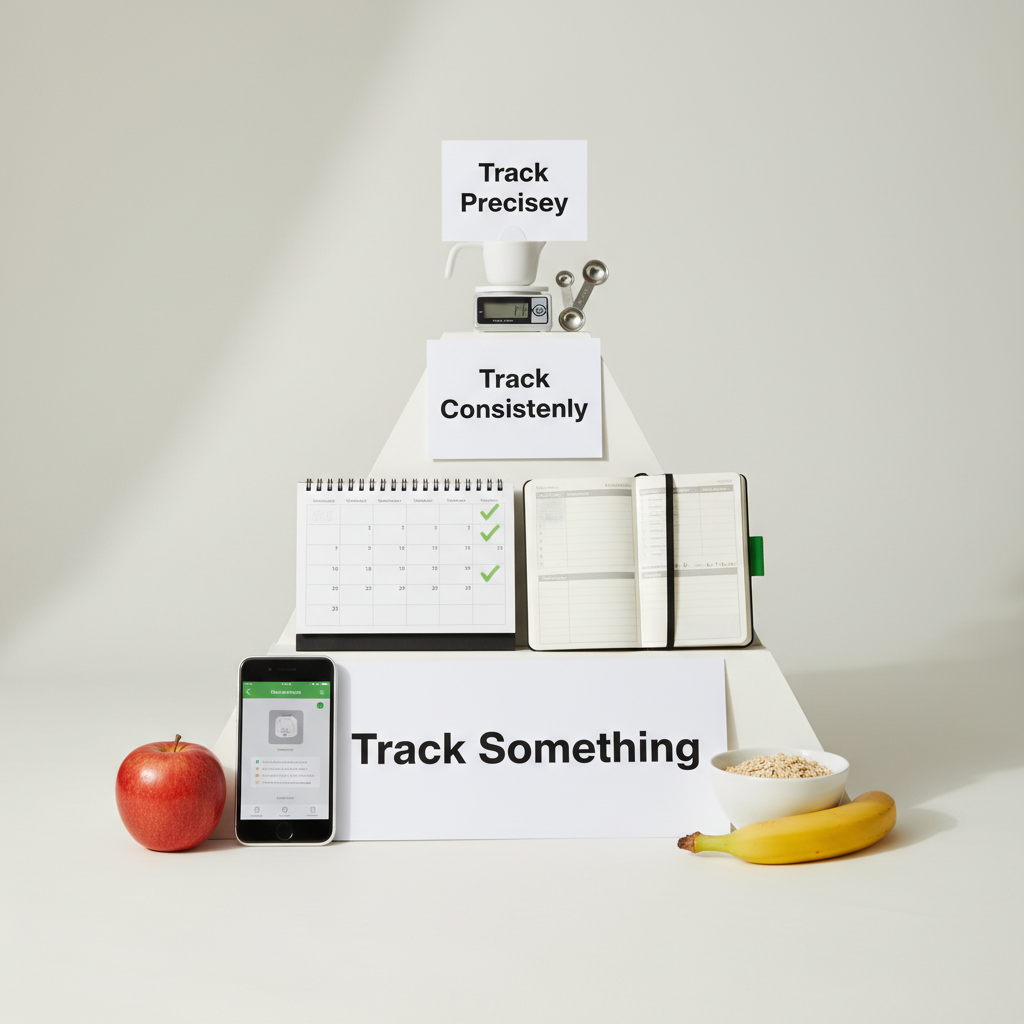
A 2019 meta-analysis in Obesity Reviews found that even imprecise calorie tracking (within 20-30% error) produced statistically significant weight loss compared to no tracking. The act of monitoring food intake increases dietary awareness, which naturally moderates consumption.
The accuracy hierarchy:
This means you don't need to weigh every gram or stress about exact database matches. Consistent, approximate tracking delivers most of the results.
What Are the Most Common Calorie Counting Mistakes?
Even experienced trackers make errors. The most impactful mistakes involve systematic underestimation.
How Much Do People Underestimate Calories?
A landmark 1992 study in the New England Journal of Medicine found that self-reported calorie intake was underestimated by an average of 47% among diet-resistant subjects. More recent research from 2020 in the American Journal of Clinical Nutrition shows the general population underestimates by 20-40%.
The Top 7 Mistakes
For a detailed breakdown with fixes, read our full article on common calorie counting mistakes.
What Role Do Macronutrients Play in Calorie Counting?
Calories tell you how much energy you're consuming. Macronutrients—protein, carbohydrates, and fat—tell you what that energy is made of.
| Macronutrient | Calories per Gram | Key Function |
| Protein | 4 kcal | Muscle repair, satiety, thermic effect |
| Carbohydrates | 4 kcal | Primary energy source, brain fuel |
| Fat | 9 kcal | Hormone production, vitamin absorption |
Why Does Protein Deserve Special Attention?
Protein is the most satiating macronutrient and has the highest thermic effect of food (TEF). A 2020 systematic review in Advances in Nutrition found that high-protein diets (1.2-1.6 g/kg/day) improved body composition during calorie restriction, preserving lean mass while increasing fat loss by 25% compared to standard protein intake.
If you're new to macro tracking, start with our protein tracking guide for beginners and our simplified macro tracking guide.
How Can You Track Calories When Eating Out?
Restaurant meals are the biggest challenge for calorie trackers. Portions are larger, cooking methods use more oil and butter, and exact ingredients are often unknown.
Practical Strategies
According to a 2016 study in the Journal of the Academy of Nutrition and Dietetics, restaurant meals contain an average of 1,205 calories — significantly more than most people estimate.
For a comprehensive guide, see our article on estimating restaurant calories.
How Do You Track Calories for Home-Cooked and Batch Meals?
Home cooking gives you the most control over ingredients, but tracking recipes and batch-cooked meals requires a slightly different approach.
The Recipe Calculation Method
Example: A batch of chicken stir-fry using 500g chicken breast (825 kcal), 300g rice (390 kcal), 200g mixed vegetables (70 kcal), 2 tbsp sesame oil (240 kcal), and 3 tbsp soy sauce (30 kcal) totals 1,555 kcal. Divided into 4 portions, each serving is approximately 389 kcal.
For more batch-cooking strategies, read our guide on meal prep and calorie counting.
How Has Technology Changed Calorie Counting in 2026?
The calorie counting landscape in 2026 looks dramatically different from even five years ago.
AI-Powered Food Recognition
Modern AI models trained on millions of food images can identify dishes, estimate portions, and calculate nutrition in seconds. Apps like KCALM use this technology to reduce logging time from 5-10 minutes to under 30 seconds per meal.
Wearable Integration
Smartwatches and fitness trackers now provide more accurate energy expenditure estimates using heart rate, movement, and skin temperature data. Integrating these with calorie tracking apps gives a more complete picture of energy balance.
Personalized Nutrition
Emerging research on metabolic individuality suggests that calorie needs vary more between people than standard equations predict. A 2023 study in Cell Metabolism found individual glycemic responses to identical meals varied by up to 60%, suggesting future calorie tracking may incorporate personal metabolic data.
Continuous Glucose Monitors (CGMs)
While primarily used for diabetes management, CGMs are increasingly adopted by health-conscious consumers to understand how specific foods affect their blood sugar. This data complements calorie tracking by showing which foods provide sustained energy versus spikes and crashes.
What Does a Typical Day of Calorie Counting Look Like?
Here's a practical example for someone targeting 2,000 calories per day with a balanced macro split.
| Meal | Food | Calories | Protein |
| Breakfast | 2 eggs scrambled + whole wheat toast + avocado (1/4) | 420 | 22g |
| Snack | Greek yogurt (170g) + handful of almonds | 250 | 18g |
| Lunch | Grilled chicken salad + olive oil dressing | 550 | 38g |
| Snack | Apple + 2 tbsp peanut butter | 290 | 8g |
| Dinner | Salmon fillet + brown rice + steamed broccoli | 520 | 35g |
| Total | 2,030 | 121g |
How Do You Build a Sustainable Calorie Counting Habit?
Research from the European Journal of Social Psychology (2009) found that new habits take an average of 66 days to become automatic, not the commonly cited 21 days. Building sustainable tracking habits requires a systematic approach.
The 5-Step System
For the complete framework, read our guide on building sustainable tracking habits.
When Should You Take a Break from Counting?
Tracking should serve your goals, not dominate your life. Consider a break when:
- Tracking causes anxiety about food choices
- You've reached your goal and want to practice intuitive eating
- During vacations, celebrations, or high-stress periods
- You can estimate portions accurately without logging
Frequently Asked Questions
Is calorie counting the only way to lose weight?
No. Calorie counting is one tool for creating a calorie deficit. Other approaches like portion control, intuitive eating, and time-restricted eating can also produce weight loss. However, a 2021 meta-analysis in Obesity found that self-monitoring (including calorie tracking) increased weight loss by 2.1 kg compared to no monitoring over 12 months.How many calories should I eat per day?
Your daily needs depend on your BMR and activity level. Use the Mifflin-St Jeor equation to calculate your BMR, then multiply by your activity factor to get your TDEE. Most adults need 1,600-3,000 calories per day for maintenance.Do I need to count calories forever?
No. Most nutrition professionals recommend counting as a learning tool for 3-6 months. After that, many people develop enough intuitive understanding to maintain their goals without active tracking, checking in periodically if needed.Is it bad to eat under 1,200 calories?
Very low calorie diets (under 1,200 for women, under 1,500 for men) can lead to nutrient deficiencies, muscle loss, and metabolic adaptation. The American College of Sports Medicine recommends these minimums unless under medical supervision.Can I eat whatever I want as long as I stay within my calories?
Technically, you'll still lose weight in a calorie deficit regardless of food quality. However, nutrient-dense foods provide better satiety, more vitamins and minerals, and support overall health. A balanced approach with 80% whole foods and 20% flexible choices is optimal.How do I know if my calorie count is accurate?
Track consistently for 2-3 weeks while weighing yourself daily (at the same time). If your weight trend matches your expected outcome (loss, maintenance, or gain), your tracking is accurate enough. If not, adjust your intake by 200-300 calories and reassess.Does cooking change the calorie content of food?
Cooking can change calorie bioavailability. A 2019 study in Food Chemistry found that cooking increases calorie absorption from protein and starch by 10-20%. Most food databases account for this by listing cooked vs. raw values. Always match your database entry to how the food was prepared.What is the thermic effect of food?
The thermic effect of food (TEF) is the energy your body uses to digest, absorb, and process nutrients. Protein has the highest TEF at 20-30% of calories consumed, carbohydrates at 5-10%, and fat at 0-3%. This means 100 calories of protein delivers only 70-80 net calories after digestion.Sources
Ready to track smarter?
Join thousands who use KCALM for calorie tracking. AI-powered food recognition, scientifically-validated calculations, and zero anxiety.
Related Articles
Getting Started with Calorie Tracking: A Beginner's Guide
New to calorie tracking? Learn exactly how to start in 5 simple steps — set your calorie goal, pick a tracking method, log your first meal, and build habits that stick.
GuidesIntermittent Fasting and Calorie Tracking: A Complete Guide
Does intermittent fasting work for weight loss? Learn how to combine IF with calorie tracking, the science behind fasting windows, and evidence-based protocols for sustainable results.
GuidesBest Calorie Tracking Apps in 2026: An Honest Comparison
Which calorie tracking app is best in 2026? We compare MyFitnessPal, Cronometer, Lose It!, MacroFactor, Noom, and AI-powered options on accuracy, features, pricing, and ease of use.