How AI and Technology Are Transforming Nutrition Tracking
From photo-based food recognition to wearable integrations, discover how AI is making calorie and macro tracking faster, more accurate, and truly effortless in 2026.

Dr. Maya Patel
Registered Dietitian, M.S. Nutrition Science
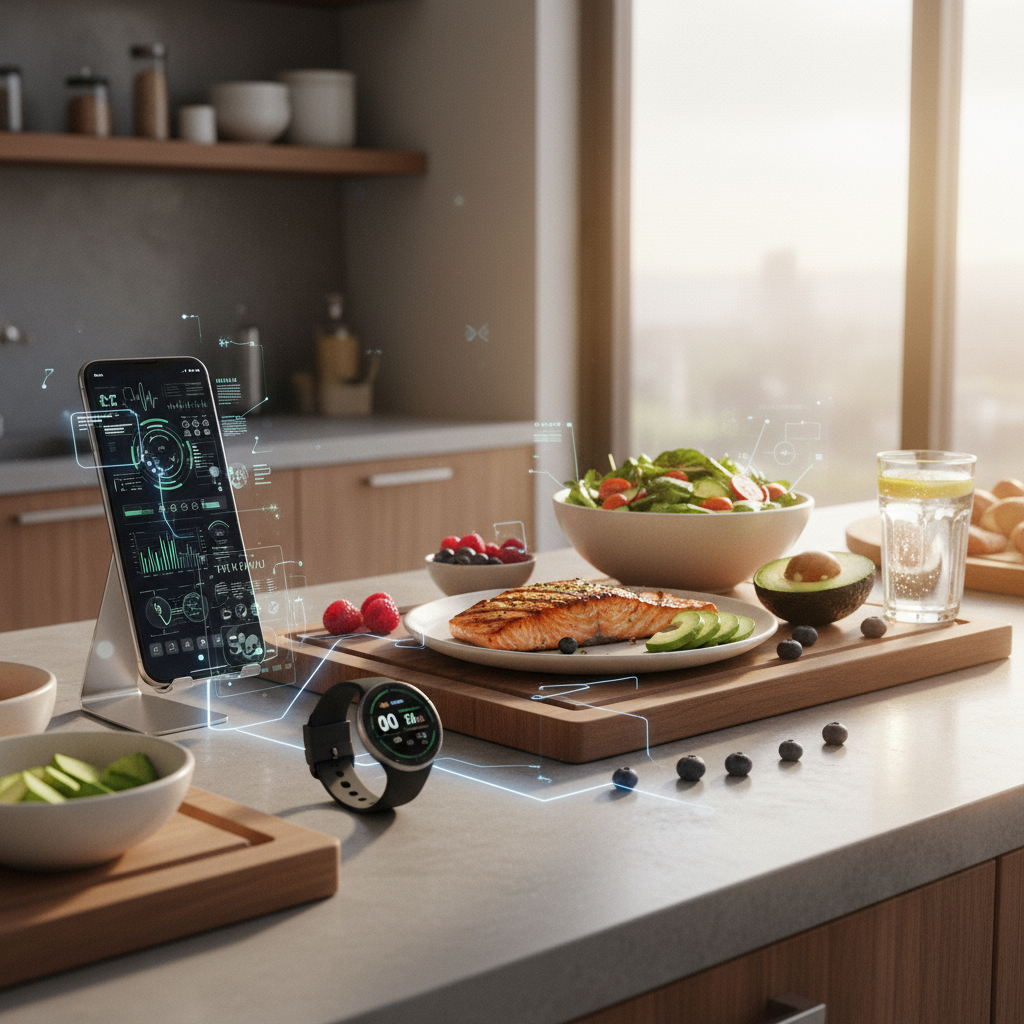
AI-powered nutrition tracking is replacing manual food logging with faster, more accurate methods. A 2024 systematic review in Nutrients found that AI food recognition systems now achieve 85-92% accuracy for calorie estimation — within the same error range as trained dietitians. Combined with wearable integrations and personalized recommendations, these technologies are making consistent nutrition tracking achievable for millions of people who previously abandoned manual methods.
This guide explores how artificial intelligence and emerging technology are reshaping every aspect of nutrition tracking in 2026 — from the computer vision models that analyze your meals to the metabolic sensors that may soon track calories in real time.
How Does AI Food Recognition Work?
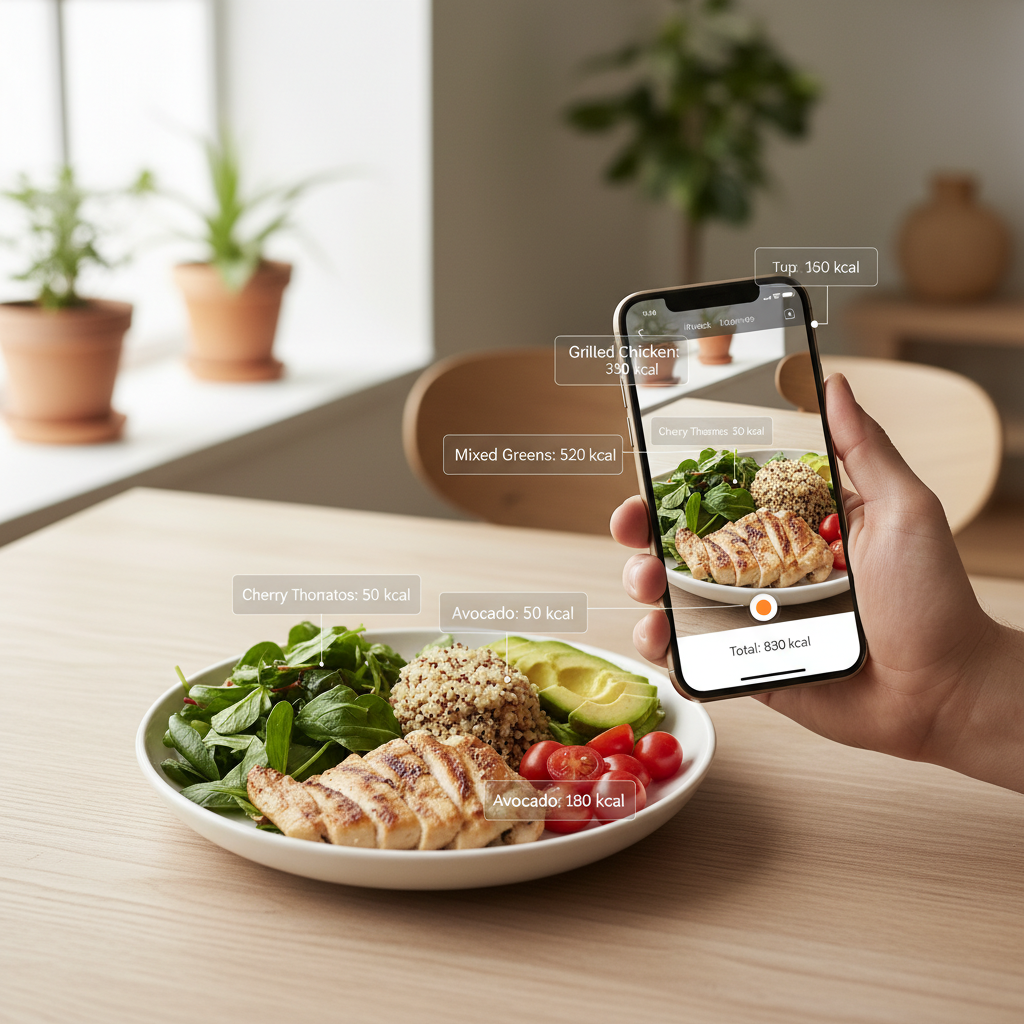
AI food recognition uses deep learning models trained on millions of labeled food images to identify dishes, estimate portion sizes, and calculate nutritional content from a single photograph. The process happens in three stages: food detection, food classification, and portion estimation.
What Happens When You Photograph Your Meal?
When you snap a photo of your plate, the AI performs a rapid multi-step analysis:
| AI Recognition Stage | Accuracy (2026) | Key Challenge |
| Food detection | 96-98% | Overlapping items, mixed dishes |
| Food classification | 90-94% | Regional dishes, similar-looking foods |
| Portion estimation | 80-88% | Depth perception, hidden ingredients |
| Overall calorie accuracy | 85-92% | Compounded errors across stages |
How Accurate Is AI Calorie Tracking Compared to Manual Methods?
The practical question most people ask is: can AI track calories as accurately as doing it by hand? The evidence suggests it can — and in many scenarios it performs better, primarily because it eliminates the human errors that plague manual logging.
What Does the Research Show?
A 2024 meta-analysis in the Journal of Medical Internet Research compared AI-based food logging with traditional manual methods across 14 clinical studies. The findings:
- AI photo-based tracking estimated calories within 15-20% of weighed food records (the gold standard).
- Manual self-reporting estimated calories within 20-40% of weighed records, with a consistent bias toward underreporting. A 2019 study in the American Journal of Clinical Nutrition found that people underreport calorie intake by an average of 30%.
- Adherence rates were significantly higher with AI tracking: 78% of participants used photo-based logging consistently over 12 weeks versus 42% for manual diary methods.
Where Does AI Tracking Still Struggle?
AI food recognition has known limitations:
What Role Do Wearables Play in Modern Nutrition Tracking?
Wearable technology is expanding nutrition tracking beyond food logging. Smartwatches, fitness bands, and emerging biosensors provide data that enriches calorie tracking by measuring the other side of the energy balance equation: energy expenditure.
How Do Wearables Improve Calorie Balance Calculations?
Traditional calorie tracking focuses on input (food) but relies on rough estimates for output (activity). Wearables close this gap:
- Continuous heart rate monitoring enables more accurate exercise calorie calculations. A 2023 study in the European Journal of Applied Physiology found that wrist-based heart rate monitors estimate exercise energy expenditure within 10-15% for steady-state activities.
- Step counting and activity classification quantify NEAT (Non-Exercise Activity Thermogenesis), which accounts for 15-30% of daily energy expenditure and is the most variable component of TDEE.
- Sleep tracking provides data on sleep duration and quality — a critical factor for weight management, as sleeping fewer than 7 hours increases hunger hormones by 28% and drives an average of 385 extra daily calories consumed, according to a 2016 meta-analysis in the European Journal of Clinical Nutrition.
| Wearable Metric | Accuracy | Impact on Tracking |
| Step count | 95-98% | Quantifies daily NEAT |
| Exercise calories | 80-90% | More accurate than estimate-based methods |
| Resting heart rate | 95-99% | Indicator of metabolic health and recovery |
| Sleep duration | 85-92% | Links sleep to appetite and energy regulation |
What Emerging Sensors Could Change Everything?
Several technologies in clinical development or early consumer release could transform nutrition tracking by 2027-2028:
How Is AI Personalizing Nutrition Recommendations?
The most transformative application of AI in nutrition is not tracking what you eat — it is telling you what you should eat. Machine learning models can synthesize your food logs, activity data, biometrics, goals, and preferences into personalized recommendations that adapt in real time.
How Do Personalized AI Nutrition Systems Work?
Modern AI nutrition platforms use a combination of data sources to build individualized models:
A 2025 randomized controlled trial published in Nature Digital Medicine found that participants using AI-personalized meal recommendations lost 34% more weight over 6 months compared to those following standard calorie-counting guidelines — primarily because adherence was 2.3x higher in the AI group.
For understanding the macro targets these systems optimize around, see our ultimate guide to macronutrients.
What Are the Biggest Challenges Facing AI Nutrition Tracking?
Despite rapid progress, significant challenges remain before AI nutrition tracking reaches its full potential.
What About Data Privacy and Security?
Nutrition tracking generates intimate personal data — what you eat, when, how much, and combined with biometrics, a detailed picture of your metabolic health. Key concerns include:
- Data storage and encryption. Food photos, body measurements, and health metrics must be encrypted in transit and at rest. KCALM processes food photos for analysis only and does not store them permanently.
- Third-party data sharing. Many free nutrition apps monetize user data by selling dietary patterns to food companies, insurers, or advertisers.
- Regulatory compliance. The EU AI Act (effective August 2026) and California's AI Transparency Act (effective January 2026) impose new requirements for transparency in AI-powered health tools.
What About Algorithmic Bias in Food Recognition?
AI models are only as good as their training data. If a food recognition model is trained primarily on Western cuisines, it will perform poorly on South Asian, African, Latin American, or Middle Eastern dishes. A 2024 audit published in AI and Ethics found that leading food recognition APIs had 23% lower accuracy on non-Western cuisines.
Addressing this requires diverse training datasets, regional model fine-tuning, and user feedback loops that continuously improve recognition for underrepresented food cultures.
How Will Nutrition Tracking Evolve Over the Next Five Years?
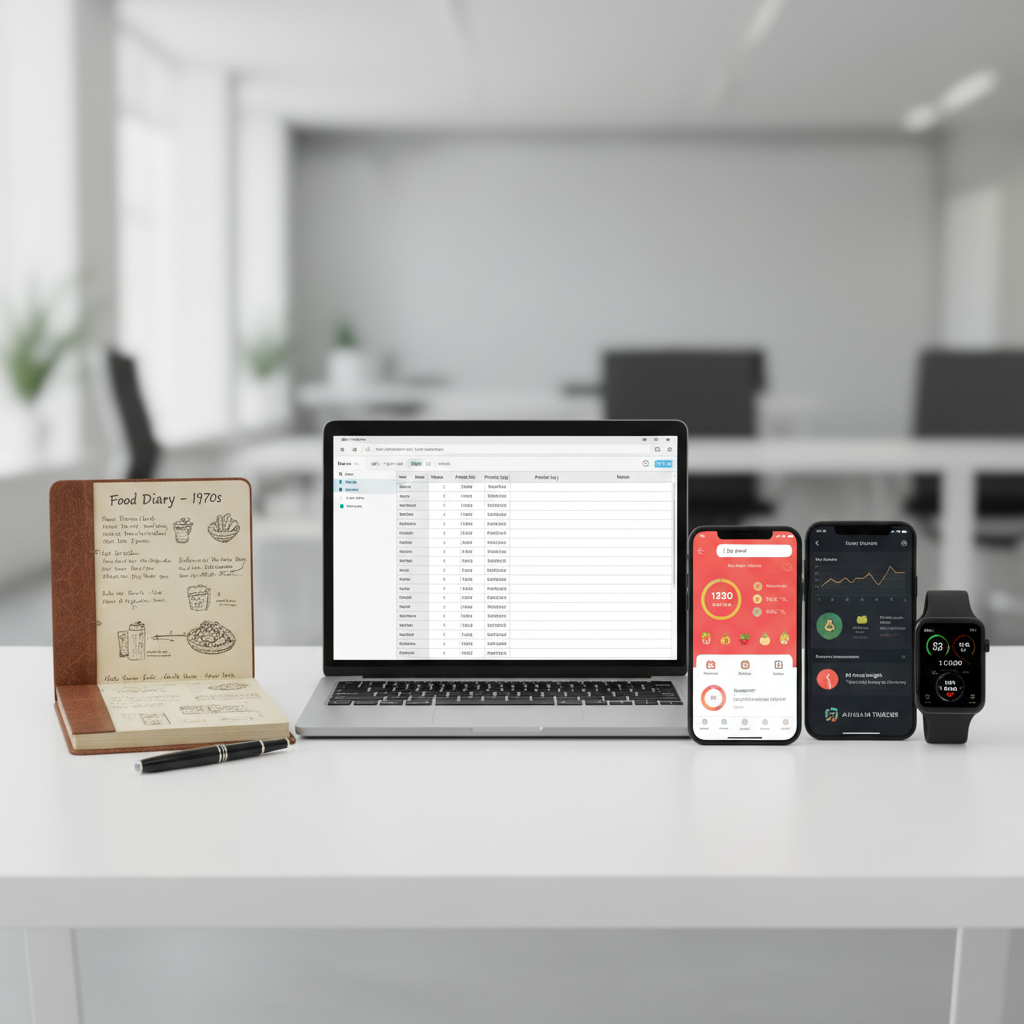
The trajectory of nutrition technology points toward a future where tracking is ambient, automatic, and almost invisible — requiring minimal user effort while providing maximum insight.
What Does the Near-Term Future Look Like (2026-2028)?
What About the Longer-Term Vision (2028-2030)?
- Passive calorie tracking. Wearable sensors that estimate energy intake from metabolic signals without any food logging at all. Early prototypes exist but accuracy remains below practical thresholds.
- Digital twins. Computational models of your individual metabolism that can simulate the effects of dietary changes before you make them — predicting weight, energy, and health outcomes.
- Gut microbiome integration. Personalized nutrition based on your unique gut bacteria composition, which a 2020 study in Cell identified as a key mediator of individual responses to identical foods.
How Does KCALM Use AI to Make Tracking Effortless?
KCALM is built from the ground up around AI-powered nutrition tracking. The app uses advanced food recognition models to analyze meal photos, estimate calories and macros, and provide instant nutritional feedback — turning a process that once took 3-5 minutes of manual data entry into a 10-second photo snap.
What Makes KCALM's AI Approach Different?
- Photo-first workflow. Take a photo, review the AI's analysis, and confirm. No searching through food databases or estimating serving sizes manually.
- Continuous learning. KCALM's models improve based on user corrections and feedback, getting more accurate for the foods you eat most often.
- Science-based targets. Calorie and macro goals are calculated using the Mifflin-St Jeor equation, the most accurate clinically validated BMR formula. See our Mifflin-St Jeor explainer for the science behind it.
- Privacy by design. Food photos are processed for analysis only and not stored permanently. Data is encrypted and users can delete everything at any time.
Frequently Asked Questions
How accurate is AI calorie tracking in 2026?
AI-powered food recognition systems achieve 85-92% accuracy for calorie estimation, according to a 2024 systematic review in Nutrients. This places AI within the same accuracy range as trained dietitians (90-95%) and significantly better than self-reported manual tracking, which typically underestimates calories by 20-40%. Accuracy improves with good photo quality and clear food separation on the plate.
Can AI recognize any type of food from a photo?
Modern AI food recognition can identify thousands of common dishes and individual ingredients. However, performance varies by cuisine — models trained primarily on Western foods may have 23% lower accuracy on non-Western dishes. Mixed dishes like casseroles, smoothies, and wrapped foods are also more challenging. The technology improves continuously through expanded training datasets and user corrections.
Will AI replace nutritionists and dietitians?
No. AI nutrition tools are designed to augment, not replace, professional guidance. AI excels at consistent, low-friction daily tracking and pattern recognition. Registered dietitians provide clinical judgment, motivational coaching, and specialized medical nutrition therapy that AI cannot replicate. The ideal approach combines AI-powered tracking for daily data collection with periodic professional consultations for strategic guidance.
How do wearables improve nutrition tracking accuracy?
Wearables contribute by measuring the energy expenditure side of the calorie equation. Continuous heart rate monitoring estimates exercise calories within 10-15%, step counting quantifies daily movement, and sleep tracking identifies patterns that affect appetite and metabolism. When integrated with food tracking data, wearables provide a more complete picture of energy balance than food logging alone.
Is it safe to share my food data with AI apps?
Safety depends on the app's data practices. Look for apps that encrypt data in transit and at rest, do not sell personal data to third parties, and allow users to delete all data on request. KCALM processes food photos for analysis without permanent storage and uses row-level security for data isolation. Always review an app's privacy policy before committing your nutritional data.
What is a continuous glucose monitor and should I use one for tracking?
A continuous glucose monitor (CGM) is a small sensor that measures blood sugar levels in real time, typically worn on the upper arm. CGMs are clinically necessary for diabetes management and increasingly used by non-diabetic consumers for personalized nutrition insights. A 2024 study found CGM-guided eating improved blood sugar control by 25%. However, CGMs are not required for effective nutrition tracking — they are an optional advanced tool.
How does AI food tracking compare to barcode scanning?
Barcode scanning is highly accurate for packaged foods (99%+ when the product is in the database) but useless for home-cooked meals, restaurant food, and fresh produce. AI photo recognition works for all food types but has lower precision for packaged items. The best tracking apps combine both methods: scan barcodes for packaged foods and photograph everything else.
What will nutrition tracking look like in 5 years?
By 2028-2030, expect multi-modal tracking combining photos, voice, receipts, and grocery data. Wearable metabolic sensors may enable passive calorie estimation without any manual logging. Digital twin technology could simulate how dietary changes affect your body before you make them. The trend is toward ambient, effortless tracking that requires minimal user input while delivering maximum personalized insight.
Sources
Ready to track smarter?
Join thousands who use KCALM for calorie tracking. AI-powered food recognition, scientifically-validated calculations, and zero anxiety.
Related Articles
How Stress and Sleep Affect Your Nutrition and Weight
Poor sleep and chronic stress sabotage your diet. Learn how cortisol drives cravings, why sleep-deprived people eat 300+ extra calories daily, and evidence-based strategies to break the cycle.
ScienceGut Health and Your Microbiome: A Nutrition Guide
How does food shape your gut microbiome? Learn which foods feed beneficial bacteria, the fiber-gut connection, fermented foods vs. supplements, and meal plans for better digestive health.
ScienceGLP-1 Medications and Nutrition: What You Need to Know
How GLP-1 medications like Ozempic and Mounjaro affect your nutrition needs. Learn about protein goals, micronutrient gaps, calorie tracking, and evidence-based diet strategies while on GLP-1 drugs.