Eating Out? How to Estimate Restaurant Calories Without Stressing
Practical tips for estimating calories when dining out, from visual portion guides to cuisine-specific strategies.

James Nakamura
Sports Nutritionist & Meal Prep Coach
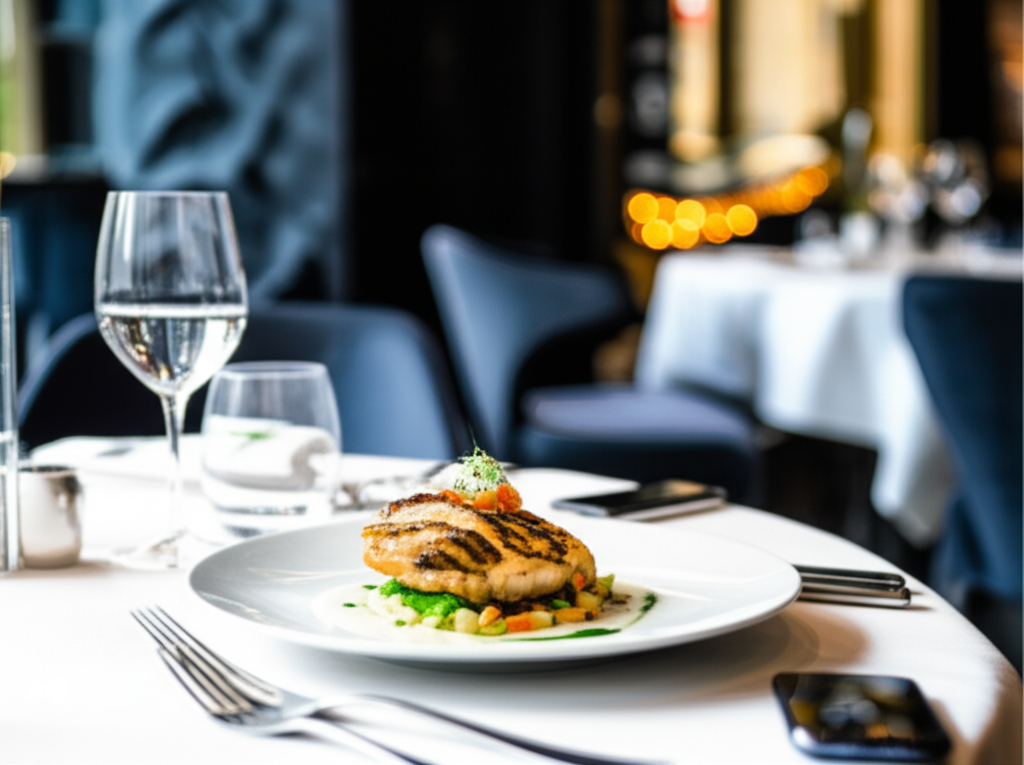
You don't have to eat every meal at home to track calories effectively. Restaurants are a normal part of life, and with the right strategies, you can make reasonable estimates without stressing over every ounce.
The Restaurant Calorie Problem
Let's be honest: restaurant portions are typically large, and calorie counts are often higher than you'd expect. A few reasons why:
Portion sizes Restaurant servings are 2-3x larger than standard portions. A restaurant pasta dish might contain 3-4 cups of pasta when a serving is 1 cup.
Hidden fats Butter, oil, and cream make food taste great. Restaurants use them liberally. A "grilled" chicken breast at a restaurant may have 200+ more calories than the same chicken at home.
Accuracy of posted counts Even when restaurants post calorie counts, studies show they're often 10-20% under actual values.
This doesn't mean you can't eat out—just that awareness and estimation strategies help.
Menu Calorie Counts: Helpful but Limited
Many chain restaurants now post calorie counts. Use them as a reference point, but know their limitations:
What they get right:
- Standardized menu items
- Average portion sizes
- Main ingredients
- Extra butter the cook added
- Larger-than-standard portions
- Substitutions and additions
- Daily specials
Visual Portion Estimation Techniques
Without a scale, visual references help you estimate amounts:
The Plate Method
- Half the plate should be vegetables
- Quarter of the plate is protein (about palm-sized)
- Quarter of the plate is starch (about fist-sized)
Standard Visual References
| Visual Reference | Food Equivalent | Approximate Amount |
| Deck of cards | Meat/fish | 3 oz, ~150 cal |
| Your fist | Rice/pasta (cooked) | 1 cup, ~200 cal |
| Tennis ball | Fruit/vegetables | 1 cup, ~50-100 cal |
| Thumb tip | Butter/oil | 1 tsp, ~40 cal |
| Whole thumb | Cheese | 1 oz, ~100 cal |
| Cupped hand | Nuts | 1 oz, ~170 cal |
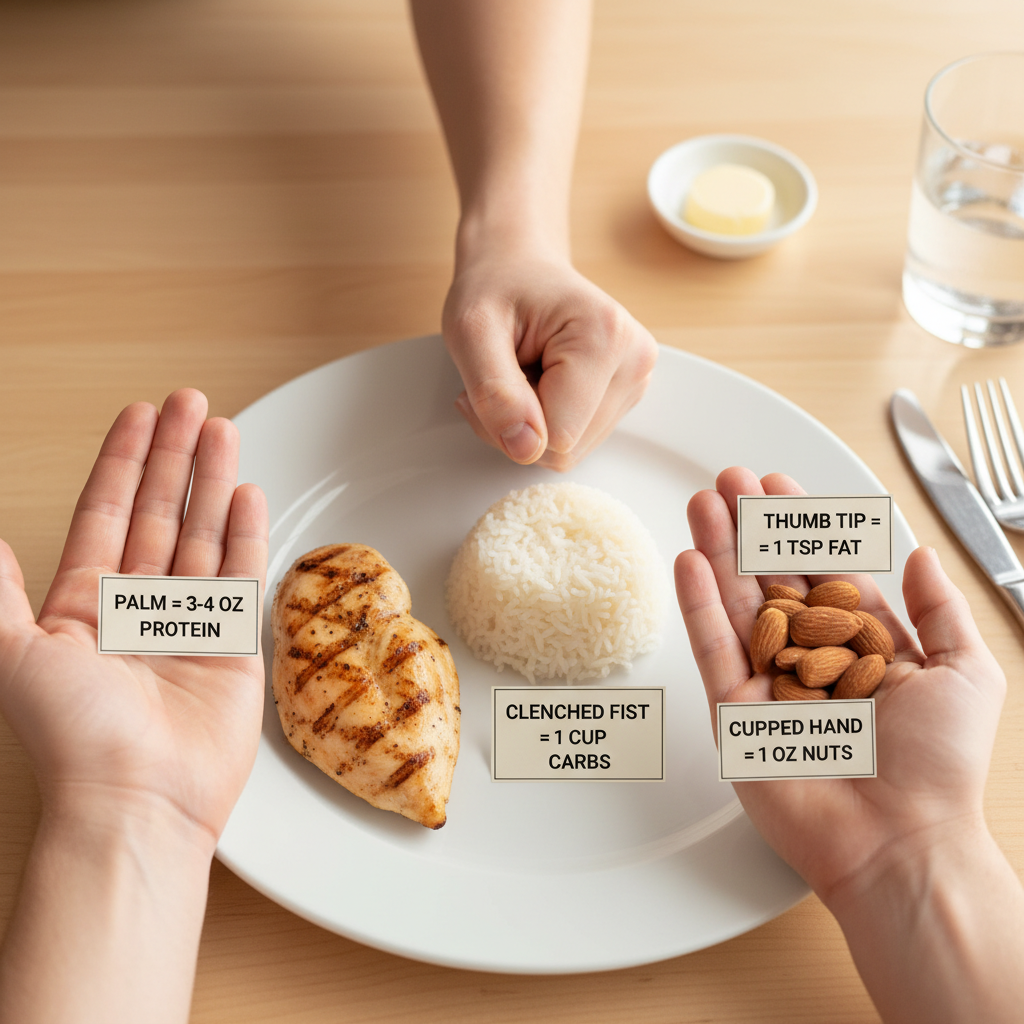
The Hand Method for Quick Estimates
Your hand is always with you, making it a useful measurement tool:
- Palm = 1 serving of protein (roughly 4 oz, 150-200 cal)
- Fist = 1 serving of carbs (roughly 1 cup, 150-200 cal)
- Cupped hand = 1 serving of fat (roughly 1-2 tbsp, 100-200 cal)
- Thumb = 1 serving of fat (roughly 1 tbsp, ~120 cal)
Cuisine-Specific Tips
Different cuisines have different calorie pitfalls. Here's what to watch for:
Italian
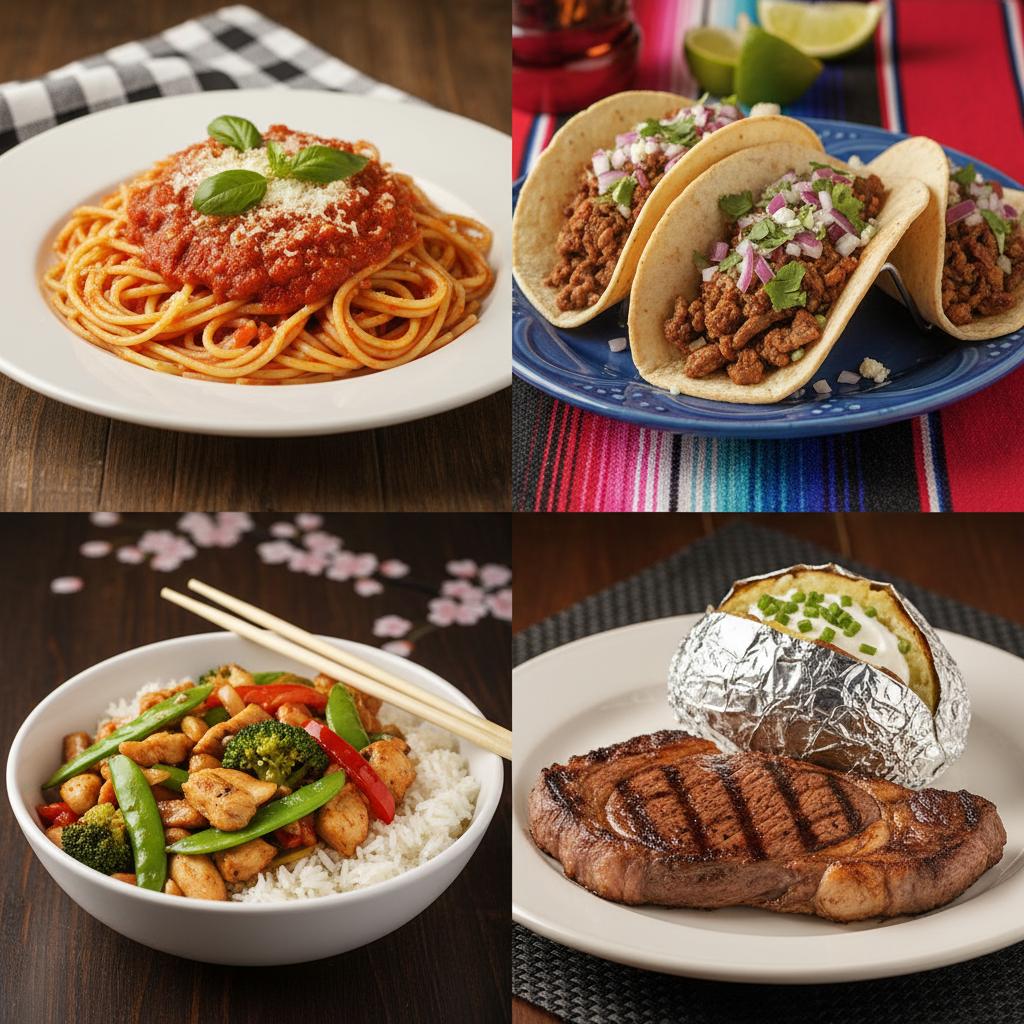
- Pasta servings are huge (often 3+ cups)
- Bread basket adds up quickly
- Cream sauces add 200-400 calories
- Estimate conservatively: simple pasta dish = 800-1200 cal
Mexican
- Chips and queso can exceed 1000 calories
- Cheese, sour cream, and guac pile on
- Tortillas add 100-150 cal each
- Estimate: burrito = 1000-1400 cal; tacos = 300-400 cal each
Asian
- Rice servings are substantial
- Sauces often contain sugar and oil
- Fried items absorb significant fat
- Estimate: stir-fry with rice = 700-1000 cal; fried rice = 800-1200 cal
American/Steakhouse
- Steaks are often 8-16 oz (double a standard portion)
- Sides are caloric (loaded potato, creamed spinach)
- Estimate: steak dinner = 1200-2000 cal depending on size
Fast Food
- This is where posted calories are most reliable
- Combos with fries and drinks hit 1200-1800 cal easily
- Consider: smaller sizes, water, skip the fries occasionally
When to Just Enjoy the Meal
Not every meal needs to be tracked precisely. There are times when estimation isn't worth the mental energy:
- Special occasions: Birthdays, anniversaries, celebrations
- Travel: Experiencing local cuisine is part of the journey
- Social meals: When tracking would be awkward or obsessive
- Recovery periods: If tracking is causing stress
The KCALM Restaurant Strategy
KCALM's AI Snap feature is particularly useful for restaurant meals:
The AI gives you a reasonable starting point that beats pure guesswork, and you can refine from there. We'd rather you log an approximate entry than skip logging entirely because precise tracking felt impossible.
Practical Tips for Dining Out
Before you go:
- Check the menu online if available
- Consider calorie counts in your restaurant choice
- Don't "save calories" by skipping meals—this often leads to overeating
- Order protein and vegetables as your base
- Ask for sauces on the side
- Request that half your entree be boxed before it arrives
- Choose grilled, baked, or steamed over fried
- Round up rather than down
- Remember that restaurant portions are larger
- Add 200-300 calories for cooking oils you can't see
Frequency Matters Most
If you eat out once a week, estimation accuracy matters less than you think. Even a 500-calorie error once weekly is only a 71-calorie daily average.
If you eat out frequently, tighter estimation becomes more important—or focus on consistently choosing lower-calorie options.
The Bottom Line
Restaurant eating and calorie tracking can coexist. Use visual estimation, leverage posted calories when available, and don't let imperfect data stop you from logging.
Tracking something approximate is better than tracking nothing. Enjoy your restaurant meals, estimate reasonably, and stay consistent with your overall approach.
Eating well while eating out—it's all about balance.
Ready to track smarter?
Join thousands who use KCALM for calorie tracking. AI-powered food recognition, scientifically-validated calculations, and zero anxiety.
Related Articles
Meal Prep and Calorie Counting: How to Track Batch-Cooked Meals
Master the art of tracking batch-cooked meals with simple strategies for calculating calories in meal prep containers.
Tips & Tricks7 Common Calorie Counting Mistakes (And How to Avoid Them)
Avoid these common pitfalls that derail calorie tracking efforts and learn how to log more accurately for better results.