Prebiotics vs. Probiotics: A Beginner's Guide to Gut Health
What is the difference between prebiotics and probiotics? Learn which foods and supplements support gut health, how to choose the right strains, and what the science says.

Dr. Maya Patel
Registered Dietitian, M.S. Nutrition Science
Prebiotics are non-digestible fibers that feed your beneficial gut bacteria, while probiotics are live microorganisms that add to your gut's microbial population. A 2024 meta-analysis in Nutrients found that combining both — called synbiotics — improved digestive health markers by 34% more than either alone. Understanding the difference is the first step toward a healthier gut.
Your gut microbiome contains roughly 100 trillion bacteria spanning over 1,000 species. These microbes influence everything from digestion and immune function to mood and metabolism. Yet a 2023 survey by the American Gastroenterological Association found that 62% of adults confuse prebiotics with probiotics or think they're the same thing. They're not — and using them correctly matters. This guide breaks down exactly what each does, which foods and supplements deliver real results, and how to build a gut-friendly eating plan backed by science.
What Is the Difference Between Prebiotics and Probiotics?
Prebiotics are food for your good bacteria. Probiotics are the bacteria themselves. Think of prebiotics as fertilizer and probiotics as seeds — you need both for a thriving gut garden.
Prebiotics are specific types of dietary fiber — primarily inulin, fructooligosaccharides (FOS), and galactooligosaccharides (GOS) — that resist digestion in the upper GI tract and ferment in the colon. This fermentation produces short-chain fatty acids (SCFAs) like butyrate, which fuel colon cells and reduce inflammation.
Probiotics are live bacteria and yeasts, most commonly Lactobacillus and Bifidobacterium strains, that confer a health benefit when consumed in adequate amounts. According to the International Scientific Association for Probiotics and Prebiotics (ISAPP), the minimum effective dose is typically 1 billion colony-forming units (CFU) per day.
| Feature | Prebiotics | Probiotics |
| What they are | Non-digestible fibers | Live microorganisms |
| Function | Feed existing good bacteria | Add new beneficial bacteria |
| Found in | Garlic, onions, bananas, oats | Yogurt, kefir, kimchi, sauerkraut |
| Survive cooking | Yes | No (heat kills live cultures) |
| Shelf stability | Stable | Requires refrigeration (most strains) |
| Minimum effective dose | 3-5g fiber/day | 1 billion CFU/day |
Which Foods Are the Best Sources of Prebiotics?
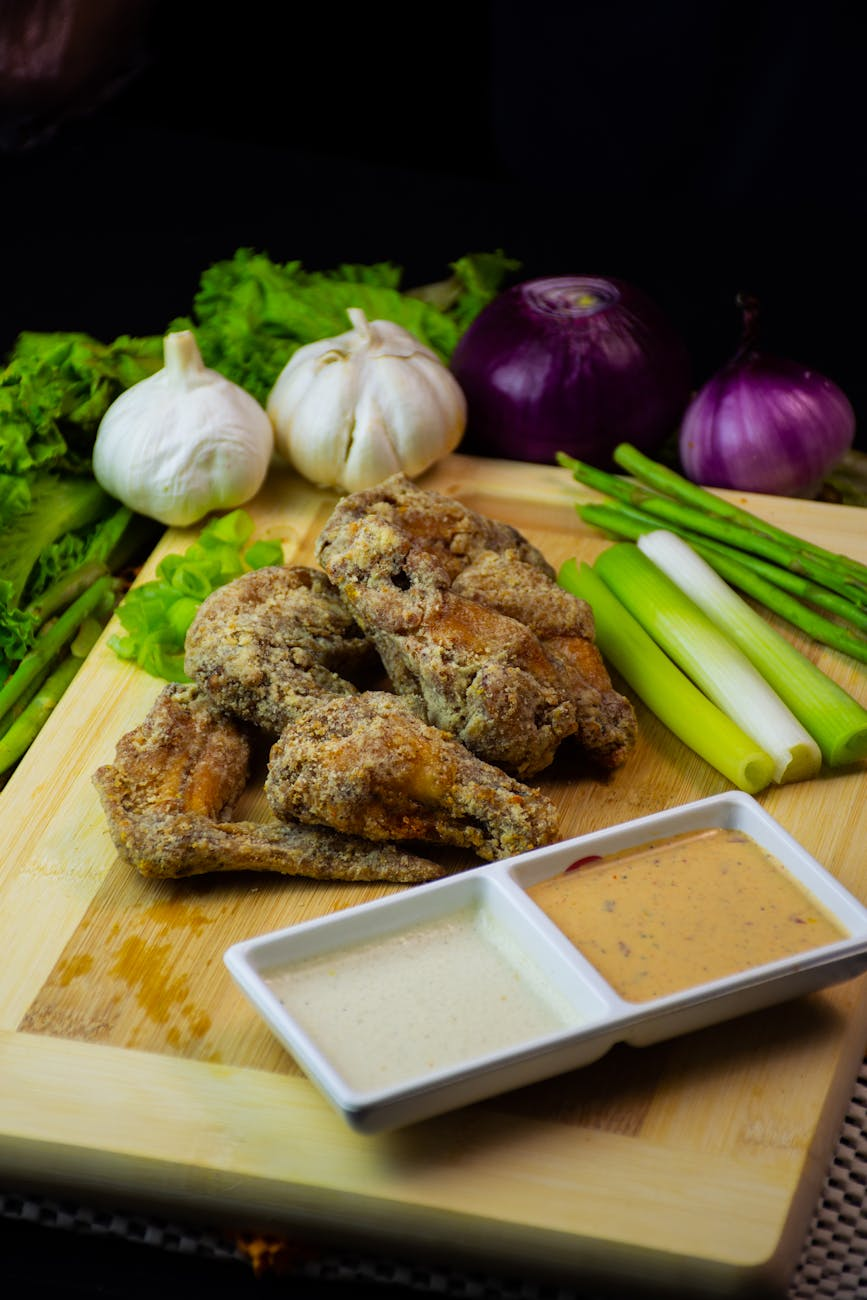
The highest prebiotic foods are those rich in inulin and FOS fibers. Chicory root leads the list with 64.6g of inulin per 100g, but everyday foods like garlic, onions, and bananas are the most practical daily sources.
A 2022 study in The Journal of Nutrition found that participants who consumed at least 5g of prebiotic fiber daily showed a 25% increase in beneficial Bifidobacterium populations within just two weeks. You don't need supplements — strategic food choices deliver enough prebiotic fiber for most people.
Top 10 prebiotic foods ranked by fiber content:
For anyone tracking their nutrition with an app like KCALM, logging these foods helps you see how much prebiotic fiber you're actually consuming — most people get far less than the recommended 5g daily minimum.
Which Probiotic Strains Actually Work?
Not all probiotics are equal. Specific strains have specific benefits, and a 2023 systematic review in The Lancet Gastroenterology & Hepatology confirmed that strain selection matters more than total CFU count for clinical outcomes.
The most evidence-backed probiotic strains and their proven benefits:
| Strain | Primary Benefit | Evidence Level | Found In |
| Lactobacillus rhamnosus GG | Antibiotic-associated diarrhea | Strong (20+ RCTs) | Supplements, some yogurts |
| Saccharomyces boulardii | Traveler's diarrhea, C. diff | Strong (15+ RCTs) | Supplements only |
| Bifidobacterium lactis BB-12 | General immune support | Moderate (10+ RCTs) | Yogurt, supplements |
| Lactobacillus acidophilus NCFM | Lactose intolerance relief | Moderate (8+ RCTs) | Yogurt, supplements |
| Bifidobacterium longum 35624 | IBS symptom relief | Moderate (5+ RCTs) | Supplements (Align brand) |
| Lactobacillus reuteri DSM 17938 | Infant colic, gut motility | Strong (12+ RCTs) | Supplements (BioGaia) |
What Are the Best Probiotic Foods to Eat?
Fermented foods are the most effective way to get probiotics from food — and they come with additional nutrients that supplements can't match. A landmark 2021 Stanford study published in Cell found that a diet rich in fermented foods increased microbial diversity by 6.3% over 10 weeks, while a high-fiber diet alone did not increase diversity in the same timeframe.
The top fermented foods for probiotic content:
- Yogurt with live cultures — Look for "contains live and active cultures" on the label. Greek yogurt also delivers 15-20g of protein per serving, making it a great fit for protein tracking goals.
- Kefir — Contains 12-50 different bacterial strains compared to yogurt's 2-7. One cup provides roughly 10 billion CFU.
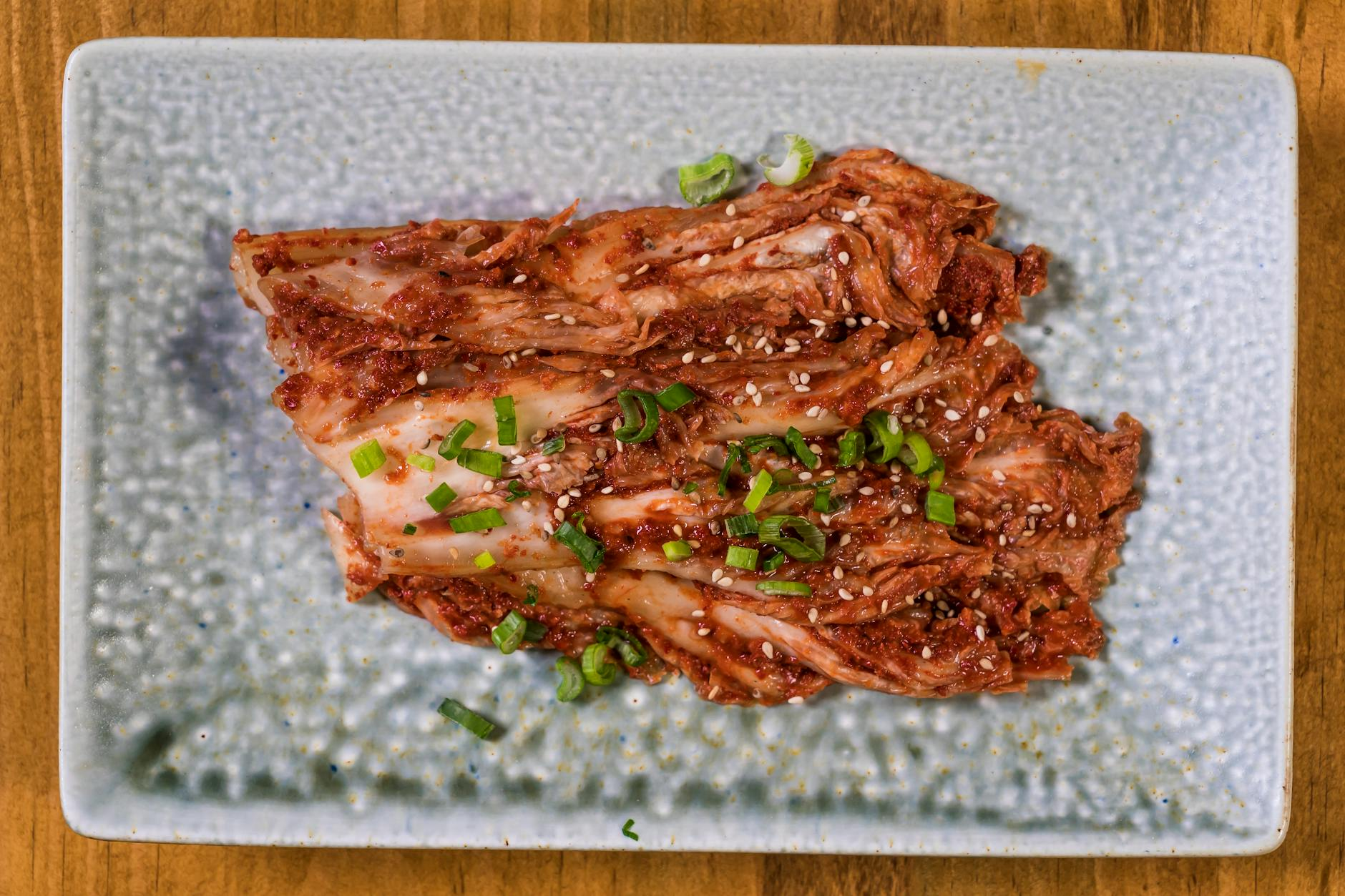
- Kimchi — Traditional Korean fermented vegetables deliver Lactobacillus strains plus fiber and vitamins A and C.
- Sauerkraut — Unpasteurized sauerkraut contains 1-10 billion CFU per serving. Must be refrigerated (shelf-stable versions are pasteurized and lack live cultures).
- Miso — Fermented soybean paste with Aspergillus oryzae and beneficial bacteria. Use in dressings and soups (add after cooking to preserve cultures).
- Kombucha — Fermented tea with variable probiotic content. Choose brands with less than 5g added sugar per serving.
How Do Prebiotics and Probiotics Work Together?
When you combine prebiotics and probiotics — called synbiotics — the prebiotic fiber acts as fuel for the probiotic bacteria, helping them survive, colonize, and multiply in your gut. A 2024 randomized controlled trial in Gut Microbes found that synbiotic supplementation improved gut barrier function by 41% compared to probiotics alone.
This is why eating fermented foods alongside high-fiber meals amplifies the gut health benefits of both. For example, topping oatmeal with yogurt and banana combines prebiotic oats and banana with probiotic yogurt in a single meal.
The synbiotic effect works through a three-step process:
A practical approach is to pair one prebiotic food with one probiotic food at every meal. When planning your weekly meals, include at least 2-3 fermented food servings per day alongside prebiotic-rich vegetables and whole grains.
Should You Take Probiotic Supplements or Eat Probiotic Foods?
For most healthy adults, food-based probiotics are sufficient and preferable. A 2023 consensus statement from the World Gastroenterology Organisation concluded that fermented foods provide probiotics alongside additional nutrients, bioactive compounds, and postbiotics that supplements cannot replicate.
However, supplements have an edge in specific clinical situations:
- After antibiotics — L. rhamnosus GG or S. boulardii reduces antibiotic-associated diarrhea by 42% (Cochrane Review, 2023)
- IBS management — Strain-specific probiotics like B. longum 35624 show consistent benefit in clinical trials
- Travel — S. boulardii taken 5 days before travel reduces traveler's diarrhea risk by 33%
- Immune support during illness — Multi-strain formulas with >10 billion CFU may shorten cold duration
- Daily gut maintenance and diversity
- Long-term microbiome health
- Nutrient density (protein, calcium, vitamins from fermented foods)
- Cost effectiveness (a container of yogurt costs less than a month of supplements)

How Much Prebiotic and Probiotic Food Do You Need Daily?
Current evidence suggests a minimum of 5g prebiotic fiber and 1 billion CFU of probiotics daily for general gut health maintenance. Most Western diets deliver only 1-4g of prebiotic fiber per day — well below the therapeutic threshold.
Here's a practical daily target framework:
| Goal | Prebiotic Fiber | Probiotic CFU | Example Daily Combo |
| General maintenance | 5-8g | 1-5 billion | 1 banana + 1 yogurt + garlic in dinner |
| Active gut repair | 10-15g | 10-20 billion | Oats + onion + 2 fermented servings + supplement |
| Post-antibiotic recovery | 8-12g | 20-50 billion | High-fiber meals + targeted strain supplement for 2-4 weeks |
| IBS symptom management | 5-10g (low FODMAP sources) | Strain-specific | Consult gastroenterologist for personalized plan |
What Are Common Mistakes People Make with Prebiotics and Probiotics?
The biggest mistake is treating all probiotics as interchangeable. A product with 50 billion CFU of an untested strain may be less effective than 1 billion CFU of a clinically validated strain. According to a 2024 analysis in Nature Reviews Gastroenterology & Hepatology, over 60% of commercial probiotic products make claims that lack supporting clinical evidence for the specific strains they contain.
Five common mistakes to avoid:
How Does Gut Health Connect to Weight Management?
Your gut bacteria directly influence how many calories you extract from food, how you store fat, and how hungry you feel. A 2023 meta-analysis in Obesity Reviews found that probiotic supplementation resulted in a modest but significant reduction in body weight (-0.82 kg) and BMI (-0.27 kg/m²) compared to placebo.
The gut-weight connection works through several mechanisms:
- Calorie extraction: Different bacterial profiles extract different amounts of energy from the same food. Studies show obese individuals have a higher ratio of Firmicutes to Bacteroidetes bacteria, a profile linked to greater calorie harvest.
- Appetite hormones: Gut bacteria produce short-chain fatty acids that stimulate GLP-1 and PYY — hormones that signal fullness. This overlaps with the mechanism behind GLP-1 medications used for weight management.
- Inflammation: An imbalanced microbiome increases systemic inflammation, which is associated with insulin resistance and fat storage.
Frequently Asked Questions
Can you take prebiotics and probiotics at the same time?
Yes, and it's actually the ideal approach. Taking them together — called synbiotics — allows prebiotic fibers to feed probiotic bacteria directly, improving colonization rates. A 2024 study in Gut Microbes found synbiotic combinations improved gut barrier function by 41% compared to probiotics alone. You can combine them by eating yogurt with a banana or oats, or by taking a synbiotic supplement.How long do probiotics take to work?
Most people notice digestive improvements within 2-4 weeks of consistent daily use. A 2023 study in Microbiome detected measurable bacterial composition shifts by day 14. However, specific conditions vary — antibiotic-associated diarrhea may improve in 2-3 days with S. boulardii, while IBS symptoms typically require 4-8 weeks of targeted strain therapy.Do probiotics survive stomach acid?
Many probiotic bacteria are killed by stomach acid before reaching the intestines. Enteric-coated supplements and spore-forming strains like Bacillus coagulans have higher survival rates. Taking probiotics with food — especially meals containing fat — buffers stomach acid and can increase survival by 20-40%, according to a 2022 study in Beneficial Microbes.Are probiotic supplements safe for everyone?
Probiotics are generally safe for healthy adults. However, immunocompromised individuals, those with central venous catheters, and critically ill patients should avoid them due to rare risks of bacteremia. A 2023 Cochrane Review confirmed that adverse events from probiotics in healthy populations are rare and typically limited to mild gas or bloating during the first week.What happens if you stop taking probiotics?
Probiotic bacteria from supplements typically don't permanently colonize your gut. Research shows that microbial populations return to baseline within 1-3 weeks of stopping supplementation. This is why consistent daily intake matters more than occasional high-dose use. Food-based probiotics like fermented foods may support longer-lasting changes when combined with a high-fiber diet.Do cooking and heating destroy prebiotics?
Unlike probiotics, prebiotic fibers are heat-stable and survive cooking. Inulin and FOS remain structurally intact at normal cooking temperatures. So cooked garlic, onions, and leeks retain their prebiotic benefits. However, some resistant starch — another type of prebiotic — actually increases when starchy foods like rice and potatoes are cooked and then cooled.Which is more important — prebiotics or probiotics?
Neither is more important — they serve complementary roles. However, if you had to choose one, increasing prebiotic fiber intake may have a broader impact because it feeds the beneficial bacteria already present in your gut. A 2022 Journal of Nutrition study found that 5g daily prebiotic fiber increased Bifidobacterium by 25% without any probiotic supplementation.Can prebiotics cause bloating?
Yes, especially when you increase intake too quickly. Prebiotic fibers ferment in the colon, producing gas as a natural byproduct. Start with 2-3g of prebiotic fiber and increase gradually over 2-3 weeks. People with IBS may need to focus on low-FODMAP prebiotic sources like cooked and cooled potatoes or partially green bananas rather than garlic and onions.Sources
Ready to track smarter?
Join thousands who use KCALM for calorie tracking. AI-powered food recognition, scientifically-validated calculations, and zero anxiety.
Related Articles
Nutrition for Fitness Goals: Fuel Muscle, Endurance & Fat Loss
How should you eat for your fitness goal? Learn evidence-based calorie, protein, carb, and fat targets for muscle building, endurance training, fat loss, and body recomposition.
NutritionPlant-Based Nutrition: How to Get Every Nutrient You Need
Can you get all essential nutrients on a plant-based diet? Learn which vitamins and minerals to prioritize, how to hit protein targets, and science-backed meal planning strategies.
NutritionFlexible Dieting and IIFYM: A Science-Backed Guide
What is flexible dieting (IIFYM)? Learn how If It Fits Your Macros works, how to calculate your macros, what the research says, and how to build a sustainable flexible eating plan.