Meal Prep and Calorie Counting: How to Track Batch-Cooked Meals
Master the art of tracking batch-cooked meals with simple strategies for calculating calories in meal prep containers.

James Nakamura
Sports Nutritionist & Meal Prep Coach
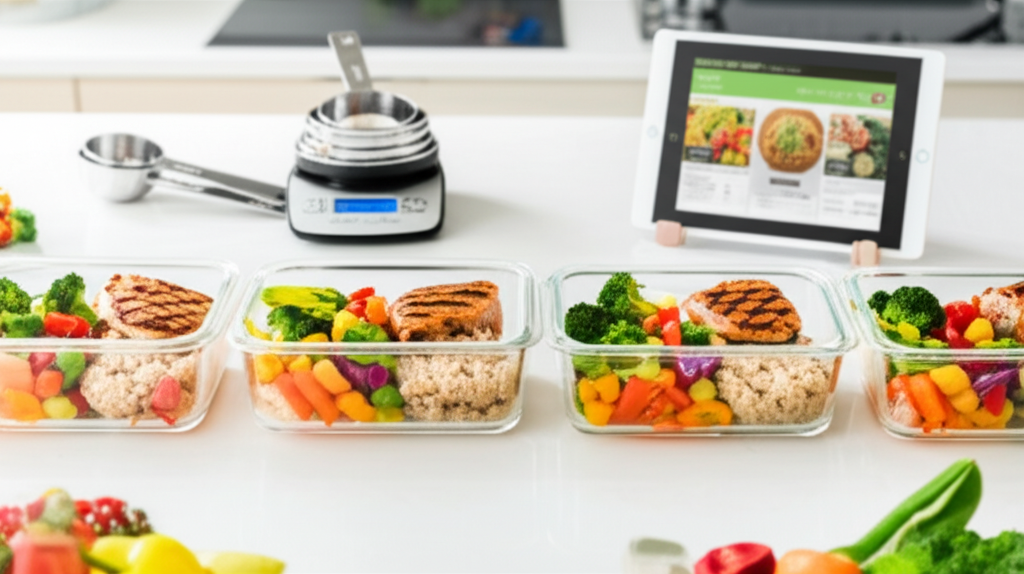
Meal prep is one of the best things you can do for both healthy eating and efficient calorie tracking. When you cook in batches and control your portions, you eliminate daily guesswork and decision fatigue. Here's how to track batch-cooked meals without overcomplicating things.
The Meal Prep Advantage for Nutrition Tracking
Why does meal prep make tracking easier?
Consistent portions When you divide a batch into equal containers, each portion has the same calories. Log it once, use it all week.
Known ingredients You know exactly what went into your food because you made it. No mystery restaurant sauces or hidden oils.
Reduced decisions Meals are ready. No thinking required. This reduces both time and the mental load of tracking.
Economies of scale Calculating nutrition for one batch of 8 servings takes the same time as calculating for one serving.
Calculating Calories for Batch Recipes
Here's a step-by-step process for accurately tracking batch-cooked meals:
Step 1: List All Ingredients
Write down everything that goes into your recipe with exact amounts:- 2 lbs chicken breast
- 1 tablespoon olive oil
- 2 cups brown rice (dry)
- 4 cups broccoli florets
- 2 tablespoons soy sauce
Step 2: Find Nutrition for Each Ingredient
Look up each ingredient in your tracking app:- Chicken breast, raw: 2 lbs = 784 calories, 163g protein
- Olive oil: 1 tbsp = 120 calories, 0g protein
- Brown rice, dry: 2 cups = 1,360 calories, 28g protein
- Broccoli: 4 cups = 136 calories, 11g protein
- Soy sauce: 2 tbsp = 18 calories, 2g protein
Step 3: Calculate Total Recipe Nutrition
Add up all ingredients:- Total calories: 2,418
- Total protein: 204g
- Total carbs: 240g
- Total fat: 58g
Step 4: Divide by Number of Portions
If you're making 6 portions:- Per portion: 403 calories, 34g protein, 40g carbs, 10g fat
Step 5: Create a Recipe in Your App
Most tracking apps let you save custom recipes. Enter the totals and serving count once, then log "Chicken Rice Bowl" with one tap all week.Dividing Portions Consistently
The math only works if portions are actually equal. Here's how to ensure consistency:
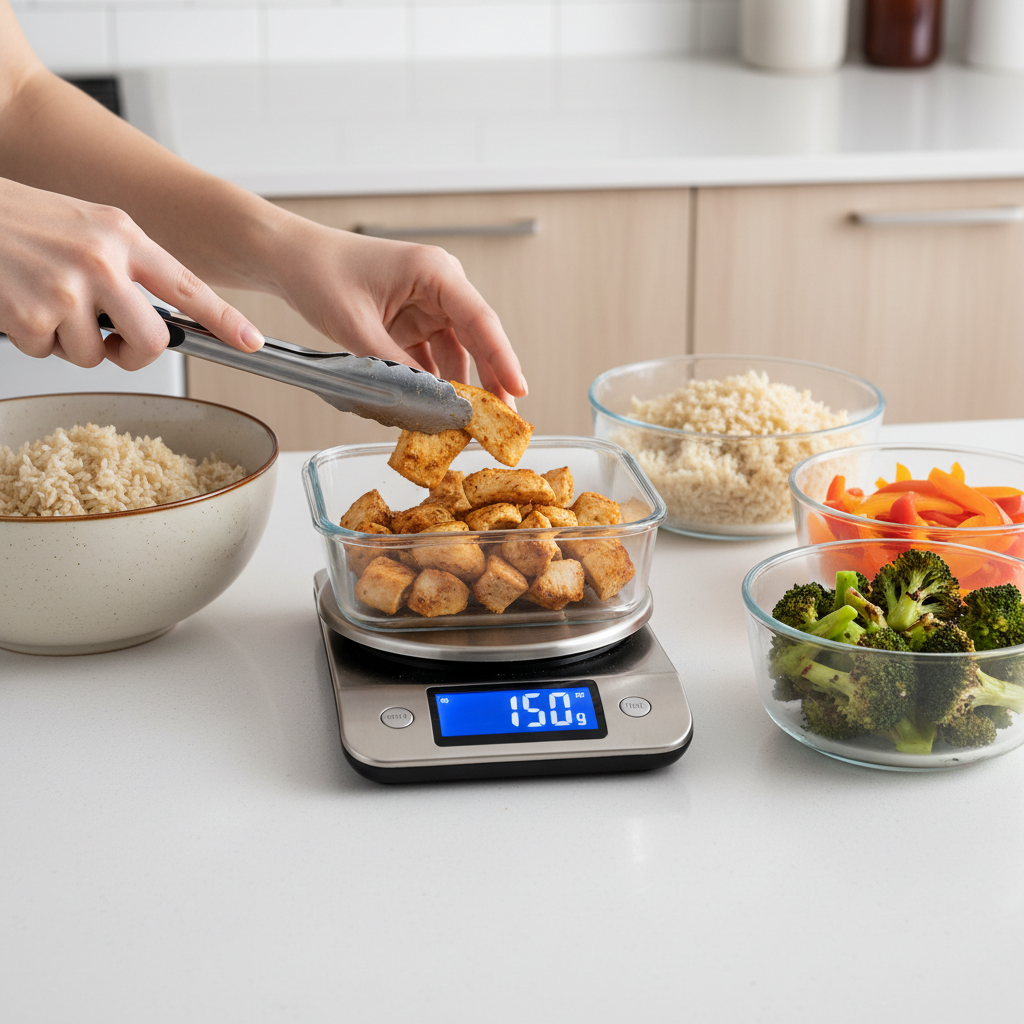
Use a food scale Weigh the total finished dish, then divide by your portion count. If total weight is 3,000g and you want 6 portions, each container gets 500g.
Use identical containers Same containers mean you can eyeball equal portions more easily. Fill to the same line each time.
Measure liquid components separately For dishes with separate components (protein, starch, vegetables), portion each element individually rather than mixing first.
Logging Strategies: Per-Meal vs. Per-Container
You have two main approaches:
Per-Container Logging
Create one "recipe" entry for your complete meal container.- Pros: One log entry per meal, simplest approach
- Cons: Less flexibility if you eat partial containers
Per-Component Logging
Create separate entries for each element (chicken, rice, vegetables).- Pros: More flexible, can adjust portions by component
- Cons: More log entries, slightly more time
Adjusting for Ingredient Variations
Real cooking involves variability. Here's how to handle common situations:
Meat weight loss during cooking
Raw chicken weighs more than cooked chicken due to water loss (typically 25-30%). Log the raw weight for accuracy, as nutrition databases typically use raw weights.Oil absorption
Not all oil stays in the pan. As a rule of thumb, assume 50-75% absorption for sautéing and roasting. If you use 2 tablespoons to cook chicken, log 1-1.5 tablespoons.Sauce and marinade
For marinades, much stays in the dish you discard. Log roughly 1/3 of the marinade's calories. For sauces you eat fully, log all of it.Produce weight changes
Vegetables lose water when cooked. Use raw weight for raw entries, cooked weight for cooked entries. Don't mix them.Sample Meal Prep with Calorie Breakdown
Here's a complete example of a week's meal prep:
Mediterranean Chicken Bowls (6 servings)
Ingredients:
| Ingredient | Amount | Calories | Protein |
| Chicken thighs, boneless | 2 lbs | 1,456 | 160g |
| Olive oil | 2 tbsp | 240 | 0g |
| Quinoa, dry | 2 cups | 1,248 | 44g |
| Cherry tomatoes | 2 cups | 54 | 2g |
| Cucumber, diced | 2 cups | 32 | 2g |
| Feta cheese | 4 oz | 300 | 16g |
| Kalamata olives | 1/2 cup | 130 | 1g |
| Lemon juice | 2 tbsp | 8 | 0g |
| Herbs/spices | — | 0 | 0g |
Per serving (6): 578 calories, 38g protein, 44g carbs, 28g fat
Weekly tracking: Log "Med Chicken Bowl" once per day, 5 days = 5 taps total.
The KCALM Approach to Meal Prep
With KCALM, meal prep tracking becomes even simpler:
You can also photograph your complete batch before portioning, enter the total nutrition, and specify serving count. KCALM divides automatically.
Meal Prep Tips for Tracking Success
Prep similar meals weekly If you rotate between 3-4 meal prep recipes, you'll have your common foods dialed in quickly.
Take photos of portions A visual reference helps you recreate portions and catch any drift over time.
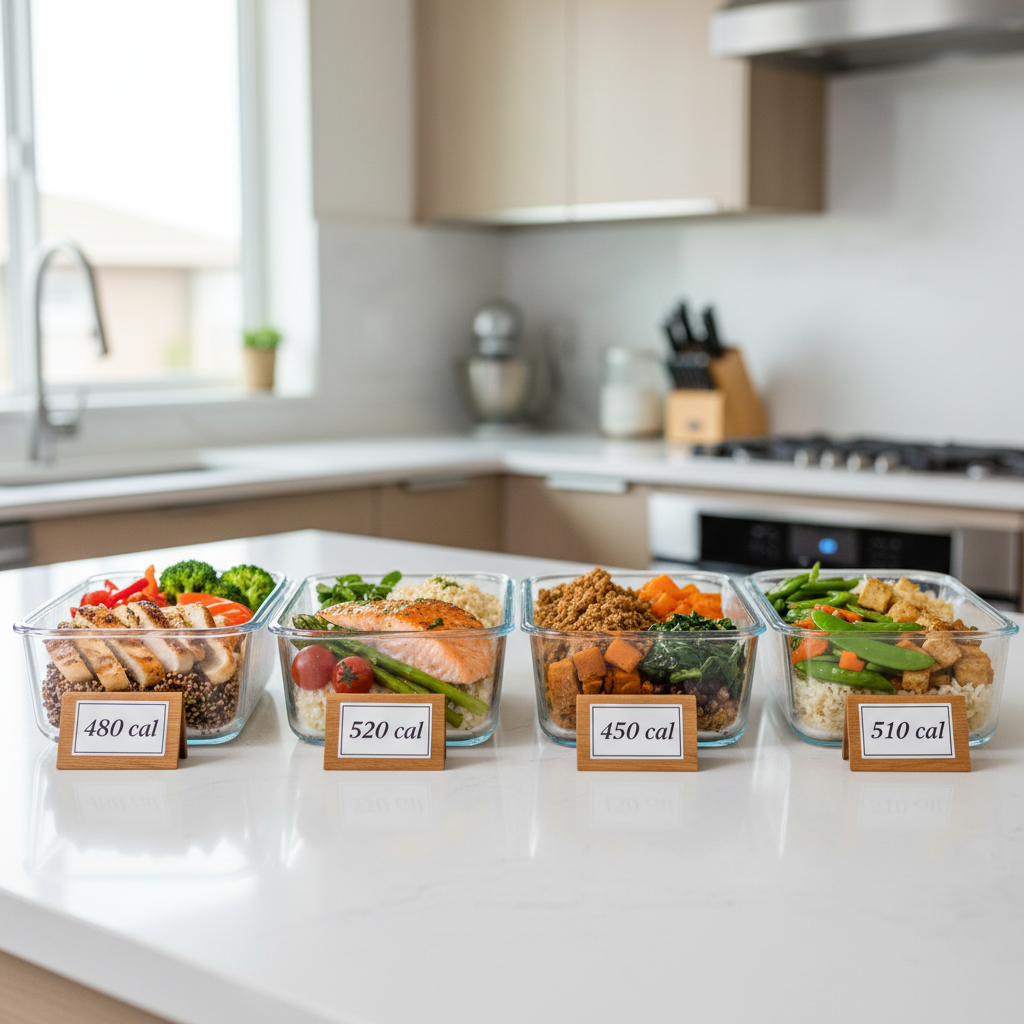
Label containers with macros A piece of tape with "400 cal / 35P" makes grabbing the right meal mindless.
Don't overthink small variations If one container has slightly more chicken than another, it averages out. Don't stress single-meal precision.
The Bottom Line
Meal prep and calorie tracking are natural partners. Cook once, track once, eat well all week. The upfront investment in calculating your batch pays dividends in daily simplicity.
Start with one meal prep recipe this week. Calculate it carefully once. Then enjoy the ease of one-tap logging for days to come.
Meal prep: Where preparation meets precision.
Ready to track smarter?
Join thousands who use KCALM for calorie tracking. AI-powered food recognition, scientifically-validated calculations, and zero anxiety.
Related Articles
Quick Healthy Meals Under 500 Calories You Can Make Fast
Need fast, low-calorie meals? Here are 15 quick healthy meals under 500 calories with full macro breakdowns, prep times under 20 minutes, and easy calorie tracking tips.
GuidesMeal Planning for Better Nutrition: A Complete System
Build a sustainable meal planning system backed by science: weekly templates, batch cooking strategies, macro-balanced meals, and tools to save time and hit nutrition goals.
Tips & TricksEating Out? How to Estimate Restaurant Calories Without Stressing
Practical tips for estimating calories when dining out, from visual portion guides to cuisine-specific strategies.