Meal Planning for Better Nutrition: A Complete System
Build a sustainable meal planning system backed by science: weekly templates, batch cooking strategies, macro-balanced meals, and tools to save time and hit nutrition goals.

James Nakamura
Sports Nutritionist & Meal Prep Coach
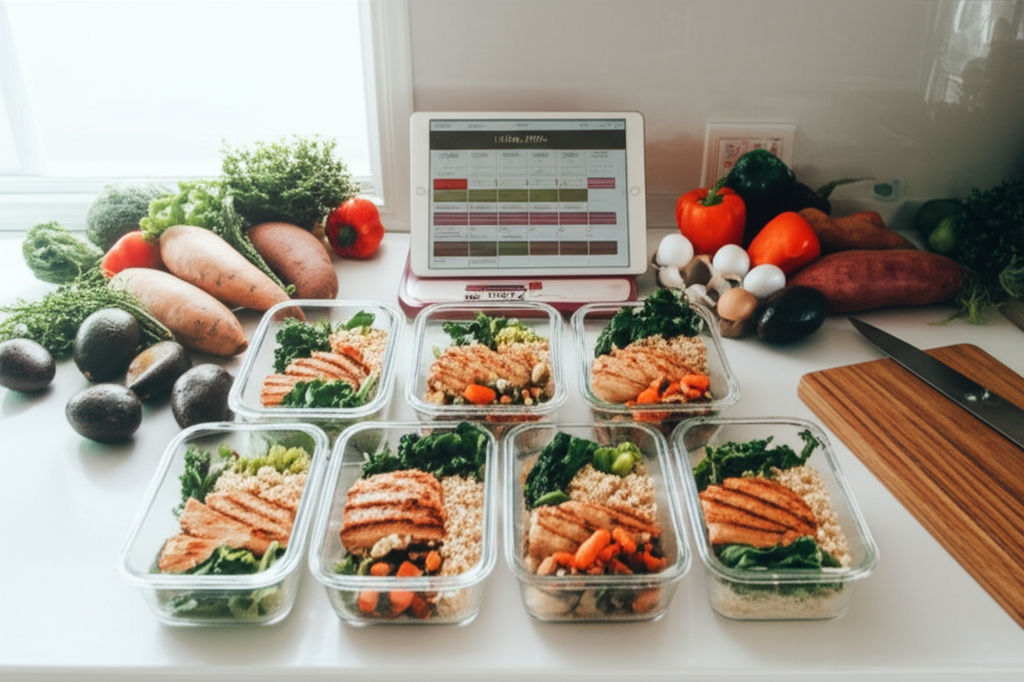
Meal planning is the single most effective habit for improving nutrition quality and consistency. People who plan meals at least 5 days per week consume significantly more fruits and vegetables and are 23% less likely to be overweight, according to a 2017 study in the International Journal of Behavioral Nutrition and Physical Activity. A complete meal planning system combines weekly templates, batch cooking, and macro-balanced recipes so you spend less time deciding what to eat and more time eating well.
This guide provides a step-by-step system for building a sustainable meal plan — from calculating your nutritional targets to shopping, prepping, and adapting your plan week over week. Whether you are tracking calories for weight loss, fueling athletic performance, or simply trying to eat healthier, this framework scales to your goals.
Why Does Meal Planning Improve Nutrition Outcomes?
Meal planning works because it removes the two biggest barriers to healthy eating: decision fatigue and time pressure. When you have no plan, you default to whatever is fastest and most convenient — which is rarely the most nutritious option.
A 2022 systematic review in Appetite analyzed 11 studies and found that meal planning was consistently associated with improved diet quality, greater food variety, and lower likelihood of obesity. The researchers noted that planners made fewer impulsive food choices, wasted less food, and spent less money on eating out.
The mechanism is straightforward. Planning ahead shifts food decisions from a high-stress, low-willpower moment (6 PM after a long day) to a calm, rational moment (Sunday morning with a cup of coffee). This aligns with behavioral science research showing that pre-commitment strategies are among the most effective tools for behavior change.
| Meal Planning Benefit | Evidence |
| Better diet quality | 23% less likely to be overweight (Ducrot et al., 2017) |
| Greater food variety | More fruit and vegetable servings per day |
| Lower food costs | 20-30% less spent on groceries per month |
| Less food waste | Planned households waste 25% less food |
| Time savings | 2-3 fewer hours per week on food decisions |
How Do You Calculate Your Meal Planning Targets?
Before building a meal plan, you need three numbers: your daily calorie target, your macronutrient split, and the number of meals you eat per day. These numbers determine the size and composition of every meal.
What Should Your Daily Calorie Target Be?
Your total daily energy expenditure (TDEE) is the number of calories you burn in a day. Eating at TDEE maintains your weight. Eating below it (a calorie deficit) produces fat loss. Eating above it (a calorie surplus) supports muscle gain.
For most adults, TDEE falls between 1,800 and 3,000 calories per day. The Mifflin-St Jeor equation is the gold standard for estimating it — validated by a 2005 meta-analysis in the Journal of the American Dietetic Association as the most accurate predictive equation for healthy adults. Our Mifflin-St Jeor explainer walks through the calculation step by step.
How Should You Distribute Macros Across Meals?
Once you know your daily targets, divide them evenly across your meals. Research from a 2018 study in the Journal of the International Society of Sports Nutrition found that distributing protein evenly across 3-4 meals (rather than loading it into one meal) maximized muscle protein synthesis throughout the day.
| Daily Target | 3-Meal Plan | 4-Meal Plan (3 + snack) |
| 2,000 cal | ~665 cal per meal | 550 cal meals + 350 cal snack |
| 2,400 cal | ~800 cal per meal | 650 cal meals + 450 cal snack |
| 1,600 cal | ~535 cal per meal | 450 cal meals + 250 cal snack |
What Does a Balanced Meal Template Look Like?
The simplest approach to building balanced meals is the plate method — a visual framework endorsed by the USDA, Harvard T.H. Chan School of Public Health, and Diabetes Canada. It requires no calorie counting at all, though it pairs perfectly with tracking.
How Does the Plate Method Work?
Divide your plate into four quadrants:
This template produces meals in the 400-700 calorie range with a roughly 30% protein, 40% carb, 30% fat macro split — which falls within evidence-based recommendations for most adults.
What Are the Best Protein Sources for Meal Planning?
Protein is the most important macro to plan around because it is the hardest to hit consistently. A 2015 survey in the Journal of the Academy of Nutrition and Dietetics found that most Americans front-load protein at dinner and undereat it at breakfast and lunch.
| Protein Source | Protein/100 cal | Prep Versatility | Shelf Life (cooked) |
| Chicken breast | 31g | High | 3-4 days |
| Canned tuna | 22g | Medium | 2 years (sealed) |
| Eggs | 13g | High | 5-7 days |
| Greek yogurt | 18g | Low (no-cook) | 7-10 days |
| Black beans | 7g | High | 4-5 days |
| Tofu (firm) | 11g | High | 5-7 days |
| Cottage cheese | 16g | Low (no-cook) | 7 days |
| Ground turkey | 21g | High | 3-4 days |
How Do You Build a Weekly Meal Plan Step by Step?
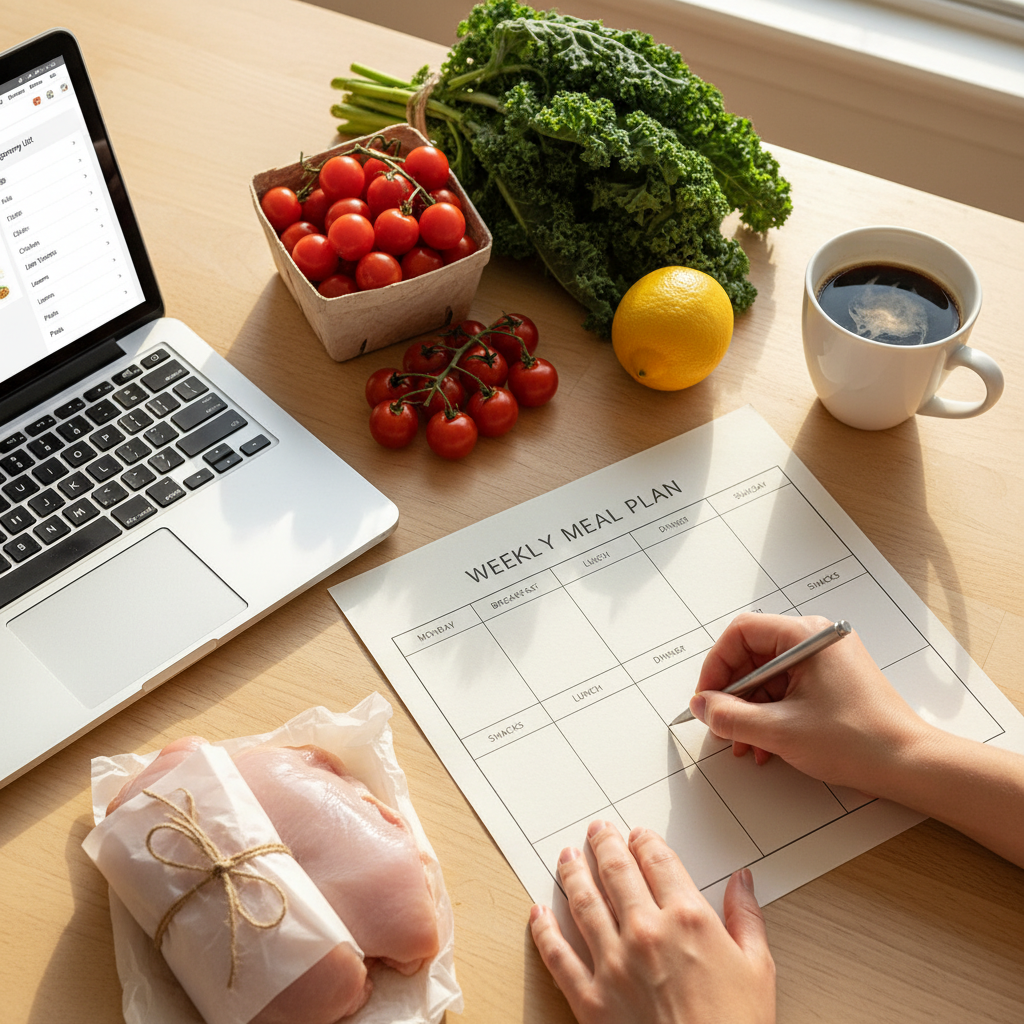
A practical weekly meal plan follows a 5-step process. This can be done in 30-45 minutes on a weekend and eliminates daily food decisions for the entire week.
Step 1: Set Your Weekly Nutrition Targets
Multiply your daily targets by 7. This gives you a weekly calorie and macro budget that allows for flexibility — a lighter lunch on Monday can offset a bigger dinner on Friday. Weekly targets are psychologically easier to hit than rigid daily targets, as shown by a 2019 study in Obesity that found flexible dieters had 1.5x better adherence than rigid dieters over 12 months.
Step 2: Choose Your Core Proteins and Carbs
Select 3-4 proteins and 2-3 carb sources for the week. Variety is good, but too many unique ingredients increases grocery costs and prep time. Batch cooking the same protein two different ways (grilled chicken for salads, shredded chicken for tacos) keeps things interesting without adding complexity.
Step 3: Map Meals to Days
Assign meals to each day of the week using a simple grid. Many successful planners follow a theme system:
| Day | Dinner Theme | Example |
| Monday | Sheet pan | Chicken + roasted vegetables + sweet potato |
| Tuesday | Stir-fry | Tofu + mixed vegetables + brown rice |
| Wednesday | Slow cooker | Turkey chili with beans |
| Thursday | Salad bowl | Grilled salmon + quinoa + greens |
| Friday | Flexible / eat out | Restaurant or leftovers |
| Saturday | New recipe | Try something new from a cookbook |
| Sunday | Batch prep | Cook proteins and carbs for the week ahead |
Step 4: Build Your Grocery List
Derive your grocery list directly from your meal plan. Group items by store section (produce, protein, dairy, pantry) to minimize shopping time. A 2020 study in the Journal of Nutrition Education and Behavior found that shopping with a list reduced impulse purchases by 30% and reduced grocery spending by an average of $25 per week.
Step 5: Batch Prep on Sunday
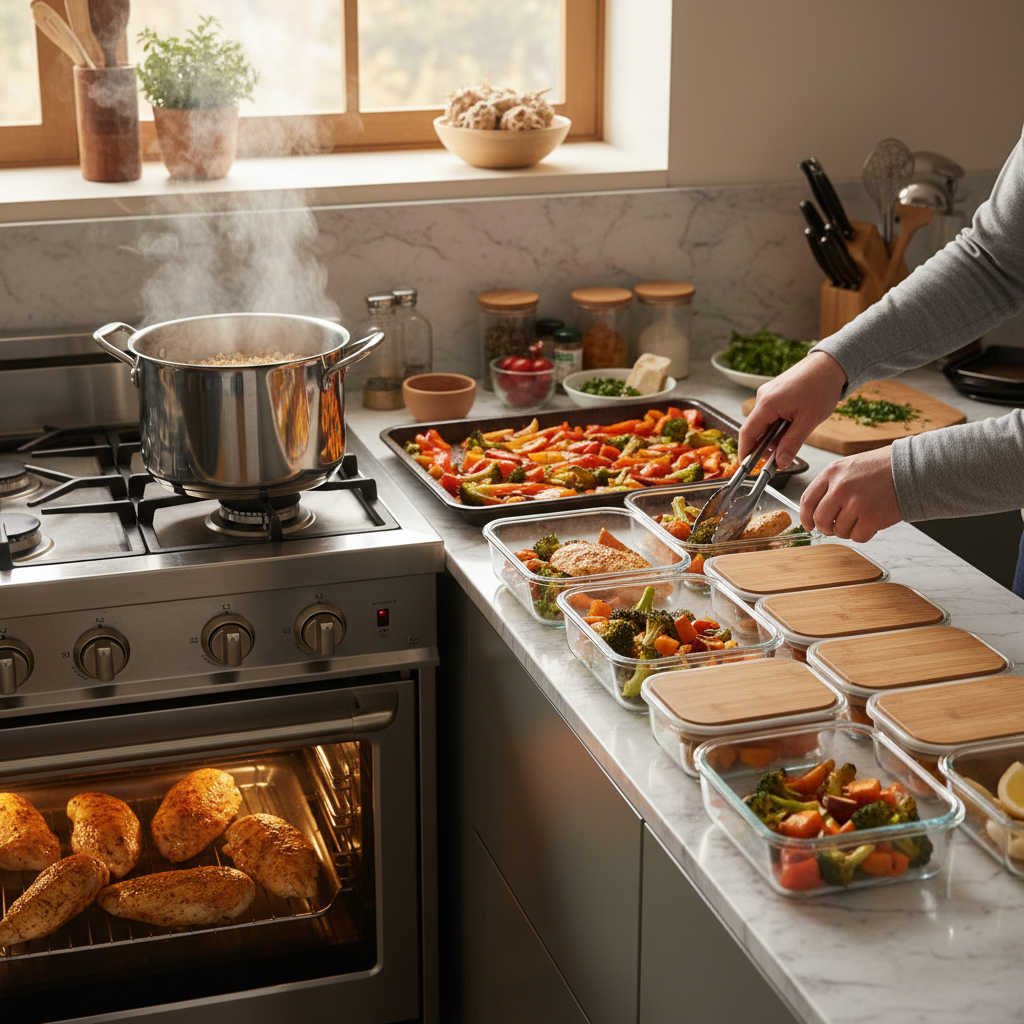
Dedicate 2-3 hours on Sunday to cook proteins, prepare carb bases, wash and chop vegetables, and portion snacks. This is the cornerstone habit. For a detailed batch cooking walkthrough, see our meal prep and calorie counting guide.
What Are the Best Batch Cooking Strategies for Meal Prep?
Batch cooking is the engine of a sustainable meal plan. The goal is not to cook every meal in advance — it is to prepare building blocks that assemble into meals in under 5 minutes during the week.
Which Foods Batch Cook Best?
The ideal batch cooking ingredients share three traits: they keep well for 4-5 days, they reheat without quality loss, and they are versatile enough to use in multiple meals.
How Long Does Meal Prep Actually Take?
A well-organized batch prep session takes 2-3 hours and produces 15-20 meals. Here is a sample timeline:
| Time | Task | Output |
| 0:00 | Preheat oven, start rice cooker | — |
| 0:05 | Season and bake chicken breasts | 8 servings protein |
| 0:10 | Chop vegetables for roasting | — |
| 0:15 | Put vegetables in oven | 6 servings roasted vegetables |
| 0:20 | Hard-boil eggs, prepare overnight oats | 6 eggs, 5 breakfasts |
| 0:45 | Assemble salad jars for lunches | 5 lunches |
| 1:15 | Cook ground turkey with seasoning | 6 servings protein |
| 1:45 | Portion everything into containers | 15-20 meals |
| 2:00 | Label, stack, and refrigerate | Done |
How Do You Track Calories When Meal Planning?
Meal planning and calorie tracking are a natural pair. When you plan meals in advance, you can log them before you eat — which means you know exactly where you stand at the start of every day rather than scrambling to estimate at the end.
What Is the Pre-Logging Strategy?
Pre-logging means entering your planned meals into a tracking app the night before or the morning of. A 2016 study in the Journal of Medical Internet Research found that participants who logged meals in advance had 40% higher adherence to calorie targets than those who logged after eating.
The workflow is simple:
This transforms tracking from a reactive chore into a proactive 2-minute planning step. For tips on avoiding common tracking mistakes, see our calorie counting mistakes guide.
How Do You Log Batch-Cooked Recipes?
The biggest tracking challenge with meal prep is logging recipes you cook from scratch. The most reliable method is the recipe builder approach:
For example, if a chicken stir-fry recipe totals 2,400 calories and you divide it into 4 containers, each container is 600 calories. This is more accurate than estimating each ingredient per serving, because it accounts for oils, sauces, and cooking losses.
How Do You Adapt Your Meal Plan for Different Goals?
The core system stays the same regardless of your goal — only the numbers change.
What Should a Weight Loss Meal Plan Look Like?
For fat loss, target a 500-calorie daily deficit from your TDEE. Prioritize protein (0.8-1.0 g/lb body weight) to preserve muscle mass, and fill the remaining calories with vegetables, complex carbs, and healthy fats.
A 2021 meta-analysis in The American Journal of Clinical Nutrition found that higher-protein diets during calorie restriction preserved 45% more lean mass than standard-protein diets — which means you lose more fat and less muscle.
What Should a Muscle-Building Meal Plan Look Like?
For muscle gain, eat at a 200-400 calorie daily surplus. Protein should be at least 0.7 g/lb body weight, distributed across 4 meals. Carbohydrates fuel training performance, so prioritize them around workouts.
What About Maintenance?
If your goal is simply eating healthier without changing weight, plan meals at your TDEE with a focus on food quality — more whole foods, more vegetables, less ultra-processed food. The plate method alone, without any calorie counting, is sufficient for most maintenance goals.
What Are the Most Common Meal Planning Mistakes?
Even with a good system, certain pitfalls can derail your plan. Here are the five most frequent mistakes:
Frequently Asked Questions
How long does it take to make a weekly meal plan?
The initial setup takes 45-60 minutes as you determine targets, choose recipes, and build a grocery list. After the first two weeks, the process takes 15-20 minutes because you recycle templates and swap only 1-2 meals. Most experienced planners spend under 30 minutes per week on planning, saving 5-7 hours on daily food decisions.
Can you meal plan without counting calories?
Yes. The plate method — half vegetables, quarter protein, quarter carbs, plus a thumb of healthy fat — produces balanced meals without tracking a single number. A 2019 study in Diabetes Care found the plate method was as effective as carbohydrate counting for blood glucose management. Calorie tracking adds precision, but it is not required for meal planning to improve nutrition.
How many meals should you prep in advance?
Start with 5 lunches and 3-4 dinners for the week. Leave 1-2 dinners flexible for eating out or cooking something fresh. Breakfast can be simplified with overnight oats, eggs, or yogurt that require minimal daily prep. Prepping too many meals leads to food fatigue and waste.
Is meal planning expensive?
Meal planning typically reduces food costs. A 2020 study in the Journal of Nutrition Education and Behavior found that households that planned meals spent $25 less per week on groceries and wasted 25% less food. Buying in bulk for batch cooking, using seasonal produce, and reducing restaurant meals all lower costs. Average savings range from $100-$200 per month for a household of two.
How do you meal plan for a family with different goals?
Build a core base of shared proteins, carbs, and vegetables, then adjust portions per person. Someone in a calorie deficit gets a smaller carb portion. Someone building muscle gets extra protein. The plate method scales naturally — just adjust the quarter sizes. This "modular" approach avoids cooking separate meals for each family member.
What if you get bored with meal prep?
Variety comes from sauces, spices, and cooking methods — not from unique ingredients every day. The same chicken breast can be herb-roasted Monday, stir-fried with teriyaki Tuesday, and served as tacos Wednesday. Rotate your sauce repertoire every 2 weeks. Also, plan one "new recipe" night per week to keep things interesting.
How do you handle meal planning when traveling?
Plan portable, shelf-stable options: protein bars, single-serve nut butter packets, pre-portioned trail mix, jerky, and individual oatmeal cups. For hotel stays, choose accommodations with a mini-fridge and microwave so you can store yogurt, fruit, and pre-made meals. For strategies on eating out, see our restaurant calorie estimation guide.
Should you meal plan for breakfast too?
Yes, but keep it simple. Choose 2-3 rotating breakfasts you enjoy (overnight oats, eggs and toast, yogurt with fruit) and eat them consistently. A 2023 study in Nutrients found that adults who ate a consistent high-protein breakfast consumed 12% fewer total daily calories than those who skipped breakfast or varied their morning meals randomly.
Sources
Ready to track smarter?
Join thousands who use KCALM for calorie tracking. AI-powered food recognition, scientifically-validated calculations, and zero anxiety.
Related Articles
Getting Started with Calorie Tracking: A Beginner's Guide
New to calorie tracking? Learn exactly how to start in 5 simple steps — set your calorie goal, pick a tracking method, log your first meal, and build habits that stick.
GuidesIntermittent Fasting and Calorie Tracking: A Complete Guide
Does intermittent fasting work for weight loss? Learn how to combine IF with calorie tracking, the science behind fasting windows, and evidence-based protocols for sustainable results.
GuidesBest Calorie Tracking Apps in 2026: An Honest Comparison
Which calorie tracking app is best in 2026? We compare MyFitnessPal, Cronometer, Lose It!, MacroFactor, Noom, and AI-powered options on accuracy, features, pricing, and ease of use.