Macro Tracking Simplified: Understanding Carbs, Protein, and Fat
A beginner-friendly guide to macronutrients and how to track them without getting overwhelmed by numbers.

Dr. Maya Patel
Registered Dietitian, M.S. Nutrition Science
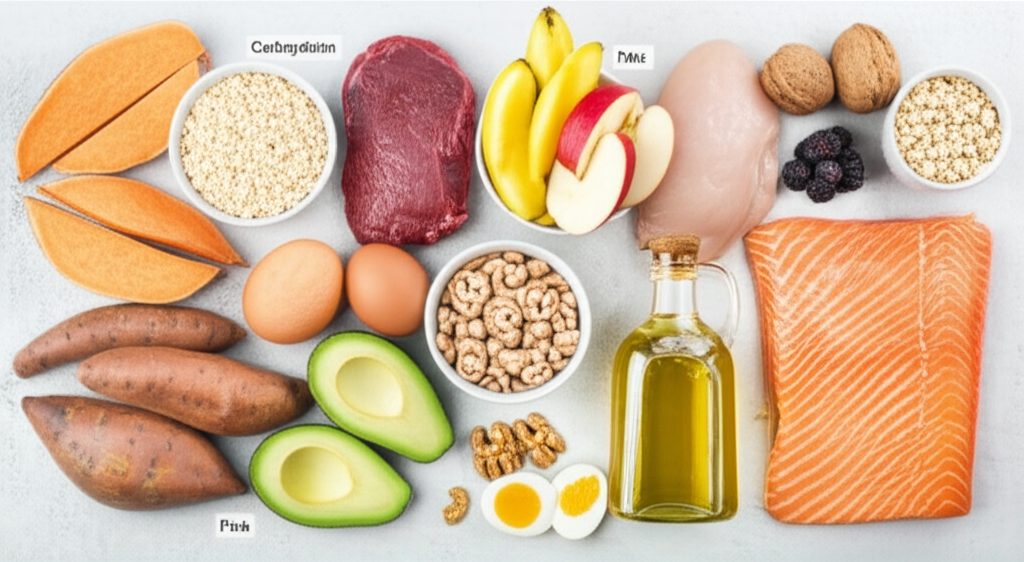
Calories are energy, but macros tell you more about what that energy is made of. Understanding and tracking macronutrients doesn't have to be complicated—here's a beginner-friendly guide to carbs, protein, and fat.
What Are Macronutrients?
Macronutrients are the three main components of food that provide calories:
- Carbohydrates: Your body's preferred energy source, especially for the brain and high-intensity activity
- Protein: Essential for building and repairing tissues, enzymes, and hormones
- Fat: Vital for hormone production, nutrient absorption, and long-term energy storage
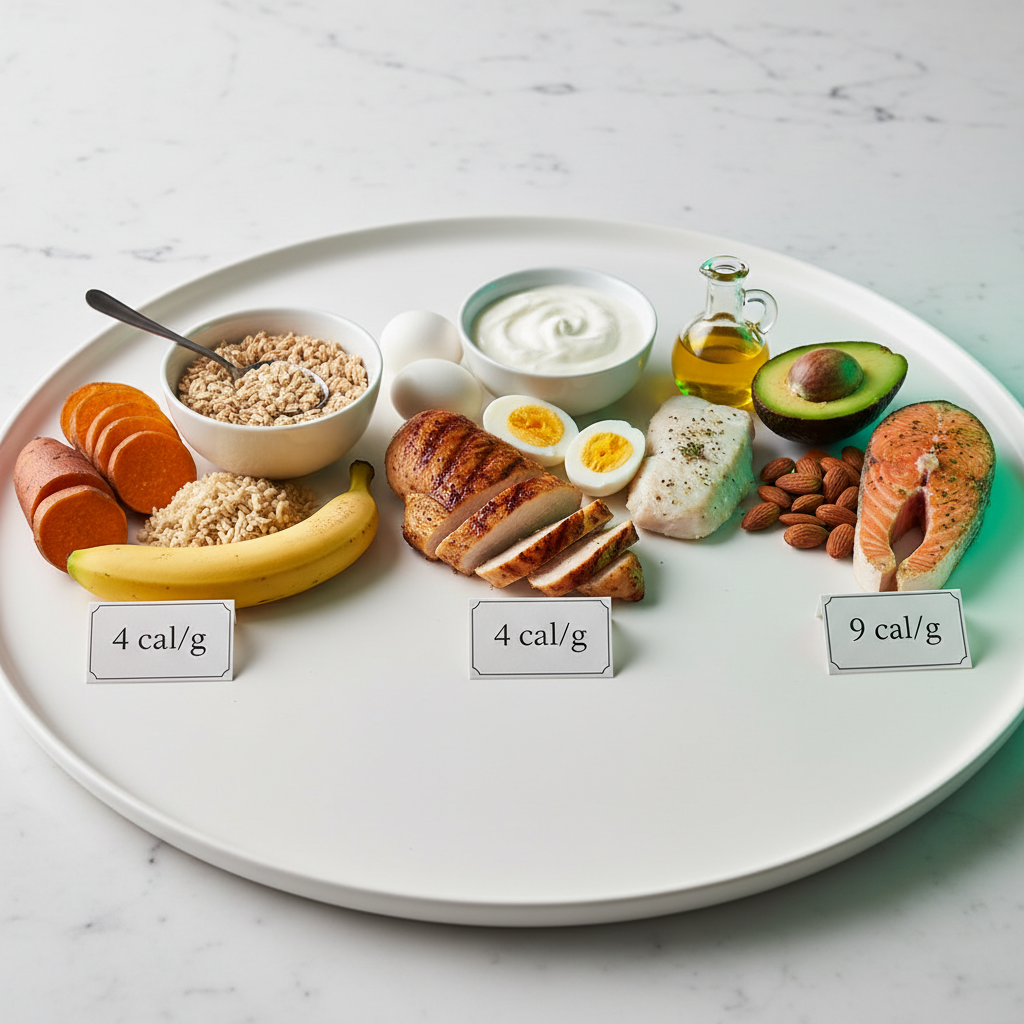
Calories Per Gram: The 4/4/9 Atwater System
Each macronutrient provides a specific amount of energy:
| Macronutrient | Calories per Gram |
| Carbohydrate | 4 calories |
| Protein | 4 calories |
| Fat | 9 calories |
Example: A food with 20g carbs, 15g protein, and 10g fat contains:
- Carbs: 20 × 4 = 80 cal
- Protein: 15 × 4 = 60 cal
- Fat: 10 × 9 = 90 cal
- Total: 230 calories
Carbs: Not the Enemy, But Context Matters
Carbohydrates have gotten an unfair reputation. They're not inherently fattening—excess calories cause fat gain, regardless of source.
What carbs do:
- Fuel intense exercise and brain function
- Spare protein from being used as energy
- Support thyroid and hormone function
- Provide fiber (which is technically a carb)
| Type | Examples | Notes |
| Simple sugars | Fruit, honey, sugar | Quick energy, less filling |
| Complex starches | Rice, oats, potatoes | Sustained energy, more filling |
| Fiber | Vegetables, whole grains | No usable calories, aids digestion |
Protein: The Satiety and Muscle Macro
Protein is unique among macros for several reasons:
- Most filling per calorie
- Preserves muscle during calorie restriction
- Has the highest thermic effect (burns calories being digested)
- Essential (your body can't make some amino acids)
- Minimum for health: 0.36g per pound of body weight
- Optimal for most: 0.7-1.0g per pound of body weight
- Athletes/muscle building: 0.8-1.2g per pound of body weight
Fat: Essential but Calorie-Dense
Dietary fat is essential for:
- Hormone production (including testosterone and estrogen)
- Absorption of vitamins A, D, E, and K
- Brain health and function
- Cell membrane integrity
| Type | Examples | Notes |
| Saturated | Butter, red meat, coconut | Limit, but don't eliminate |
| Monounsaturated | Olive oil, avocados, nuts | Generally beneficial |
| Polyunsaturated | Fish, flaxseed, walnuts | Includes essential omega-3s and omega-6s |
| Trans fat | Processed foods | Avoid when possible |
Finding Your Ideal Macro Split
There's no single "best" macro ratio—it depends on your goals, preferences, and how your body responds.
Common Starting Points:
Balanced (good for most people):
- 40% carbs / 30% protein / 30% fat
- 35% carbs / 35% protein / 30% fat
- 25% carbs / 35% protein / 40% fat
- 50% carbs / 25% protein / 25% fat
How to Calculate Your Macros
Let's say your target is 2,000 calories with a 40/30/30 split:
Carbs (40%):
- 2,000 × 0.40 = 800 calories
- 800 ÷ 4 = 200g carbs
- 2,000 × 0.30 = 600 calories
- 600 ÷ 4 = 150g protein
- 2,000 × 0.30 = 600 calories
- 600 ÷ 9 = 67g fat
Flexible Dieting: Hitting Targets, Not Perfection
Macro tracking works best with flexibility:
The "80/20" approach
- 80% of your calories from whole, nutrient-dense foods
- 20% from whatever you enjoy
- This prevents the restriction/binge cycle
Macro ranges, not single numbers
Instead of: "I must hit exactly 150g protein" Try: "I'll aim for 130-160g protein"Weekly averages matter more
Bodies don't reset at midnight. A week of balanced macros is more important than any single day.Practical Macro Tracking Tips
Start with protein Set a protein target first, then let carbs and fat fill in based on preferences and remaining calories.
Build meals around macros
- Choose a protein source (chicken, fish, tofu, eggs)
- Add a carb source (rice, potatoes, fruit)
- Include healthy fats (olive oil, avocado, nuts)
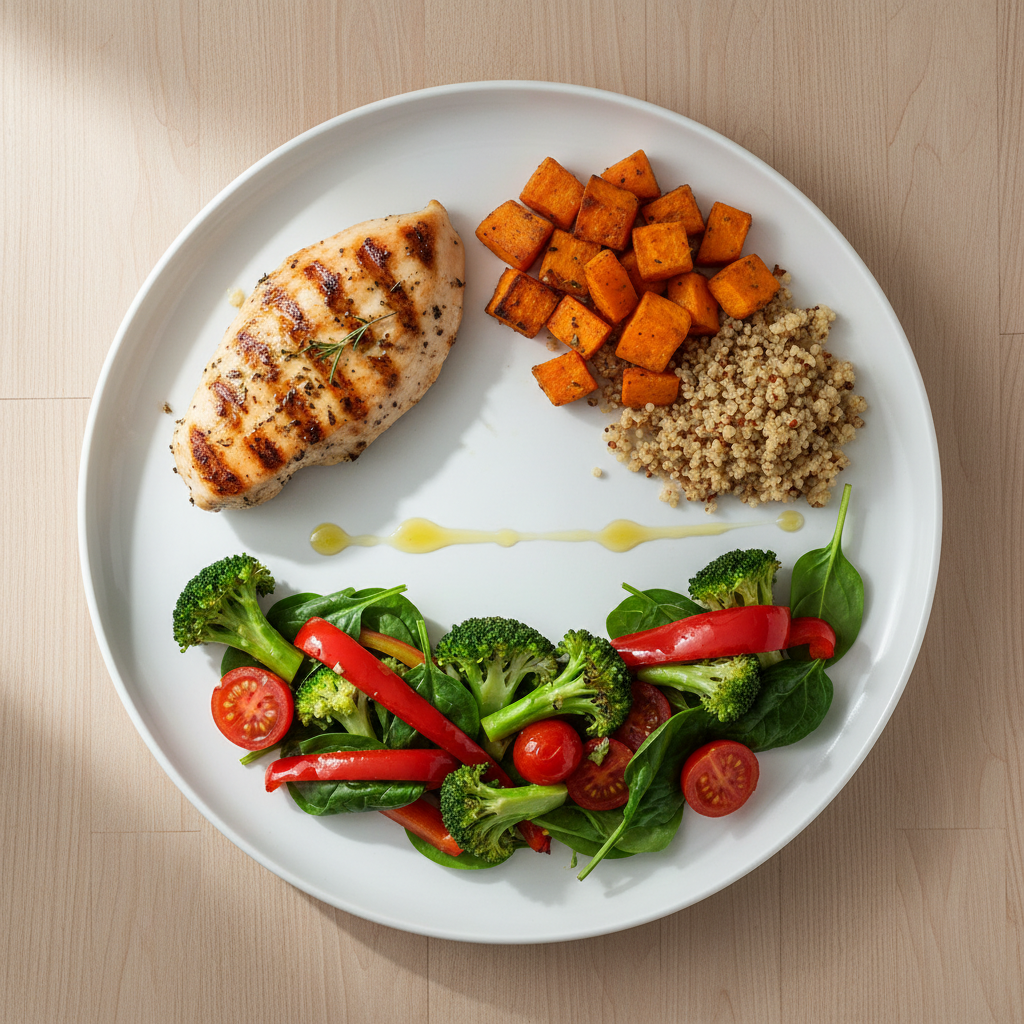
- 1/4 plate = protein
- 1/4 plate = complex carbs
- 1/2 plate = vegetables (low-calorie carbs + fiber)
- Add a thumb-size amount of healthy fat
The KCALM Approach
When you log a meal in KCALM, you see your macro breakdown at a glance—not just calories, but protein, carbs, and fat. Our AI estimates these automatically from photos, so you get macro awareness without manual calculation.
We don't enforce rigid macro targets or flash warnings when you're "over" on carbs. Instead, you get neutral information to help you make informed choices about your next meal.
Common Macro Tracking Questions
Do I need to track all three macros? No. If tracking everything feels overwhelming, focus on calories and protein. Those two give you most of the benefit.
Are carbs bad for weight loss? No. What matters is total calories. Low-carb diets work because they often reduce calorie intake, not because carbs are inherently fattening.
Can I eat more fat and fewer carbs? Yes, if you prefer it and still hit your calorie target. Some people feel better on higher-fat diets, others don't.
What about alcohol? Alcohol provides 7 calories per gram but isn't a "macro." It displaces other nutrients and is often logged separately or counted against carbs/fat.
The Bottom Line
Macros add another layer of nutritional awareness beyond simple calorie counting. Start with protein, keep things flexible, and remember that consistency matters more than perfection.
You don't need to calculate to the gram. You just need enough awareness to make better choices over time.
Reference: Atwater WO, Woods CD. The Chemical Composition of American Food Materials. USDA Farmers' Bulletin No. 28, 1896.
Ready to track smarter?
Join thousands who use KCALM for calorie tracking. AI-powered food recognition, scientifically-validated calculations, and zero anxiety.
Related Articles
Nutrition for Fitness Goals: Fuel Muscle, Endurance & Fat Loss
How should you eat for your fitness goal? Learn evidence-based calorie, protein, carb, and fat targets for muscle building, endurance training, fat loss, and body recomposition.
NutritionPlant-Based Nutrition: How to Get Every Nutrient You Need
Can you get all essential nutrients on a plant-based diet? Learn which vitamins and minerals to prioritize, how to hit protein targets, and science-backed meal planning strategies.
NutritionFlexible Dieting and IIFYM: A Science-Backed Guide
What is flexible dieting (IIFYM)? Learn how If It Fits Your Macros works, how to calculate your macros, what the research says, and how to build a sustainable flexible eating plan.