Gut Health and Your Microbiome: A Nutrition Guide
How does food shape your gut microbiome? Learn which foods feed beneficial bacteria, the fiber-gut connection, fermented foods vs. supplements, and meal plans for better digestive health.

Dr. Maya Patel
Registered Dietitian, M.S. Nutrition Science

Your gut microbiome — the roughly 38 trillion bacteria living in your digestive tract — directly influences weight management, immune function, and mental health. According to a 2023 review in Nature Reviews Microbiology, the diversity of your gut bacteria is the single strongest predictor of overall metabolic health. The most effective way to improve gut microbiome diversity is through dietary fiber and fermented foods, not supplements.
This guide covers how your diet shapes your microbiome, which foods feed beneficial gut bacteria, what the research says about probiotics and prebiotics, and how to build a gut-friendly meal plan that supports both digestive health and your broader nutrition goals.
What Is the Gut Microbiome and Why Does It Matter?
Your gut microbiome is the ecosystem of bacteria, fungi, viruses, and other microorganisms living primarily in your large intestine. An adult hosts approximately 500-1,000 different bacterial species, with the total microbial population weighing roughly 1-2 kg (2-4 lbs). These organisms are not passive passengers — they actively digest fiber, produce vitamins (K and B12), regulate immune responses, and synthesize neurotransmitters like serotonin.
A 2019 landmark study in Nature Medicine — the largest of its kind with 1,098 participants — found that gut microbiome composition explained more variation in blood lipid levels than genetics did. The study also revealed that only 1-12% of microbiome composition was heritable, meaning diet and environment, not genes, primarily determine which bacteria thrive in your gut.
| Microbiome Function | What It Does | Impact on Health |
| Fiber fermentation | Produces short-chain fatty acids (SCFAs) | Reduces inflammation, feeds colon cells |
| Vitamin synthesis | Produces vitamins K, B12, biotin, folate | Fills micronutrient gaps |
| Immune regulation | Trains 70% of the immune system | Reduces autoimmune risk and infections |
| Neurotransmitter production | Produces ~95% of body's serotonin | Influences mood, sleep, and appetite |
| Metabolic regulation | Affects calorie extraction from food | Influences body weight and fat storage |
| Barrier function | Maintains intestinal lining integrity | Prevents leaky gut and systemic inflammation |
How Does Diet Shape Your Gut Bacteria?
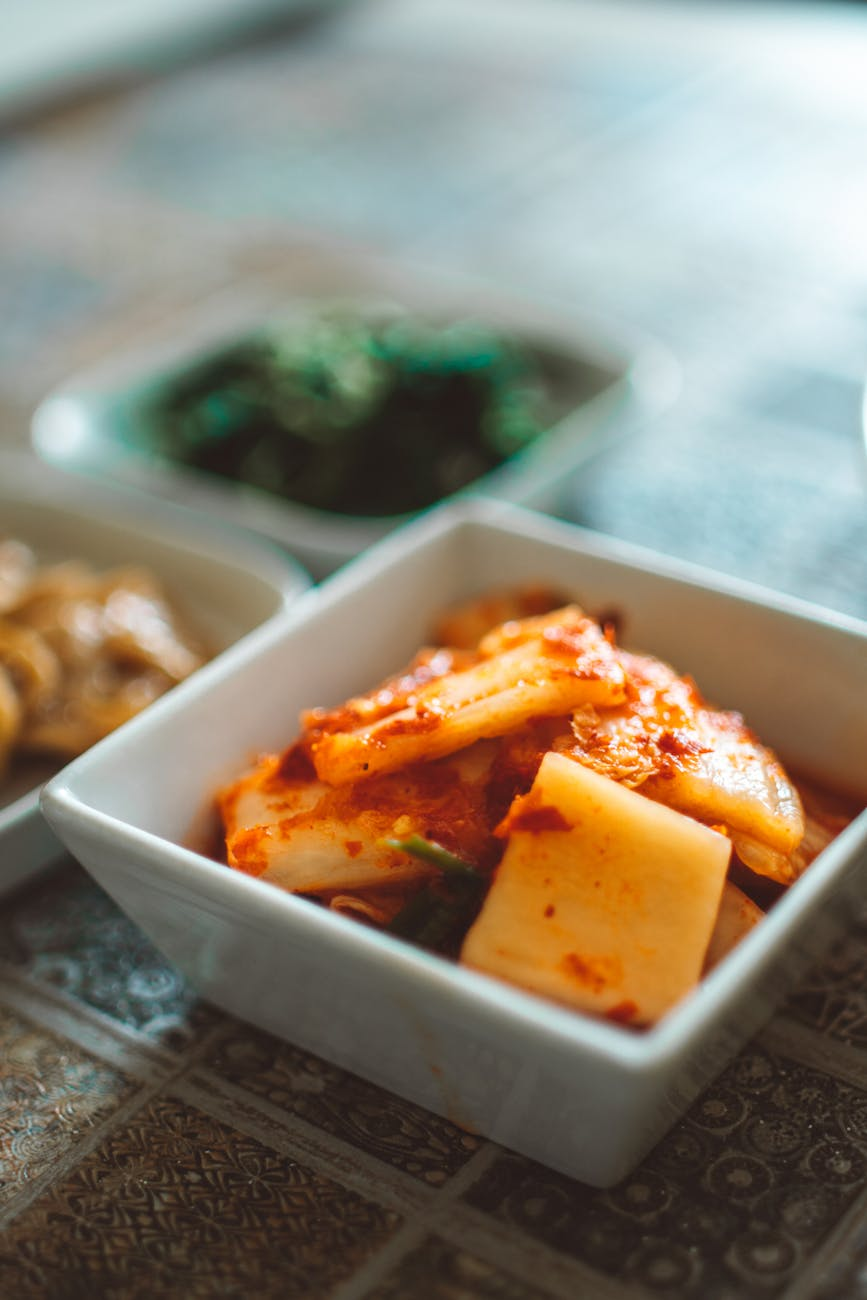
Diet is the dominant factor determining gut microbiome composition — more than genetics, geography, or medication use. A 2021 study in Nature Medicine tracked 1,098 adults and found that specific foods could predict the abundance of specific bacterial strains with remarkable accuracy. High-fiber foods, fermented foods, and polyphenol-rich plants consistently promoted beneficial bacteria, while ultra-processed foods, artificial sweeteners, and excess saturated fat reduced microbial diversity.
The speed of dietary impact is striking. A 2014 study in Nature demonstrated that switching between plant-based and animal-based diets altered gut microbiome composition within just 24-48 hours. However, sustained changes to overall diversity require consistent dietary patterns maintained over weeks to months.
Which Foods Increase Beneficial Gut Bacteria?
Three food categories have the strongest evidence for improving microbiome health:
Which Foods Harm Your Gut Microbiome?
Ultra-processed foods are the biggest threat to microbiome diversity. A 2022 study in BMJ following 116,087 participants found that each 10% increase in ultra-processed food consumption was associated with a 2.7% reduction in gut microbial diversity. Specific concerns include:
What Is the Difference Between Probiotics and Prebiotics?
Probiotics are live microorganisms you consume (in fermented foods or supplements), while prebiotics are non-digestible fibers that feed the beneficial bacteria already in your gut. Think of prebiotics as fertilizer for your existing gut garden, and probiotics as adding new plants. Both matter, but research increasingly suggests prebiotics (dietary fiber) have a more durable effect on microbiome composition.
| Feature | Prebiotics | Probiotics |
| What they are | Non-digestible plant fibers | Live microorganisms |
| How they work | Feed existing beneficial bacteria | Add new bacteria to the gut |
| Best food sources | Garlic, onions, leeks, oats, bananas | Yogurt, kefir, kimchi, sauerkraut |
| Durability of effect | Long-lasting with consistent intake | Often temporary — bacteria may not colonize |
| Daily target | 25-38 g fiber (5+ g prebiotic fiber) | No established RDA; 6+ servings fermented food/week |
| Supplement effectiveness | Moderate — whole foods preferred | Strain-specific; many products unproven |
| Side effects | Gas and bloating if increased too fast | Generally safe; immunocompromised should consult doctor |
For more on dietary fiber's role in gut health, see our complete guide to fibermaxxing and fiber nutrition trends.
How Much Fiber Do You Need for Optimal Gut Health?
The minimum recommended fiber intake is 25 g per day for women and 38 g per day for men (Institute of Medicine). However, research on gut microbiome diversity suggests the optimal target may be higher. A 2021 American Gut Project analysis — the largest citizen-science microbiome study with over 11,336 participants — found that people eating 30+ different plant foods per week had significantly more diverse microbiomes than those eating 10 or fewer, regardless of total fiber grams.
The type of fiber matters as much as the quantity. Soluble fibers (oats, beans, apples) are fermented more readily by gut bacteria than insoluble fibers (wheat bran, vegetables), producing more short-chain fatty acids. The most potent prebiotic fibers include:
The practical recommendation: aim for 30 g of fiber daily from 30+ different plant sources per week. Increase fiber intake gradually (5 g per week) to avoid bloating and gas.
Does the Gut Microbiome Affect Body Weight?
Yes — and the relationship is bidirectional. Your gut bacteria influence how many calories you extract from food, how your body stores fat, and how hungry you feel. A 2023 meta-analysis in Obesity Reviews analyzed 42 studies and found that people with obesity consistently had lower gut microbial diversity and a higher Firmicutes-to-Bacteroidetes ratio compared to lean individuals.
The gut microbiome influences weight through several mechanisms:
The most actionable finding: increasing fiber intake is the most effective dietary intervention for improving the weight-related microbiome profile. A 2021 study in mSystems found that each additional 10 g of daily fiber was associated with a 2.2% improvement in the Firmicutes-to-Bacteroidetes ratio.
How Can You Track and Improve Your Gut Health with Calorie Tracking?
Calorie tracking apps like KCALM can serve as gut health tools when you track fiber and fermented food intake alongside calories and macros. The key metrics to monitor for gut health are daily fiber grams, number of unique plant foods per week, and servings of fermented foods.
What Does a Gut-Healthy Day of Eating Look Like?
Here is a sample 2,000-calorie day optimized for both microbiome diversity and balanced macronutrients:
| Meal | Foods | Calories | Fiber | Gut-Health Highlight |
| Breakfast | Overnight oats with banana, ground flaxseed, kefir, and blueberries | 420 | 9 g | Beta-glucan (oats), probiotics (kefir), polyphenols (blueberries) |
| Snack | Apple slices with almond butter | 250 | 5 g | Pectin (apple), prebiotic fiber |
| Lunch | Lentil and vegetable soup with whole grain bread and sauerkraut | 520 | 14 g | Resistant starch (lentils), probiotics (sauerkraut), diverse plants |
| Snack | Carrots and hummus with a handful of walnuts | 280 | 6 g | Prebiotic fiber (chickpeas), polyphenols (walnuts) |
| Dinner | Grilled salmon with roasted garlic asparagus, brown rice, and kimchi | 530 | 8 g | Inulin (garlic, asparagus), omega-3 (salmon), probiotics (kimchi) |
| Totals | 12+ unique plant foods | 2,000 | 42 g | Prebiotics + probiotics + polyphenols |
What Are the Best Supplements for Gut Health?
The evidence for gut health supplements is more nuanced than marketing suggests. A food-first approach is supported by stronger evidence than supplementation for most people.
Do Probiotic Supplements Actually Work?
Probiotic supplements work for specific conditions but are not a general gut health solution. A 2023 Cochrane review of 82 randomized controlled trials found strong evidence for probiotics in three situations:
For general gut health in healthy adults, evidence is weaker. The 2021 Stanford fermented foods study (Cell) found that whole fermented foods outperformed probiotic capsules for improving microbial diversity — likely because fermented foods provide both bacteria and prebiotic substrates in a food matrix.
If you choose a supplement, look for strains with clinical evidence (e.g., Lactobacillus rhamnosus GG, Bifidobacterium lactis BB-12), colony counts of 10+ billion CFU, and third-party testing (USP, NSF, or ConsumerLab verified).
How Does Gut Health Connect to Mental Health?
The gut-brain axis is a bidirectional communication system between your gut microbiome and your brain, primarily mediated through the vagus nerve, immune signaling, and microbial metabolites. This isn't speculative — a 2019 Nature Microbiology study analyzing 1,054 participants found that two bacterial genera (Coprococcus and Dialister) were consistently depleted in people with depression, regardless of antidepressant use.
Your gut produces approximately 95% of your body's serotonin and 50% of its dopamine. These neurotransmitters regulate mood, sleep, motivation, and appetite. A 2023 randomized trial published in Nature Communications found that a Mediterranean-style diet rich in fiber, fermented foods, and omega-3 fatty acids improved depression scores by 32% over 12 weeks — an effect comparable to some antidepressant medications.
The connection to calorie tracking and mental health is worth noting: restrictive dieting that severely limits food variety can harm microbiome diversity, while a balanced, whole-foods approach supports both gut and mental health simultaneously.
Frequently Asked Questions
How long does it take to improve your gut microbiome through diet?
Measurable changes in gut bacteria composition begin within 24-48 hours of dietary shifts, according to a 2014 study in Nature. However, meaningful improvements in overall microbial diversity require 2-4 weeks of consistent dietary changes. The Stanford fermented foods study showed significant diversity gains after 10 weeks of increased fermented food intake.
Can you test your gut microbiome at home?
Yes — commercial gut microbiome tests (like ZOE, Viome, and Thorne) analyze stool samples to identify bacterial populations. However, a 2023 Science editorial cautioned that these tests have limited clinical actionability. The dietary recommendations they generate (eat more fiber, more fermented foods, less processed food) are universal advice that doesn't require testing.
Are fermented foods safe for everyone?
Most fermented foods are safe for healthy adults. However, people with histamine intolerance may react to aged fermented foods like aged cheese, wine, and sauerkraut. Immunocompromised individuals should consult their doctor before consuming unpasteurized fermented foods. Start with small portions (1-2 tablespoons) and increase gradually.
Does cooking destroy the probiotics in fermented foods?
Yes — heat above 46°C (115°F) kills most probiotic bacteria. To preserve live cultures, consume fermented foods raw or add them after cooking. For example, add kimchi or sauerkraut as a side dish rather than cooking it into hot dishes. Yogurt and kefir should not be heated above warm temperature.
What is the gut-skin connection?
The gut-skin axis is an emerging area of research. A 2021 review in Microorganisms found that gut dysbiosis is associated with acne, eczema, rosacea, and psoriasis. The mechanism involves systemic inflammation from gut permeability affecting skin barrier function. Improving gut diversity through diet may improve skin conditions, though more clinical trials are needed.
Can antibiotics permanently damage your gut microbiome?
A single course of broad-spectrum antibiotics can reduce gut bacterial diversity by 30-40%, according to a 2018 Nature Microbiology study. Most bacterial populations recover within 1-3 months, but some species may take 6-12 months to return. Taking probiotics (specifically Lactobacillus rhamnosus GG) during and after antibiotic treatment can reduce recovery time.
Does exercise affect your gut microbiome?
Yes. A 2022 meta-analysis in Sports Medicine found that regular moderate exercise increased gut microbial diversity by 8-12% compared to sedentary individuals. Endurance athletes show particularly enriched populations of Akkermansia muciniphila, a species linked to lean body composition and improved metabolic health.
How many servings of fermented foods should you eat per day?
The Stanford Cell study that demonstrated significant microbiome improvements used 6+ servings per day (e.g., 2 servings yogurt, 1 serving kimchi, 1 serving kombucha, 2 servings other fermented foods). For practical purposes, 2-3 servings daily is a sustainable starting target. One serving equals about 170 g yogurt, 60 g sauerkraut, or 240 ml kefir/kombucha.
Sources
Ready to track smarter?
Join thousands who use KCALM for calorie tracking. AI-powered food recognition, scientifically-validated calculations, and zero anxiety.
Related Articles
How Stress and Sleep Affect Your Nutrition and Weight
Poor sleep and chronic stress sabotage your diet. Learn how cortisol drives cravings, why sleep-deprived people eat 300+ extra calories daily, and evidence-based strategies to break the cycle.
ScienceGLP-1 Medications and Nutrition: What You Need to Know
How GLP-1 medications like Ozempic and Mounjaro affect your nutrition needs. Learn about protein goals, micronutrient gaps, calorie tracking, and evidence-based diet strategies while on GLP-1 drugs.
ScienceCalorie Deficit vs. Surplus: What They Mean for Your Body
Understand calorie deficits and surpluses: how energy balance controls weight loss and gain, how to calculate yours, safe deficit ranges, and when a surplus helps build muscle.